.png)
 3 hours ago
7

Article content
WASHINGTON, D.C. — If only Americans better understood Canada and its people. That’s a thought many Canadians have shared in recent years, especially as the widening trade spat has disrupted cross-border travel and trade. But those tensions have not stopped one American octogenarian — no, not that one — from sharing his many thoughts on Canada.

THIS CONTENT IS RESERVED FOR SUBSCRIBERS
Enjoy the latest local, national and international news.
- Exclusive articles by Conrad Black, Barbara Kay and others. Plus, special edition NP Platformed and First Reading newsletters and virtual events.
- Unlimited online access to National Post.
- National Post ePaper, an electronic replica of the print edition to view on any device, share and comment on.
- Daily puzzles including the New York Times Crossword.
- Support local journalism.
SUBSCRIBE FOR MORE ARTICLES
Enjoy the latest local, national and international news.
- Exclusive articles by Conrad Black, Barbara Kay and others. Plus, special edition NP Platformed and First Reading newsletters and virtual events.
- Unlimited online access to National Post.
- National Post ePaper, an electronic replica of the print edition to view on any device, share and comment on.
- Daily puzzles including the New York Times Crossword.
- Support local journalism.
REGISTER / SIGN IN TO UNLOCK MORE ARTICLES
Create an account or sign in to continue with your reading experience.
- Access articles from across Canada with one account.
- Share your thoughts and join the conversation in the comments.
- Enjoy additional articles per month.
- Get email updates from your favourite authors.
THIS ARTICLE IS FREE TO READ REGISTER TO UNLOCK.
Create an account or sign in to continue with your reading experience.
- Access articles from across Canada with one account
- Share your thoughts and join the conversation in the comments
- Enjoy additional articles per month
- Get email updates from your favourite authors
Sign In or Create an Account
or
Article content
Famed travel writer and novelist Paul Theroux, 85, recently released his 12th travel book, True North: On the Road in Canada, detailing his cross-country trek and the conversations and discoveries made along the way between 2022 and 2025. To better understand what everyone can gain by travelling across Canada, National Post spoke with Theroux to hear what he learned about his family’s Canadian roots, today’s sense of national unity, Canada’s disappointment in its southern neighbour, and the important role Canada has always played in American society and culture.
Article content
Article content
Advertisement 1
Article content
This Q&A has been edited for clarity and length.
Article content
By signing up you consent to receive the above newsletter from Postmedia Network Inc.
Article content
You went to Yamaska, Quebec, looking for your family’s Canadian roots. What did you discover that you hadn’t known from your family’s stories?
Article content
I knew very little about my ancestors or what they did, where they came from, and I realized that they were pioneers and that when the original ancestor, Antoine, came here, he was 18 years old. He came from a small village near Toulouse called Verdun-sur-Garonne, and arrived in Canada a callow youth. He didn’t even speak French — he was a Gascon speaker. He hooked up with other Gascons. The main one was (Antoine) de la Mothe Cadillac, the founder of Detroit.
Article content
He was also involved in (Louis de Buade, Comte de) Frontenac’s last big campaign against the Onondaga people, a punitive mission, actually. Two thousand soldiers went to the Onondaga territory with Frontenac, who was in his seventies then, leading them. He was carried. They were there trying to punish First Nation people, but they did a very wise thing. They actually disappeared. They just withdrew from their village.
Article content
Antoine later retired and became a farmer in Yamaska. And here’s the interesting part: He went to Yamaska, following one of his children there in 1707, and died there in 1759, the pivotal year … of the fall of Quebec.
Article content
Advertisement 2
Article content
The family’s still there. So here’s a Canadian story — a family that goes to a small village. The patriarch goes there, has children; his children live there, and they become farmers. Three hundred years later, they’re still there. That’s not an American story. I don’t know any American (families) who, 300 years later, are still in the same place, still farming, still struggling, and still speaking the language.
Article content
I was going back to a place where I have family. That has never happened to me in travel. It’s a wonderful experience, actually. And a very sobering experience too, because, as you know, a lot of the Québécois couldn’t find work, so hundreds of thousands of them came to New England, like my grandfather, and settled, worked in the mills, had children, like my father.
Article content
So it’s not only a trip to Canada, it’s a trip to the past. It’s connection with the family.
Article content
Did hearing Indigenous people’s stories change how you thought about your own family’s place in Canada?
Article content
Yes, but it’s a divided loyalty because I have First Nation ancestry. My grandmother was related to — she was Anishinaabe Nipissing, and she was born in Belleville, but one of her ancestors was First Nation.
Advertisement 1
Advertisement 2
Article content
I’m very proud of the bravery, the boldness of an 18-year-old who leaves his village, crosses an ocean, goes to a place that’s impossibly cold and inhospitable, and survives it. A lot of the French who went to Nouvelle France went back to France. They got homesick and went back, or they went to the American colonies.
Article content
But he didn’t, he stayed.
Article content
And of course that’s a tragic story, what happened to First Nation people deprived of their land, punished in the residential schools. All of that fascinated me and became part of the story too.
Article content
I’m very proud of my First Nation ancestry and wanted to write about it. But here on one side I have a First Nation person, and the other, Antoine, who’s punishing them.
Article content
You travelled through Canada as tensions with the United States were flaring. What emotional response did you hear: anger, disappointment, defiance or worry?
Article content
All those things. Defiant, worried, anxious, and also they feel betrayed, and they have reason to feel betrayed. They’ve always been a great neighbour, a great trading partner. And the unusual aspect of Canadians, different from every other country I’ve been to, is Canadians are the most well-informed people about American culture and politics and history.
Article content
Advertisement 3
Article content
So I’m talking to people who know a lot about the States. This is why they feel so betrayed. They’ve invested a lot. They also travel. They spend winters in Florida. They go to New York City. They go to Las Vegas. They take the Greyhound bus and travel around. They’re very well-informed. And that was surprising to me, how well-informed they are.
Article content
The mood, it’s a mood of betrayal. But the other aspect of it was that they realized that in order to defy what’s happening to them, in order to fight back, they need to be unified, so they had a greater sense of unity.
Article content
I met some really, really wonderful people, but I met more people just sitting in a Tim Hortons than I did at a university or in an auditorium or a gourmet restaurant or hotel. Just sitting with good old boys in this Tim Hortons, or women, or families. That became a kind of touchstone for me. It was very helpful.
Article content
Do you think that unity will last, or does it depend on having a common adversary in President Donald Trump?
Article content
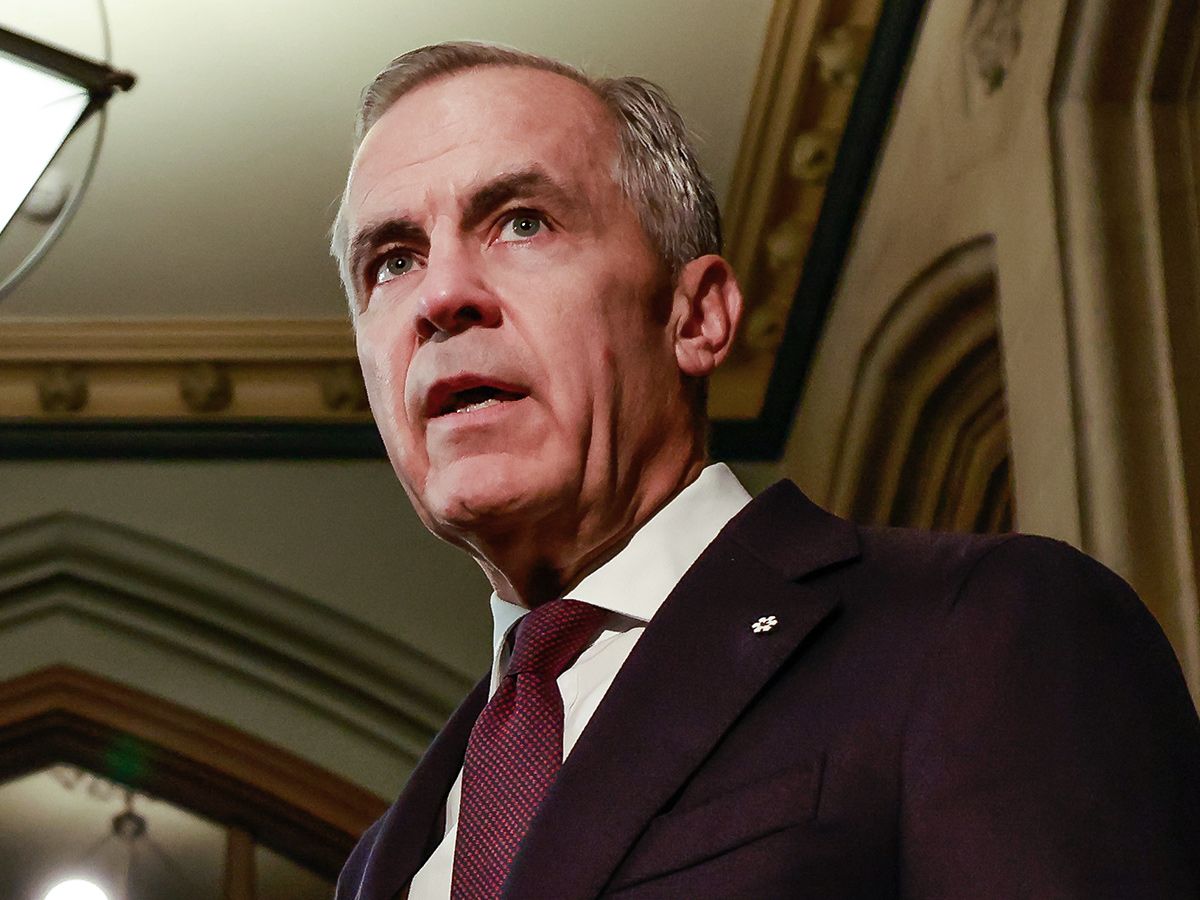
I don’t know because only time will tell. But I did feel that — and (Prime Minister Mark) Carney has said this — this is an inflection point.
Article content
Advertisement 4
Article content
This is a wound that’s not likely to heal. This is an event which will leave a lasting impression. A sense of betrayal … doesn’t go away. Once you feel betrayed, you’re not gonna go back and say, “Well, you betrayed me, but I guess we can make up and be friends again.”
Article content
I think that leaves a permanent, lasting wound or impression that makes people think we have to look elsewhere or we have to depend on ourselves. We can’t assume that life will continue as it was before. That something permanent has happened.
Article content
So I think whether it lasts, I don’t know. But the memory is very strong.
Article content
And the next president might come and say, “Well, we’ll be nice to you. We’ll change things.” It could happen. I hope it does happen. But I don’t think it will heal the wound. I think the Canadians will still be smarting from that betrayal, and it will have an effect, a historical effect. It will have an effect on the future. They’re not going to assume that everything’s going to be rosy.
Article content
Did Canadians distinguish between Trump and Americans generally? Did anyone hold you personally responsible?
Article content
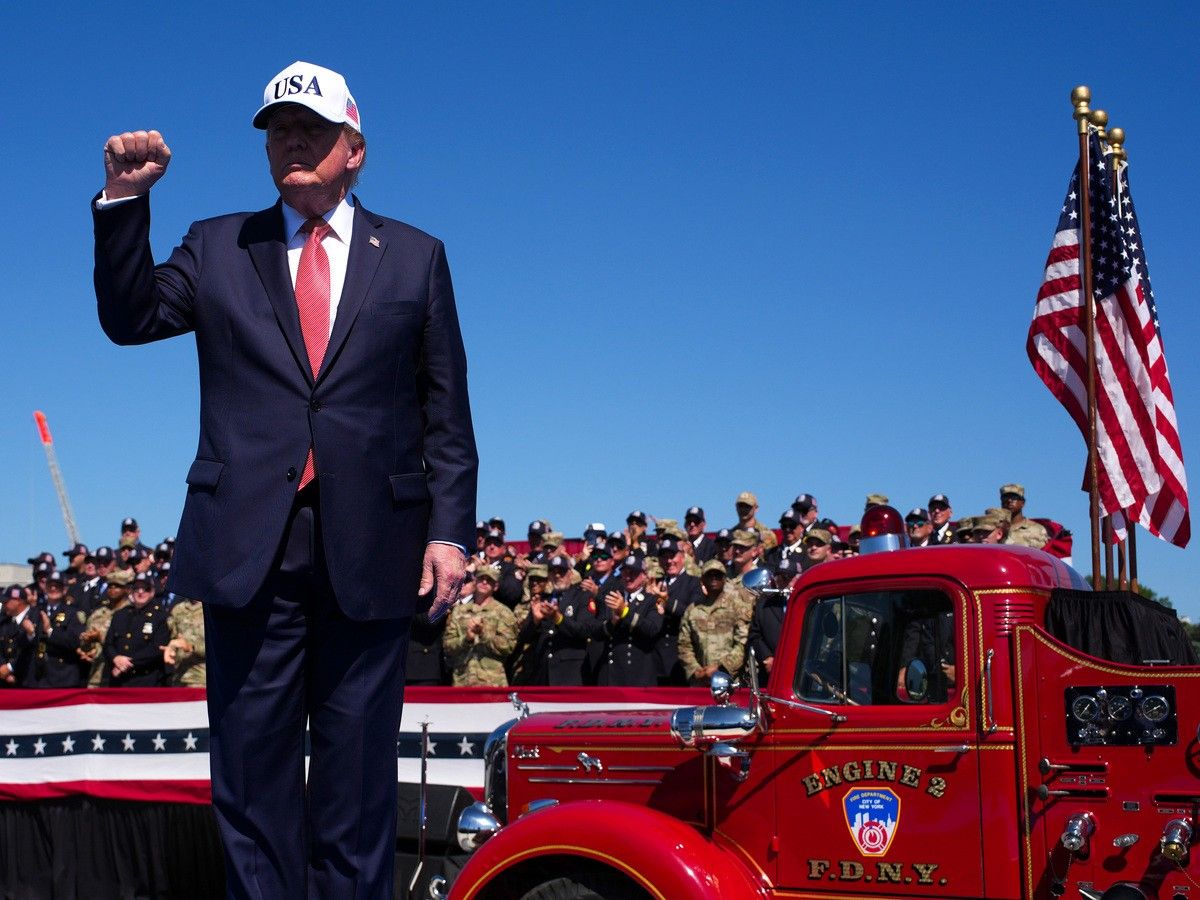
Canadians don’t blame Americans for the tariffs or Trump. If I went there and was wearing a Trump badge, they would blame him. But I never felt that Canadians held me personally responsible for anything that Trump did.
Advertisement 2
Advertisement 3
Article content
I’m an old man. I travelled during the Vietnam War. I was in Africa for six years during the Vietnam War. I was in Southeast Asia during the Vietnam War, and I very rarely met people who didn’t blame me for the Vietnam War.
Article content
They said, “You know what? It’s your war. You did it, and you’re responsible.” I was constantly explaining, “I wasn’t in favour of the war. I was a war resister. I used to be in demonstrations.” But I was held personally responsible.
Article content
Canadians aren’t like that. The Canadians are intelligent, humane people, and they’ve had their issues with the government too, and they realize that they’re not responsible.
Article content
I also had a bumper sticker on my car: “Don’t blame me. I didn’t vote for him.”
Article content
We had really good conversations with them about it. And also, you have the people in Alberta who are sympathetic to Trump. So if they said, “Explain him,” I’d say, “Well, explain the people in Alberta who visit Trump in Washington. Do you understand those people? If you understand those people, then you’ll understand the people in America, in the United States, who voted for him.”
Article content
Advertisement 5
Article content
So it’s easy. You can have an intelligent conversation about it.
Article content
What would you tell Trump he needs to understand about Canada?
Article content
I would tell him something very simple. Read a book. Read a book. It can be Conrad Black’s history of Canada. I read it. It’s very informative. Read a book. Talk to Conrad. He’s a friend (of Trump’s). Ask him a little bit about Canadian history, about the relationship between the diplomacy back and forth.
Article content
Canada is the farm team for American culture. Writers, comedians, actors, academics, manual labourers have created or helped create the United States. They participated in every aspect of American culture. Find out a little bit about the contribution that Canadians have made to the United States.
Article content
Canadians were fighting in the First World War long before Americans. Canadians were fighting in World War II before Americans, and then we hooked up.
Article content
What I would tell him is “do a little homework, Donald.”
Article content
I don’t agree with everything that Conrad Black has said, but he has considerable weight as a historian. His volumes are very readable. So that would be my advice. And you know something, Trump wouldn’t listen to me, he wouldn’t listen to Carney, but he would listen to Conrad Black.
Article content
Advertisement 6
Article content
What made travelling through Canada different from your other journeys?
Article content
The best thing that can happen to a traveler is to visit a place in a time of crisis. Weather crisis, political crisis, foreign war. The Canadians opened up much more than they normally would, I think, when I was travelling. Also, Canada’s a wonderful place to travel in. The people are hospitable, and the roads are great. I was on the road all the time. The food’s great. There’s always a place to stay. I never made an onward booking. It was just pleasant all the time.
Article content
People say, “Well, it’s hard to write about happiness or hospitality or pleasantness.” Actually, I had the combination of great hospitality in a time of crisis, so that was just wonderful.
Article content
In all the travel I’ve done, this is my 12th travel book, speaking English and French, having conversations — this was different from any other book that I’ve written. I have a family connection; I’m speaking my own language.
Article content
I loved the trip. I’ve liked travelling in countries for the challenges, but I never felt challenged in Canada. I always felt I was finding out aspects of culture that I hadn’t found in other countries, and I felt welcomed.
Advertisement 3
Advertisement 4
Article content
I felt at home, to tell you the truth.
Article content
What surprised you about Canada?
Article content
I didn’t have any strong assumptions. What I think I discovered was how open Canada is to other cultures, to other people, to migrants. And without expecting them to conform to Canadian values. That a person could go to Canada — a Hutterite, a Mennonite, a Jamaican, a Somali, a Punjabi — and realize that they’re going to be accepted, and they can live as they were.
Article content
I found that in Sault Ste. Marie. I was staying in a motel that was filled with Somali refugees. And it so happens I lived in East Africa for four years. I can speak Swahili, not badly. And I was able to talk to them.
Article content
They were telling me that they’d spent years, actually, in a refugee camp in Kenya. They spoke Swahili. And one man said memorably — I said, “What do you want here?” He said, “I want a house.”
Article content
He had a family there. They were spending time at the Station Mall in Sault Ste. Marie just killing time, waiting for a house, in a town that didn’t have a lot of housing and didn’t have a lot of jobs for them. And they were being accommodated. That’s part of Canadian accommodation. Not a lot of people are happy about it in Canada. People say, “Well, what about us?” First Nations people, a lot of them don’t have houses. They don’t have jobs. And so there’s this contradiction, which a Canadian would say, “Well, this is a mosaic. That’s one little piece of the mosaic.” I wasn’t expecting that.
Article content
Advertisement 7
Article content
Where would you most like to return?
Article content
I’d love to go back to Newfoundland. I’d like to see more of Newfoundland.
Article content
I went up the west side. I drove from Port aux Basques to L’Anse aux Meadows, to the top, the Viking top, and that was a wonderful trip. I love the food, I love the people, I love the landscape.
Article content
You have mountains on one side, and the sea on the other side. It’s just fabulous. Like the coast of California in places, just dramatic.
Article content
I’d like to go back to our ancestral home, Yamaska, just because I have family there. It’s southeast of Montreal.
Article content
I would go back to anywhere, to tell you the truth. I love driving across the prairie, listening to music or listening to the CBC, listening to people discussing stuff. And then in the distance you see Winnipeg looking like “Lord of the Rings” battlements, just like a castle in the distance.
Article content
Just across the grassland you see the city, the spires of the city. Just a very wonderful sight, and then driving into the city.
Article content
What would you like American readers to take away from ‘True North’?
Article content
Americans know very little about Canada. I would like them to see that it’s a rich, vibrant, intelligent, hospitable culture, a place well worth visiting and knowing about.
Article content
Advertisement 8
Article content
They don’t realize Toronto is a gigantic city. It has everything. It has museums, it has churches, it has sports teams, it has culture, it has music, it has writers, it has poets, it has workers. It’s just a wonderful city. It’s a world-class city, and Americans don’t know that.
Article content
They don’t know that Winnipeg is a great city. They may know Vancouver, but Vancouver is full of interests. Americans don’t know that. They don’t know. They’re not curious about it.
Article content
My book has been given a much warmer reception in Canada than in the States, and this in a time when Canada’s under threat by Trump.
Article content
I would like Americans to know that Canada’s a different culture. It’s different. It’s not just a bunch of English speakers who live north of us. They have their own political system, their own electoral system. Their elections are so much more sensible than American elections. They don’t spend a ton of money … They have debates. They accept the results of the election, and they move on.
Article content
There’s a lot to learn from Canada, and I hope they’d learn it from my book, and beyond.
Article content
Advertisement 4
























 Bengali (BD) ·
 English (US) ·