.png)
 1 hour ago
9
Researchers at the University of Arizona argue that changes in the brain associated with aging aren't a sign of decline, but a new phase of development that supports perspective, emotional regulation, and passing on knowledge to the next generation.
Author of the article:

Washington Post
Maggie Penman, The Washington Post
Published Oct 22, 2026 • Last updated 6 minutes ago • 4 minute read
See more Toronto Sun on Google — save as a Preferred Source
Advertisement 2

THIS CONTENT IS RESERVED FOR SUBSCRIBERS ONLY
Subscribe now to read the latest news in your city and across Canada.
- Unlimited online access to articles from across Canada with one account.
- Get exclusive access to the Toronto Sun ePaper, an electronic replica of the print edition that you can share, download and comment on.
- Enjoy insights and behind-the-scenes analysis from our award-winning journalists.
- Support local journalists and the next generation of journalists.
- Daily puzzles including the New York Times Crossword.
SUBSCRIBE TO UNLOCK MORE ARTICLES
Subscribe now to read the latest news in your city and across Canada.
- Unlimited online access to articles from across Canada with one account.
- Get exclusive access to the Toronto Sun ePaper, an electronic replica of the print edition that you can share, download and comment on.
- Enjoy insights and behind-the-scenes analysis from our award-winning journalists.
- Support local journalists and the next generation of journalists.
- Daily puzzles including the New York Times Crossword.
REGISTER / SIGN IN TO UNLOCK MORE ARTICLES
Create an account or sign in to continue with your reading experience.
- Access articles from across Canada with one account.
- Share your thoughts and join the conversation in the comments.
- Enjoy additional articles per month.
- Get email updates from your favourite authors.
THIS ARTICLE IS FREE TO READ REGISTER TO UNLOCK.
Create an account or sign in to continue with your reading experience.
- Access articles from across Canada with one account
- Share your thoughts and join the conversation in the comments
- Enjoy additional articles per month
- Get email updates from your favourite authors
Article content
Have you ever walked into a room and forgotten why you’re there? Or struggled to recall where you left your keys?
Article content
Recommended Videos
Article content
These memory lapses aren’t unusual, especially as we age, but a new paper published this month in the journal Perspectives on Psychological Science suggests there may be an overlooked biological reason for it.
Researchers at the University of Arizona argue that changes in the brain associated with aging aren’t a sign of decline, but a new phase of development that supports perspective, emotional regulation, and passing on knowledge to the next generation.
“What the goals of an older brain are are quite different than the goals of a younger brain,” said Fabian-Xosé Fernandez, a professor of cognition and neural systems at the University of Arizona and an author on the new research.
He said we should think about the aging brain not as a young person’s brain in decline, but as one specifically adapted to prioritize wisdom.
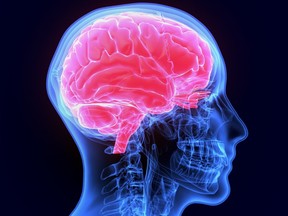
Fernandez and his colleagues point to a body of research showing that older adults’ brains rely less on the hippocampus, which is responsible for forming and recalling new memories, including details like names and places and spatial navigation.
By signing up you consent to receive the above newsletter from Postmedia Network Inc.
Article content
Advertisement 3
Article content
Instead, during memory tasks, older brains are relying more on the frontal cortex, the area associated with higher-level thinking and synthesizing information.
Some scientists have argued that aging brains rely on the cortex to compensate for decline in the hippocampus, which shrinks over our lives. But Fernandez offers a different theory: In later adulthood, we need wisdom more than we need to retain every new detail we come across.
“It’s this ability to melt away that which does not matter and get to the essence of an issue,” Fernandez said.
Other research has suggested that healthy aging could be simply another phase of the brain’s development, bringing new strengths and weaknesses. Children, for instance, have an extraordinary ability to learn language but might have more difficulty than adults with emotional regulation and impulse control. For someone in their 70s, 80s or older, it might be helpful to focus less on memorizing minutiae and more on understanding a bigger picture.
Advertisement 4
Article content
A takeaway for older adults is that memory changes might be beneficial in later phases of life, according to Daniel Nation, a professor of gerontology and neurology at the University of Southern California who was not involved in the study.
“There may be some cognitive benefits to older adults that come from cognitive changes we normally think of as purely negative,” Nation said of the new paper.
He noted the “grandmother hypothesis,” a theory about the wisdom and perspective of older members of the community when it comes to making decisions and imparting knowledge to younger people.
“I think it’s provocative,” said Patricia Reuter-Lorenz, a professor of psychology and neuroscience at the University of Michigan who conducted some of the studies cited in the new paper.
“It’s taking a new step that’s building on ideas that have been in the literature on aging for several decades, including the idea that aging involves adaptive processes,” she said.
Advertisement 5
Article content
Reuter-Lorenz’s work has pointed to older adults using their frontal cortex to compensate for the weakening of the hippocampus. But she said she is interested in the silver linings of old age and is currently studying emotion later in life.
She said her work is “trying to understand the tendency for older adults to have a more positive outlook and better emotion regulation.”
It is advancing existing research showing that older adults tend to focus more on the positive aspects of a situation, and remember them more than negative ones.
Both Reuter-Lorenz and Fernandez say the idea of brain aging as an adaptive phase more than a declining one needs more study.
Regardless of whether scientists believe that the older brain is adapting to a new phase of life or compensating for decline, they suggest that there are ways we can all age better.
In Fernandez’s paper, he and his colleagues write that older people who “engage in lifelong learning, complex occupations, or high social activity” tend to have more flexible brains. That means they can continue to navigate complicated tasks even as the hippocampus shrinks.
Advertisement 6
Article content
Reuter-Lorenz agreed that lifestyle factors are key.
“Solid fitness, a good diet and sleep are all very important. And maintaining an active social network and cognitive engagement,” she said. “Those are the pillars.”
Reuter-Lorenz also emphasized that the upsides of aging should continue to be acknowledged by researchers, especially since having a positive view of aging seems to help people age better.
“There are treasures in aging that can be cherished,” Reuter-Lorenz said. “And that may only come with age.”
For more health news and content around diseases, conditions, wellness, healthy living, drugs, treatments and more, head to Healthing.ca – a member of the Postmedia Network.
Article content




























 Bengali (BD) ·
 English (US) ·