.png)
 1 hour ago
9
Article content
When the Accord failed, the Mulroney government instead signed an agreement granting immigration powers to Quebec and no one else.
Article content
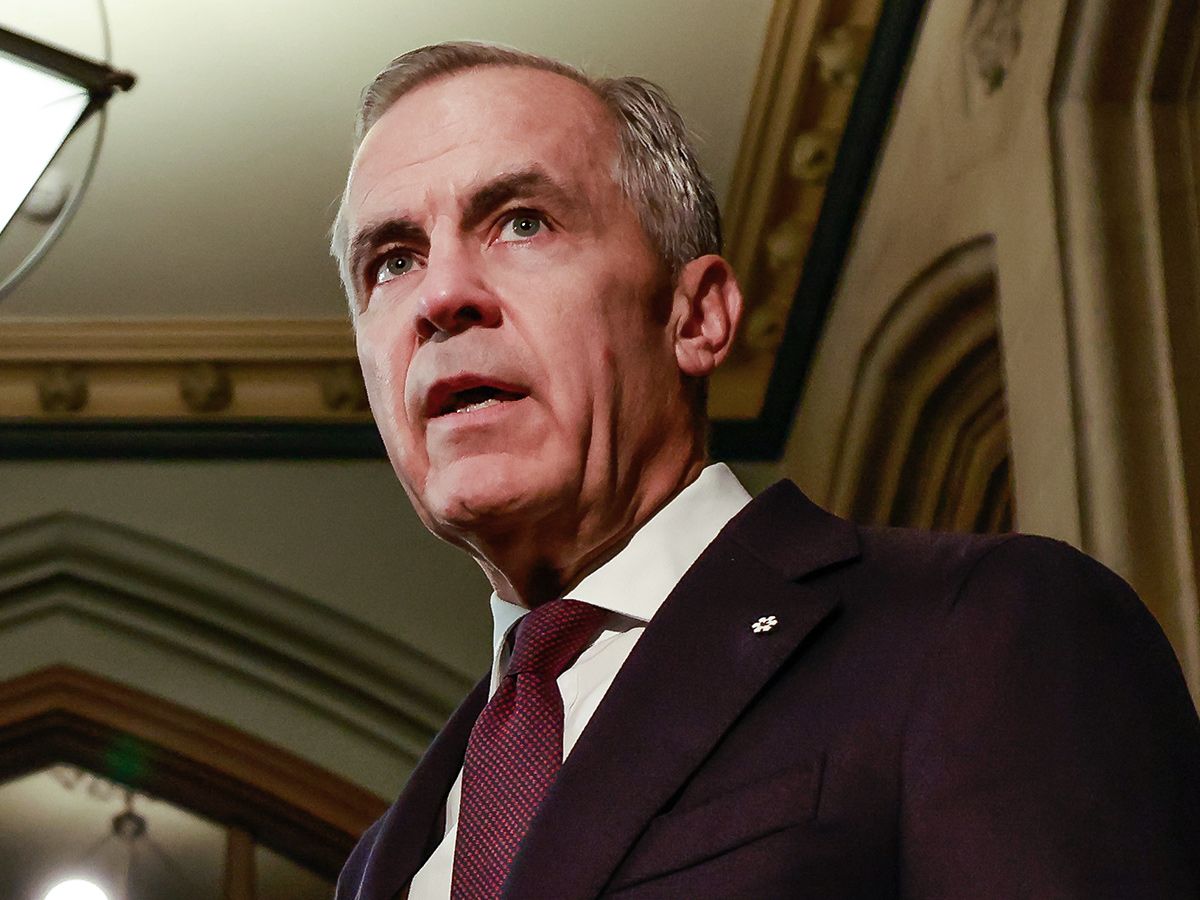
On Wednesday, Carney didn’t immediately reject the idea that a similar accord could be struck with Alberta. “We’ll see,” was what he told reporters outside a Parliament Hill caucus meeting, before adding that “Quebec is distinct.”
Article content
At a press conference in Kitchener, Ont., last week, Immigration Minister Lena Diab confirmed rumours that her government was planning to raise immigration levels from their current rate.
Article content
“We have an ambitious agenda. We are going to want to drive growth. We do need people,” she said.
Article content
This was in addition to comments made by Carney in a Sept. 27 New York Times interview where he expressed an intention to “resume some controlled increase in the population, which is the nature of Canada.”
Article content
The Carney government has consistently claimed that it has brought immigration levels “under control” following the record migration surges that characterized the final years of Carney’s predecessor, Justin Trudeau.
Article content
Advertisement 3
Article content
In just the three years between 2022 and 2025, Statistics Canada tracked an influx of 2.8 million people — a rate of migrant intake well beyond any other country in the OECD.
Article content
And as has been documented by analysts such as the Bank of Canada, the surge mostly broke with the Canadian pattern of predominantly admitting high-skilled economic immigrants.
Article content
This wave, by contrast, was mostly low-skilled, lightly vetted migrants who entered the country on temporary status. “Not only has Canada experienced an unprecedented surge in immigration, but the composition of recent newcomers has been markedly different than in the past,” reads one Bank of Canada analysis from March.
Article content
Canada’s population growth has indeed dropped to historic lows under Carney, largely because of sharp reductions in international student admissions. In 2025, overall population grew by just 0.5 per cent.
Article content
But these reductions are mostly still a comedown from the post-COVID peaks, as immigration still remains at record highs as compared to the pre-COVID normal.
Article content
In 2019, Canada admitted 341,180 permanent residents and had a non-permanent resident population of about 1.3 million.
Article content
Advertisement 4
Article content
This year, even after the Carney government’s reductions, Canada is slated to bring in 380,000 permanent residents, while the population of non-permanent residents stands at about 2.8 million.
Article content
Last week, Immigration, Refugees and Citizenship Canada announced that it would be waiving a requirement for employers to prove that they had offered a high-skilled job to a Canadian before offering it to a foreign national.
Article content
Previously, any employer looking to bring in foreign labour under one of two high-wage, high-skilled immigration streams had to first file a labour market impact assessment proving that no Canadian was available to do the job.
Article content
This requirement is now waived, although it remains in place for lower-skilled positions, such as those granted via the Temporary Foreign Worker Program.
Article content
Wrote IRCC in a statement, “this change will make the process simpler and more efficient for candidates and employers.”
Article content
IN OTHER NEWS
Article content

Article content
There are plenty of Canadian elections that have been swayed by the United States, but the Americans may be in the late stages of an election for which the precise opposite will be true.



























 Bengali (BD) ·
 English (US) ·