.png)
 2 hours ago
12
Article content
B.C. NDP candidate Niki Sharma’s 2018 tweet lamenting the “unbearable whiteness” of British Columbia’s elected leaders has circulated widely as the province heads into a snap election on Oct. 24. The comment was not an isolated slip. It reflect a longstanding NDP approach to the legal status of the province itself.

THIS CONTENT IS RESERVED FOR SUBSCRIBERS
Enjoy the latest local, national and international news.
- Exclusive articles by Conrad Black, Barbara Kay and others. Plus, special edition NP Platformed and First Reading newsletters and virtual events.
- Unlimited online access to National Post.
- National Post ePaper, an electronic replica of the print edition to view on any device, share and comment on.
- Daily puzzles including the New York Times Crossword.
- Support local journalism.
SUBSCRIBE FOR MORE ARTICLES
Enjoy the latest local, national and international news.
- Exclusive articles by Conrad Black, Barbara Kay and others. Plus, special edition NP Platformed and First Reading newsletters and virtual events.
- Unlimited online access to National Post.
- National Post ePaper, an electronic replica of the print edition to view on any device, share and comment on.
- Daily puzzles including the New York Times Crossword.
- Support local journalism.
REGISTER / SIGN IN TO UNLOCK MORE ARTICLES
Create an account or sign in to continue with your reading experience.
- Access articles from across Canada with one account.
- Share your thoughts and join the conversation in the comments.
- Enjoy additional articles per month.
- Get email updates from your favourite authors.
THIS ARTICLE IS FREE TO READ REGISTER TO UNLOCK.
Create an account or sign in to continue with your reading experience.
- Access articles from across Canada with one account
- Share your thoughts and join the conversation in the comments
- Enjoy additional articles per month
- Get email updates from your favourite authors
Sign In or Create an Account
or
Article content
NDP politicians have long used Aboriginal land claims to make British Columbians pay for yesterday’s colonial grievances. The story begins with the first land claim to test British Columbia’s legal foundations.
Article content
Article content
Advertisement 1
Article content
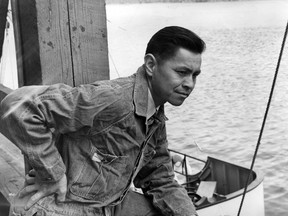
It was launched by Frank Calder, who was not only a former chief of the Nisga’a but also an MLA who served with the NDP and its predecessor, the Co-operative Commonwealth Federation. Calder’s claim failed. Three of seven justices found that while Aboriginal title existed, it had been extinguished in this case. A fourth judge dismissed the appeal on a procedural technicality.
Article content
By signing up you consent to receive the above newsletter from Postmedia Network Inc.
Article content
In 1991, Allan McEachern, then-chief justice of the Supreme Court of British Columbia, denied the next major land claim, brought by the Gitxsan and Wet’suwet’en nations in Delgamuukw v British Columbia. He again found that Aboriginal interests in land had clearly and plainly been extinguished when British Columbia entered Confederation.
Article content
But by the time the appeal was heard, Premier Mike Harcourt’s NDP had taken power from Social Credit. Under Attorney General Colin Gabelmann, lawyers were instructed to reverse the province’s position and argue that Aboriginal rights had not actually been extinguished. In 1997, the Supreme Court of Canada ordered a new trial, while setting the standard for determining Indigenous rights to claimed territories. Aboriginal title, a new set of undefined Indigenous property and governance rights, was born.
Article content
Advertisement 2
Article content
The addition of Aboriginal rights within Section 35 of the Constitution Act, 1982, lifted these newfound rights beyond the reach of the notwithstanding clause and allowed the courts to repeatedly expand the scope of Aboriginal title, with or without the assistance of elected governments.
Article content
Article content
They have done so repeatedly. In 2004, the Supreme Court ruled in Haida Nation v British Columbia that governments must consult and accommodate Indigenous groups with credible but unproven title claims. Mikisew Cree First Nation v. Canada followed in 2005, extending those obligations to bands that had surrendered their claims through historic treaties.
Article content
The practical consequences have been substantial. The Trans Mountain pipeline expansion, originally budgeted at $5.4 billion, ultimately cost $34 billion and took 12 years to complete. The federal government was forced to nationalize the project to bring it into service. Comparable delays and cost overruns have affected resource projects of every scale throughout the province, driven in large part by the consultation and accommodation obligations created by post-Delgamuukw jurisprudence.

























 Bengali (BD) ·
 English (US) ·