.png)
 2 days ago
8
2 days ago
8
Anime has given us plenty of unforgettable places, but a memorable location needs more than a cool skyline. The greatest ones become part of the story itself: they shape characters, host turning-point battles into some of the best battle scenes, carry their own history, and develop a visual identity fans can recognize in seconds. Some feel like home; others feel like beautiful places you absolutely should not visit after sunset.
This ranking considers each location’s narrative importance, world-building, cultural footprint, and lasting connection to its franchise. And yes, a few technically aren’t cities at all, but their impact is far too massive to leave them off the map.
6 Ecruteak City Has Pokémon’s Most Mysterious Old-School Charm
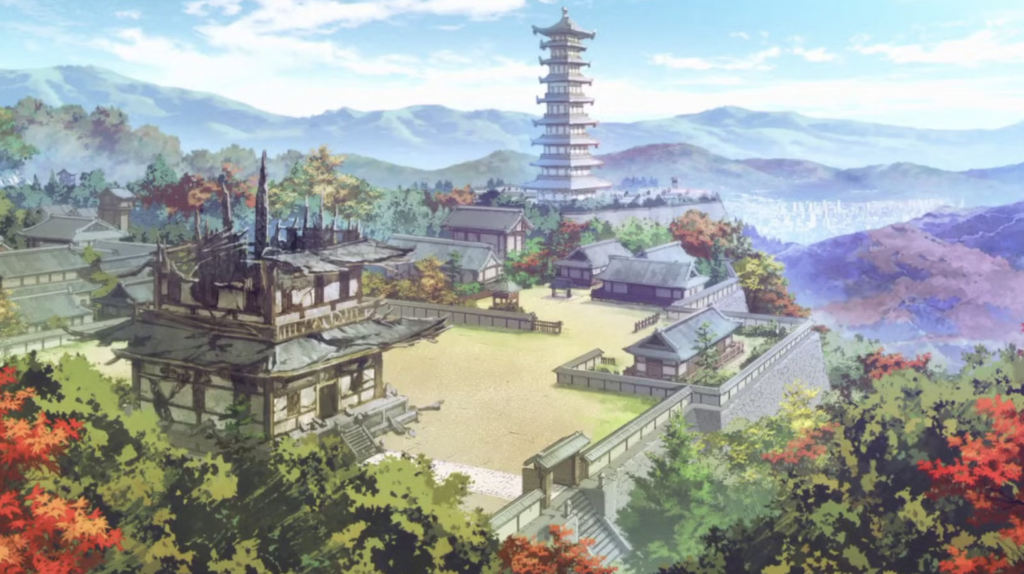 Ecruteak City from Pokémon. [Credit: OLM]
Pokémon‘s Ecruteak City may be quieter than the other entries, but its atmosphere is practically dripping with history. Located in Johto, it is built around traditional Japanese-style architecture and landmarks, including the Bell Tower and Burned Tower. Its mythology goes much deeper: the twin towers were constructed centuries ago, and the destruction of one is tied to Ho-Oh and the origins of Raikou, Entei, and Suicune.
The anime also uses Ecruteak’s towers and legends, including encounters involving Ash, Morty, and Ho-Oh. It ranks sixth because its story footprint is smaller than the locations above, but few Pokémon locations have such a distinctive spiritual identity.
5 Alubarna Proves One Piece Cities Can Be Just as Epic as Its Pirates
 Alubarna City from One Piece. [Credit: Toei Animation]
Alubarna, the capital of the Alabasta Kingdom, gets one of One Piece‘s most emotionally loaded city arrivals. Built around a massive elevated rock, its circular layout, royal palace, and clock tower give the capital a distinctive desert-fantasy identity. More importantly, the city becomes the endpoint of Vivi’s desperate attempt to stop a civil war engineered by Crocodile.
The Straw Hats race there as the Royal Army and rebels prepare for battle, while Vivi desperately tries to make both sides listen. The palace, plaza, and clock tower become pieces of the climax, making Alabasta memorable not simply as scenery but as the physical heart of the Alabasta conflict.
4 Orario Is DanMachi’s Labyrinth City Where Gods Meet Adventurers
Orario is the beating heart of DanMachi, a vast city built around the Dungeon that draws adventurers, gods, and monsters into the same dangerous ecosystem. Its defining landmark is the Babel tower, constructed above the Dungeon’s entrance, while the city’s different districts reflect the enormous adventurer economy surrounding it.
Bell Cranel arrives in Orario dreaming of becoming a hero, and his adventures quickly connect him to Hestia, the Loki Familia, the Freya Familia, and countless other residents. The city’s unique blend of divine politics, guild business, and Dungeon exploration gives it a world-building depth that earns it the #4 spot, even if its emotional legacy is still growing.
3 Magnolia City Is the Chaotic Fairy Tail City We’d Happily Move Into
 Magnolia from Fairy Tail. [Credit: A-1 Pictures, Dentsu Entertainment, and Satelight]
Magnolia is practically Fairy Tail‘s second protagonist. It is home to the Fairy Tail guild, meaning Natsu, Lucy, Gray, Erza, and their fellow troublemakers repeatedly return to its streets between adventures. The city also proves that being home does not mean being safe: Alvarez’s invasion turns Magnolia into a battlefield, while later events show the guild rebuilding after devastating destruction.
That connection between ordinary community life and absurd magical chaos gives Magnolia a warmth many fantasy settings lack. Konoha carries a larger generational legacy, but Magnolia wins its place this high because Fairy Tail repeatedly makes the city feel like the place its characters are fighting to come home to.
2 The Walls of Attack on Titan Hide a City Built on Fear
 Shiganshina District from Attack on Titan. [Credit: Wit Studio]
Attack on Titan deliberately makes its urban settlements feel like cages. Rather than one conventional city, humanity’s society is spread across districts and settlements protected by Walls Maria, Rose, and Sina. Shiganshina becomes synonymous with catastrophe after the Colossal Titan breaches Wall Maria, while Trost turns into the battlefield where Eren’s Titan power first changes humanity’s chances of survival.
Later, the Underground and the royal capital reveal that danger exists both outside and inside the Walls. That layered geography gives the setting enormous narrative weight: every gate, district, and wall represents safety that can disappear in seconds.
1 Konoha Is Naruto‘s Ninja Village That Practically Raised a Generation
Naruto‘s Konohagakure, or the Hidden Leaf Village, is technically a shinobi village, but few anime locations have become this inseparable from their series. The caveat being that in the Naruto universe, major shinobi villages function as fully realized city-states in every sense, even if the series uses the traditional title of ‘village’. Konoha was founded by Hashirama Senju of the Senju Clan and Madara Uchiha as a new model for ninja society.
It is Naruto’s home, Sasuke and Sakura’s home, and the stage for everything from the Chunin Exams to Orochimaru’s invasion and Pain’s devastating assault. Even its landmarks, like the Hokage Monument, village gates, training grounds, and Ichiraku, are instantly recognizable. More importantly, Konoha evolves alongside its characters, making it feel less like a backdrop and more like another member of Team 7.
Which fictional anime city or location would you actually live in, and which one did we miss? Comment below!



























/https%3A%2F%2Fsportsmole-media-prod.s3.gra.io.cloud.ovh.net%2Fuploads%2F2026%2F08%2Faaa-tonali-6a90726542bfb856302507.jpg)
/https%3A%2F%2Fsportsmole-media-prod.s3.gra.io.cloud.ovh.net%2Fuploads%2F2026%2F01%2Fsm-azzuu-doku-city-697cbbe40795a441463276.jpg)
 Bengali (BD) ·
  English (US) ·