.png)
 1 week ago
21
1 week ago
21
Horror as a genre has produced many standalone wonders, but when they are stretched into a franchise, things get dicey. To effectively tell a great story that continues either narratively or thematically, the OG director’s vision must remain intact, along with why the audience loved it in the first place. Whether it’s zombie films or cinema entering the realm of the unknown cosmos, time has shown us that horror trilogies can have a lasting impact.
We’ve compiled a list of such trilogies that prove how wonderful the genre is in telling a story about the human condition through the lens of supernatural beings or downright campy stuff. From the twisted mind of the Terrifier movies, all the way back in time to the start of the undead cinema phenomenon, here are the ten greatest horror movie trilogies of all time, ranked based on impact and storytelling.
10 Terrifier Trilogy
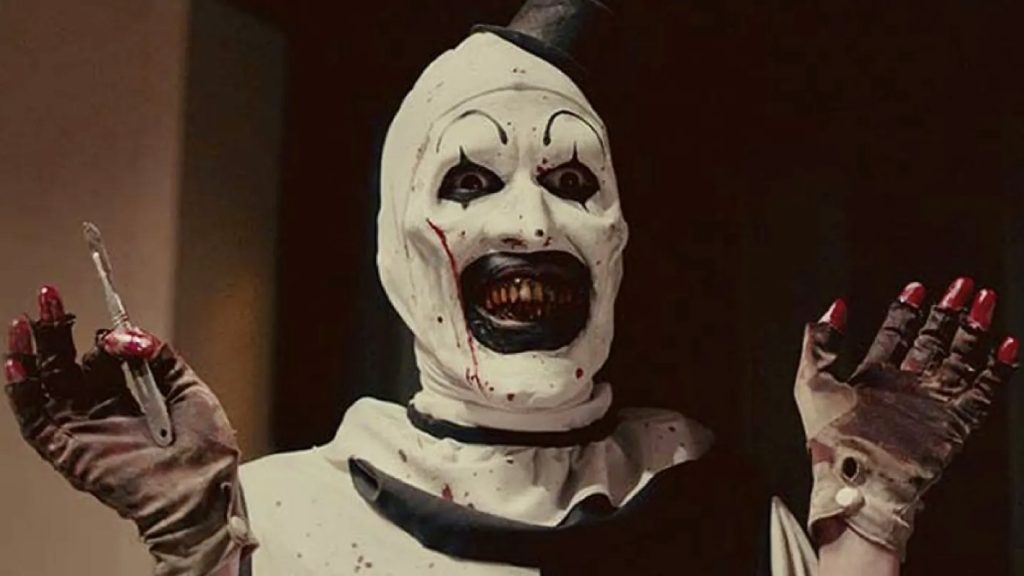 A still from Terrifier 3 | Cineverse Corp.
Art the Clown terrorized three films in the Terrifier trilogy, going from a campy B-grade movie to completely embracing it by doubling down. The indie scene was truly revitalized with practical gore effects so absurd that fans of the genre had a great time seeing the grindhouse aesthetic modernized. With each movie, the trilogy only got better and better, constantly testing the endurance of the audience without compromising on quality and effects.
The trilogy sits at the bottom for being thin on narrative elements, lacking any depth compared to all the other movies on this list. This does not mean the trilogy is bad, and it rightfully earns the #10 spot in the greatest horror movie trilogies of all time. FandomWire’s Sean Boelman highlights in his review that the third film continued to be “unhinged and fun.”
Where to watch (USA): Prime Video
9 The X Trilogy
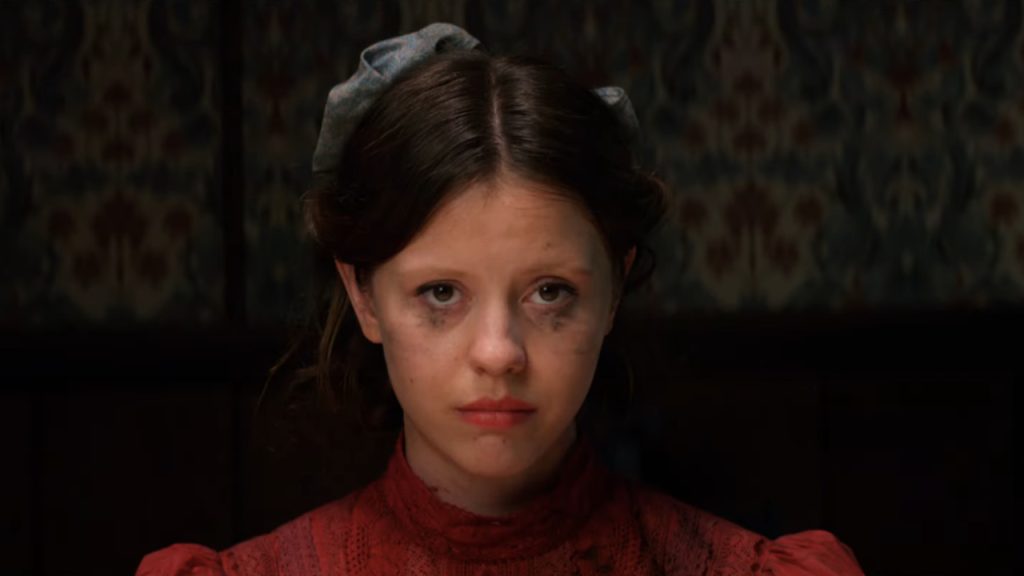 A still from Pearl | A24
The X trilogy is Ti West’s gift to the world: X, Pearl, and MaXXXine. Starring Mia Goth, who also co-wrote Pearl, the trilogy showcases the actor playing multiple roles across different generations. Thematically exploring the pursuit of stardom and the anxieties of aging, the movies successfully cement Goth as a modern scream queen through her powerhouse performances. Each film is vibrant in its own way, with unique color grading and storytelling elements in the slasher genre.
The trilogy sits at #9 for closing out the trilogy in a lukewarm manner, as reviewed by FandomWire’s Matt Hambidge. While the first two movies were absolutely fantastic, fans were disappointed by the highly anticipated MaXXXine, which fell flat in terms of the quality of the script. That doesn’t mean Mia Goth isn’t fantastic in it.
Where to watch (USA): Prime Video (rent)
8 Fear Street Trilogy
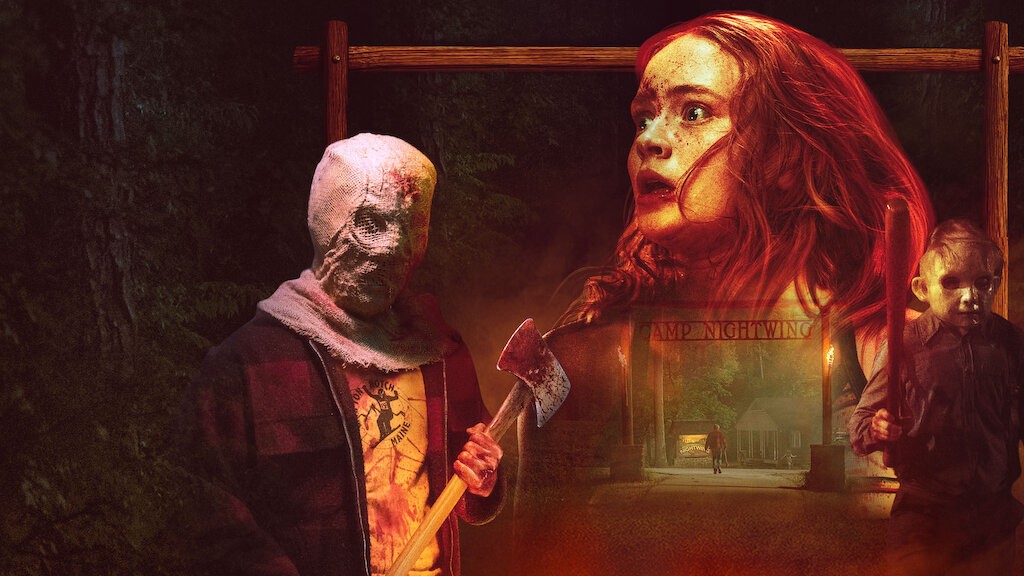 A still from Fear Street Part Two: 1978 | Netflix
Based on the beloved Goosebumps author R. L. Stine’s work, the Fear Street trilogy consists of films told across three timelines: 1994, 1978, and 1666. Released entirely on streaming, the films treat audiences to the good old nostalgic traps of our childhood, reminding us exactly why we loved Stine’s books. The movies do a great job adapting the author’s vision, and if you read the books as a child, the trilogy is sure to evoke fond memories of a lost time.
The trilogy sits at #8 and not higher because it did not add to cinema the way the other films ranked higher did. With wonderful characters and strong R-rated gore, the execution is great from start to finish, but it banks on the classics that came before it.
Where to watch (USA) : Netflix
7 The Re-Animator Trilogy
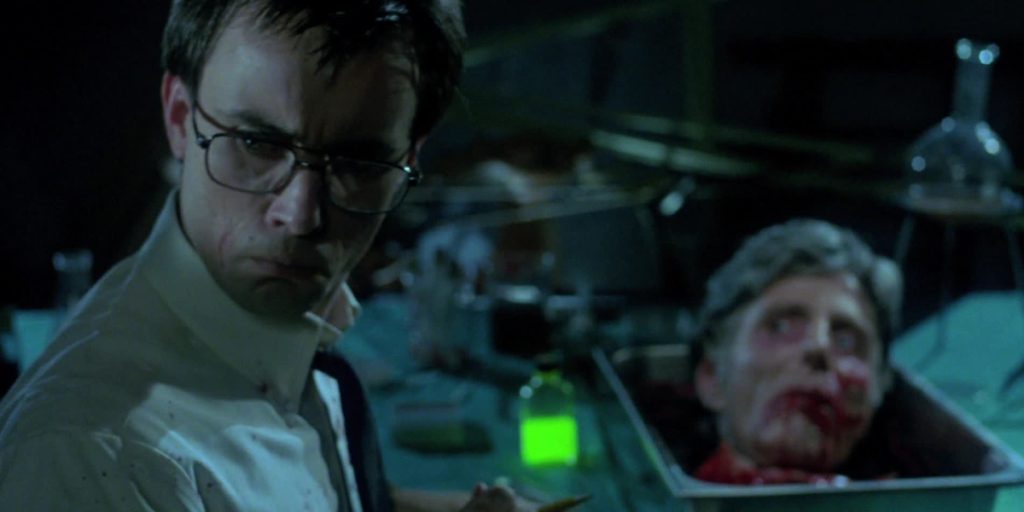 A still from Re-Animator | Empire Pictures
Stuart Gordon and Brian Yuzna’s Re-Animator, Bride of Re-Animator, and Beyond Re-Animator fundamentally changed body horror cinema for the better. An ultimate triumph of camp (depends on how you look at it), the movies are loosely based on cosmic horror pioneer Lovecraft’s works. This trilogy arguably pushed the subgenre into B-grade territory for better or for worse.
The argument for better can be made by seeing how much fun the movies have with their absurd plots, while an argument for worse can be made for taking thematically rich stories and diluting them. Sitting at #7, the trilogy does a great job of balancing comedy with horror, but often loses the plot for the sake of it.
Where to watch (USA) : Prime Video (rent)
6 A Quiet Place Trilogy
John Krasinski began a trilogy of movies that were a blessing in modern horror cinema. A Quiet Place rightfully earns a spot in this list for prioritizing the story of the family as the basis for why you’re so invested in the scary alien setting. Krasinski proved he’s a great director with A Quiet Place and A Quiet Place Part II. The spinoff Day One tells its own tale with its own characters, without compromising on the vision that humanity comes first and not just sci-fi scares. FandomWire’s Richard Valero called the latter film “a moving summer blockbuster” in his review.
A Quiet Place trilogy comfortably sits at the midway #6 spot, bridging the gap between modern horror and classic horror. From a filmmaking POV, this also makes sense. The franchise is inspired by the sci-fi classics that came before it while standing its own ground during the modern elevated horror movement.
Where to watch (USA) : Paramount Plus
5 Ridley Scott’s Alien Trilogy
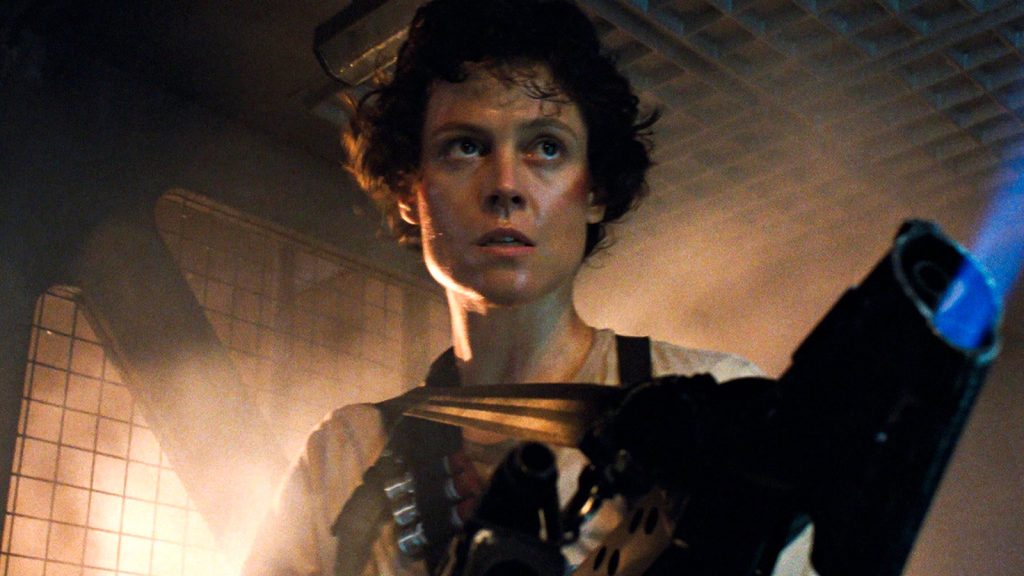 A still from Alien | 20th Century Fox
Whether you like his new work or not, Ridley Scott changed what it meant to make science fiction films. The Alien franchise by the director has gone from the 70s to the 2010s: Alien, Prometheus, and Alien: Covenant. The trio of films explores different subgenres of horror storytelling, including cosmic horror, sci-fi thriller, and the trapped-in-space-with-an-alien trope. Stylistically derived from H.R. Giger’s work, the movies’ creature design is enough to traumatize anybody by its psycho-s*xual nature.
The trilogy breaks into the top 5 for its immense contribution to cinema, despite missing the mark occasionally. While the movies are dense in rich storytelling and visuals, certain character choices or narrative arcs can feel redundant. The final Alien: Covenant film is relatively lukewarm but makes up for it with brilliant performances and effects.
Where to watch (USA): Hulu
4 The Three Mothers Trilogy
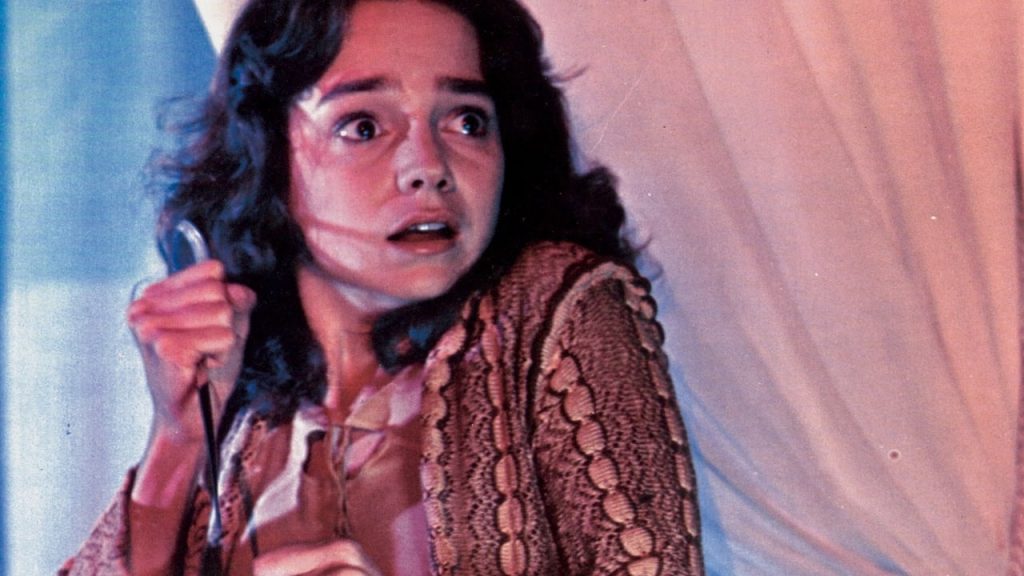 A still from Suspiria | International Classics
There is just way too much to discuss when it comes to the beautiful and intoxicating Three Mothers trilogy by Dario Argento: Suspiria, Inferno, and The Mother of Tears. Argento’s style is a signature power move, capable of inducing terror with a sensory overload of bold colors and harsh lighting. We don’t get the usual flavor of gray, dimly lit horror, as Argento instead chooses to reflect the protagonists’ chaotic mindsets through carefully curated, vibrant environments.
With rich mythology, the trilogy confidently comes in at #4 for changing world cinema, with Suspiria being one of the greatest movies of all time. The only thing holding it back from moving into the top three is that the dreamy and colorful worlds can take away from the horror in favour of style. Make no mistake, the narrative and sound/music are terrifying, and you will walk away wondering what the hell you saw.
Where to watch (USA): Prime Video (rent)
3 John Carpenter’s Apocalypse Trilogy
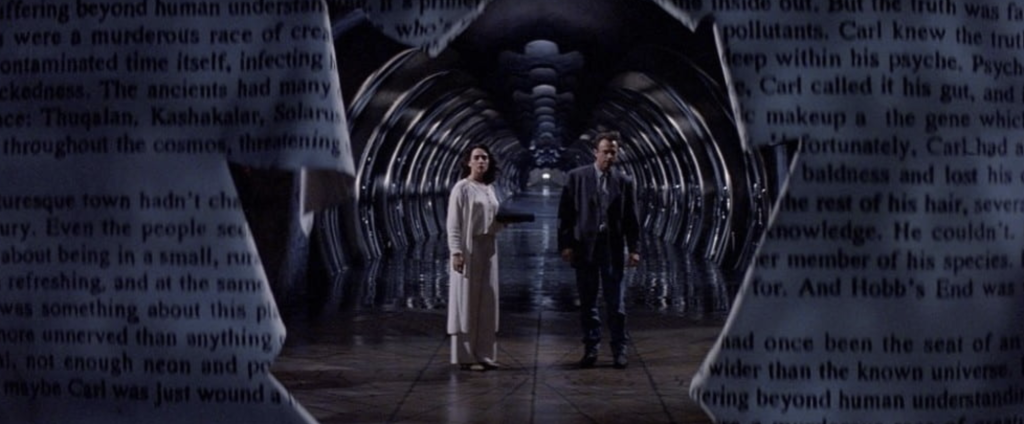 A still from In the Mouth of Madness | New Line Cinema
Breaking into the #3 spot is John Carpenter’s Apocalypse trilogy: The Thing, Prince of Darkness, and In the Mouth of Madness.. There is something to be said about a director’s ability to turn the unimaginable into effective, visceral horror that also remains timeless. Heavily inspired by the works of Lovecraft, Carpenter goes ham on all the various themes that the author pioneered, specifically cosmic and body horror through the lens of the unknown.
This trio of films will leave you pondering the universe long after the credits roll, perfectly encapsulating the bleak viewpoint of nihilism that skeptics have with regard to an indifferent universe. An antithesis to religion but also an allegory for it, the movies have their fair share of primordial beings, cults, and monsters.
Where to watch (USA): Prime Video
2 Romero’s Dead Trilogy
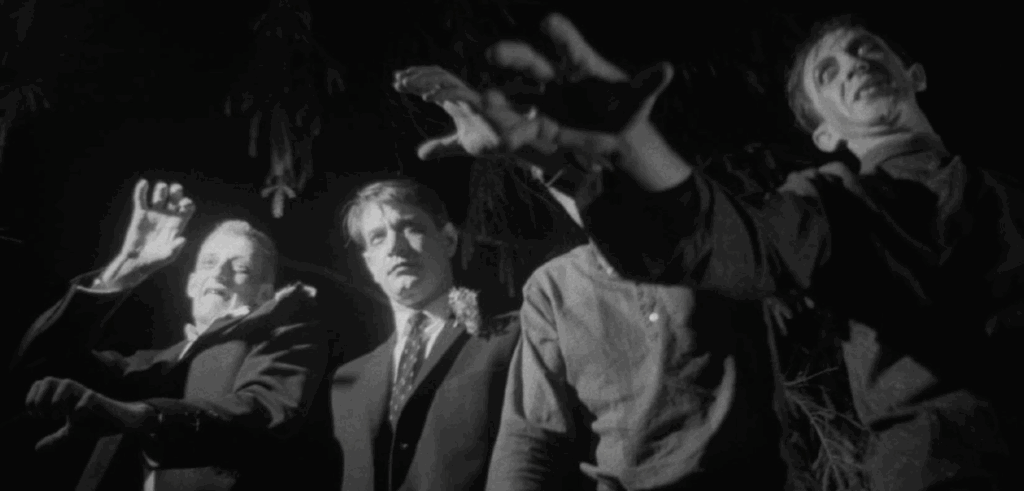 A still from Night of the Living Dead | Continental Distributing
It’s easy to say that George A. Romero laid the foundation for the zombie genre in 1968 with Night of the Living Dead. From the slow, brain-dead walk and the survival storytelling, the trilogy of films remains timeless for their striking use of shadows and practical effects before CGI was a thing. We recommend watching a good restoration of the films for the full experience.
The trilogy takes the #2 spot for going beyond just zombie survival, simultaneously critiquing American society with its political allegories. Arguably one of the best examples of horror-as-social-commentary, Romero’s films still influence modern filmmakers like Guillermo del Toro and Jordan Peele.
Where to watch (USA): Hulu
1 The Evil Dead Trilogy
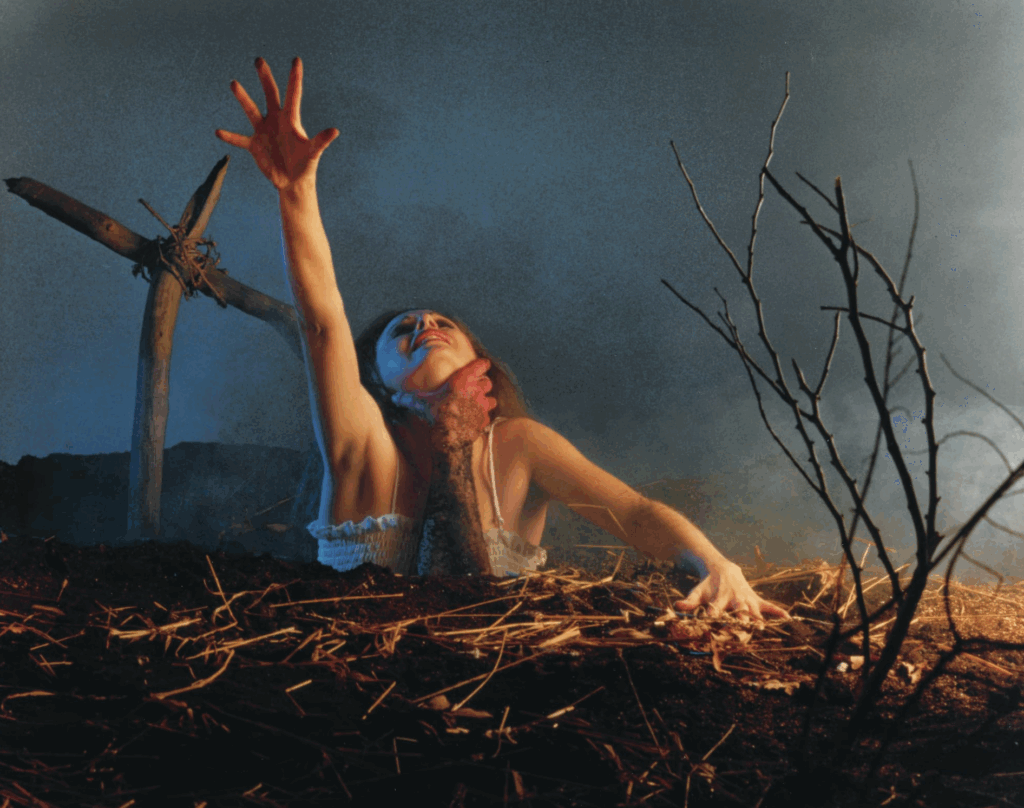 A still from The Evil Dead | New Line Cinema
We now come to the greatest horror trilogy of all time: The Evil Dead, Evil Dead II, and Army of Darkness. Sam Raimi remains an active, massively successful director in modern cinema, but if you look back in time, you’ll find that he took the demonic possession/zombie genre and flipped the script entirely. Filmed on extremely low budgets, the premises go from the cabin-in-the-woods to the realm of time travel. All this happens without the trilogy losing the Raimi flavour.
Sitting atop the hill at the coveted #1 spot, Sam Raimi deserves to be known as more than just the director of the Spider-Man films. He revolutionized the way horror filmmaking can be done, while introducing the iconic Bruce Campbell to the world. The movies shift genres so seamlessly that you can tell how much love was poured into the script. Raimi inspired an entire generation of filmmakers, telling them that you can tell the best stories and you only need a camera.
Where to watch (USA): HBO Max
Here is a summary of the trilogies discussed.
| 10 | Terrifier Trilogy | Terrifier, Terrifier 2, Terrifier 3 |
| 9 | X Trilogy | X, Pearl, MaXXXine |
| 8 | Fear Street Trilogy | Fear Street Part One: 1994, Fear Street Part Two: 1978, Fear Street Part Three: 1666 |
| 7 | Re-Animator Trilogy | Re-Animator, Bride of Re-Animator, Beyond Re-Animator |
| 6 | A Quiet Place Trilogy | A Quiet Place, A Quiet Place Part II, A Quiet Place: Day One |
| 5 | Ridley Scott’s Alien Trilogy | Alien, Prometheus, Alien: Covenant |
| 4 | Three Mothers Trilogy | Suspiria, Inferno, The Mother of Tears |
| 3 | John Carpenter’s Apocalypse Trilogy | The Thing, Prince of Darkness, In the Mouth of Madness |
| 2 | Romero’s Dead Trilogy | Night of the Living Dead, Dawn of the Dead, Day of the Dead |
| 1 | The Evil Dead Trilogy | The Evil Dead, Evil Dead II, Army of Darkness |
What is your favourite horror trilogy? Let us know in the comments.




















/https%3A%2F%2Fsportsmole-media-prod.s3.gra.io.cloud.ovh.net%2Fuploads%2F2026%2F07%2Fdaniel-mcgregor-huyer-zuma-press-wire-luciano-gonzalez-anadolu-abacapress-com-estadio-azteca-harry-kane-jude-bellingham-composite-6a49eb8857b70695441164.png)
 Bengali (BD) ·
  English (US) ·