.png)
 1 hour ago
11
1 hour ago
11
Spoiler Alert !!!
This article discusses major plot details and the ending of Christopher Nolan's The Odyssey.
Athena is the ghost haunting The Odyssey, and she isn’t a goddess at all. She’s a woman Odysseus watched die. In the 3 hours (almost) of the film, Christopher Nolan allows us to believe that we’re witnessing the patron goddess of Homer helping her favorite hero make his way home, silver-eyed wisdom and divine favor shining through. But towards the end of the movie, it becomes clear that the face that Odysseus (Matt Damon) has been imagining belongs to the priestess who was murdered before his very eyes at the fall of Troy; proof that all there is to this tale is guilt.
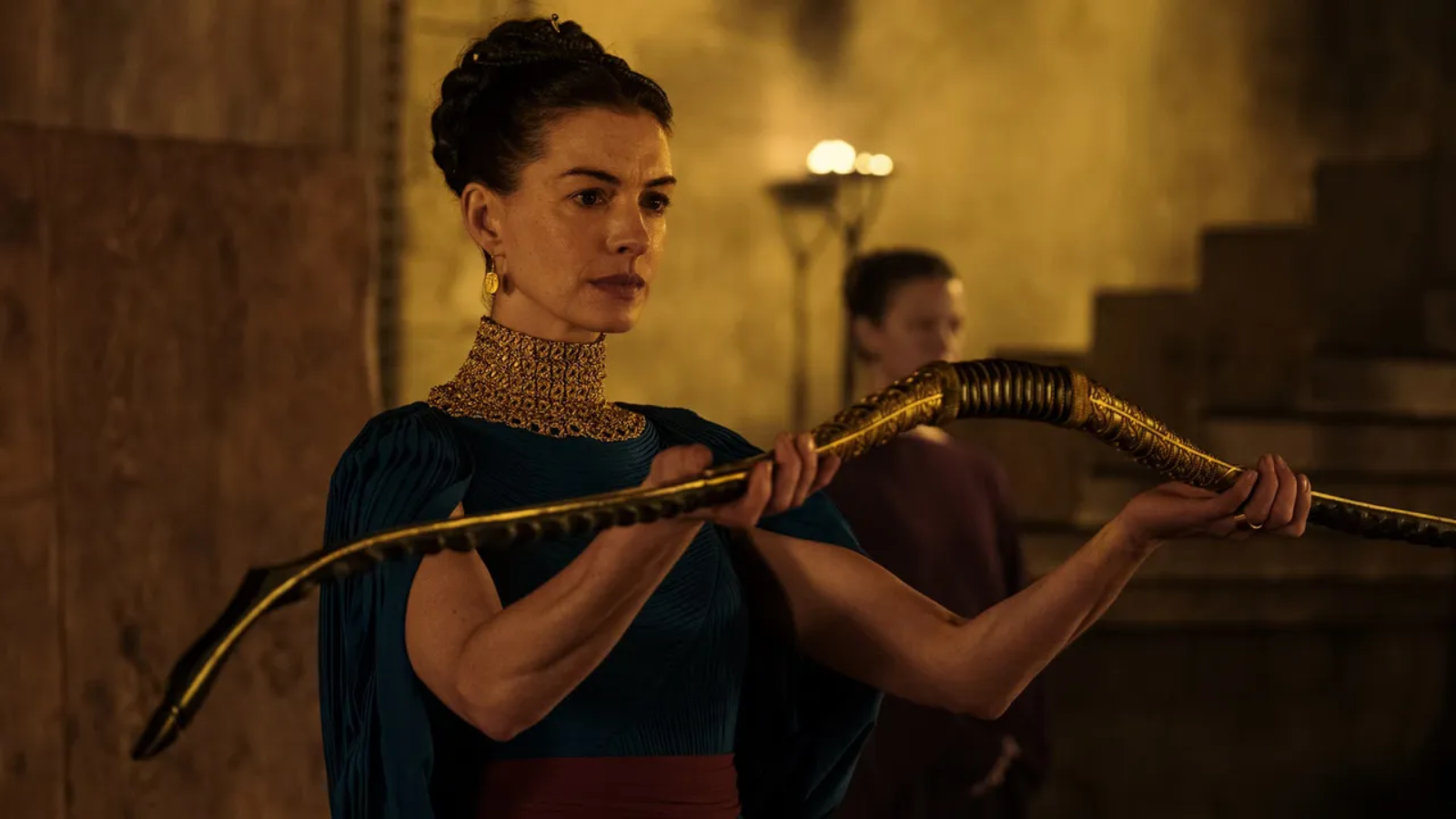
And that is precisely what this film comes down to: in Nolan’s vision of Odysseus, the journey that he took never mattered one bit. This is ironic, considering the word ‘odyssey’ has come to signify epic journeys. Anyway, Odysseus does return sort of like Homer described: dressed like a beggar, stringing the bow, shooting an arrow through twelve axe-heads, killing off the suitors, reclaiming Penelope (Anne Hathaway), and crowning his son Telemachus (Tom Holland) in his stead. The question that Nolan is posing is whether the man who shattered the world to fight the war had the right to come home as the gods had promised him. And the answer that Nolan gets amidst the fall of Troy and the sailing of a ship into disappearing light is that coming home was not even the point.
Quick reference:
| Title | The Odyssey |
| Director | Christopher Nolan |
| Premise | Based on Homer’s epic poem, the film follows Odysseus’ perilous decade-long journey home to Ithaca after the Trojan War. |
| Cast | Matt Damon, Tom Holland, Anne Hathaway, Zendaya, Lupita Nyong’o, Robert Pattinson, Charlize Theron, Jon Bernthal, Benny Safdie, John Leguizamo, Elliot Page, Mia Goth |
| Release Date | July 17, 2026 |
| IMDb score (as of July 17, 2026) | N/A |
| Rotten Tomatoes Score (as of July 17, 2026) | 96% | 96% |
Athena Was Never in the Room
-

Credits: Universal Pictures
-

Credits: Universal Pictures
-

Credits: Universal Pictures


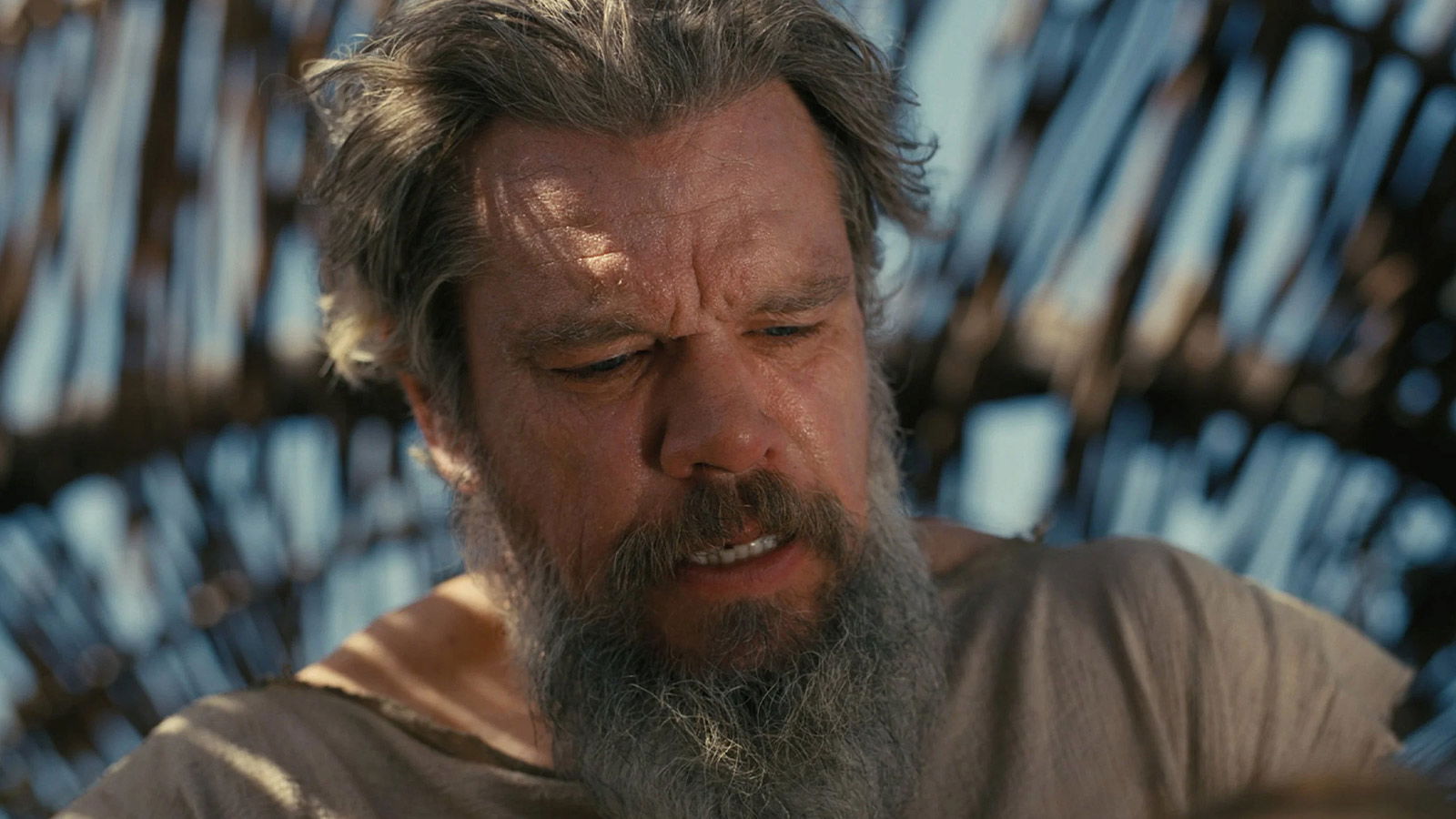
Strip the myth away, and there remains a man recounting his own trauma to himself in the language of his choice. The Athena (Zendaya) of Odysseus in The Odyssey is not the wise strategist of original Homeric epic who whispers battle strategies into his ear; she is the hallucination sewn together from the image of a priestess from Troy who is beheaded in the blood-soaked payoff of the wooden horse, her sacrifice embedded in his consciousness so deeply that he has been for ten years dressing it up as divine companionship.
This is the clearest proof the film provides of its main argument, which states that all the gods in this Odyssey are just coping mechanisms. Poseidon’s curse is the guilt he feels over tormenting Polyphemus for sport.
Nolan’s films have always revolved around men who create architectures that allow them to escape unbearable truths (Cobb and his totem in Nolan’s most perplexing movie, Inception, Oppenheimer and his bomb in Oppenheimer). Odysseus’s Athena is that architecture given a face and a voice. She walks by his side so that he never has to walk alone with what he has done. The fact that the movie chooses to reveal this information at the final stage of the movie makes it more than just a plot twist. It’s sheer structural cruelty to make us spend two hours misunderstanding a man’s remorse and anguish for a goddess’s blessing.
The Suitors Are Not the Real Villains
 Robert Pattinson plays Antinous in Christopher Nolan’s The Odyssey | Credits: Universal Pictures
Yes, Antinous (Robert Pattinson) dies for it, and yes, the killing in Odysseus’s household is staged as the blood payment towards which the entire story has been building up all along. However, Nolan has devoted far more time and energy to condemning the men who have never entered this hall: the army of Agamemnon (Benny Safdie), the “Men from the Sea” attacking the shores of Greece, who actually prove to be the very comrades of Odysseus, who go on plundering even after the victory they have already achieved in their war.
Circe (Samantha Morton) makes her point quite plainly when she transforms his sailors into swine, for it is not so much that she curses them as that she diagnoses their true natures as something which has always been under the guise of violence (“Men are pigs” made suddenly, viciously literal). It is one of the clearest statements of thesis made in the entire film by one of the few characters with no connection to the redemption of Odysseus, and it frames all of the events that follow thereafter: the disease took hold the first time the Trojan horse passed through Troy, and the suitors’ fight over Penelope is merely a symptom of the same malady.
Are the Gods Real in Nolan’s Odyssey?
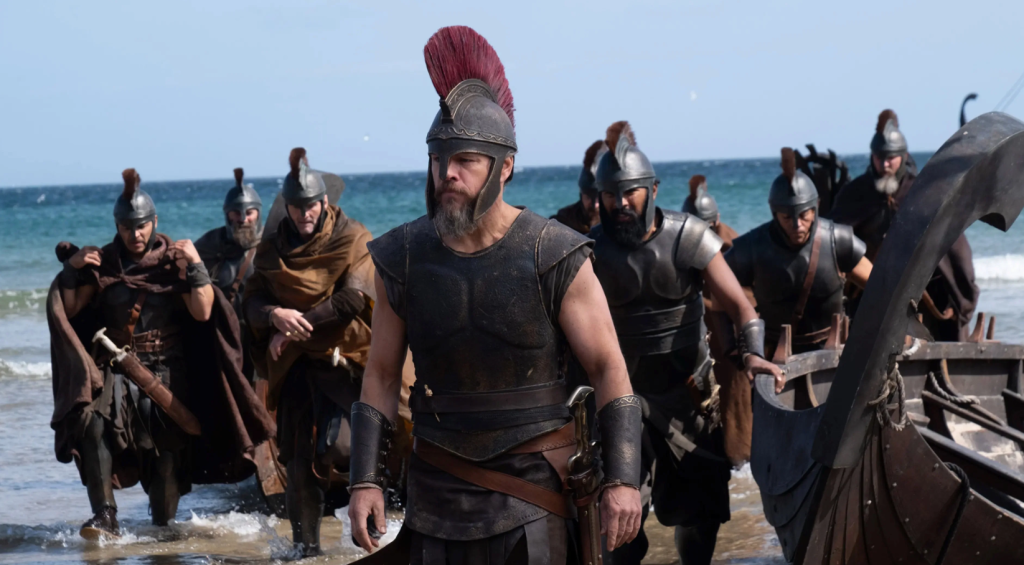 Matt Damon stars as Odysseus in Christopher Nolan’s The Odyssey | Credits: Universal Pictures
Nolan does not give an outright answer to this. The movie has a huge cast, and none of them, really, play any Greek gods. The curse of Poseidon stands for the feeling of guilt in Odysseus. Zeus’s Law appears to be a pact between people to ensure the survival of civilization in general, not something dictated by a deity. In his quest to find the eyes of Athena in his mentors, Telemachus is looking for meaning in a world that no longer provides any. Once the credits roll, the movie has spoken its piece without saying anything: the only influences these characters receive come from inside themselves. And yet, despite any actual divine intervention, the movie somehow captures the epic scale of the source material.
Why Does The Odyssey‘s Bleak Ending Still Feel Warm?
-

Credits: Universal Pictures
-

Credits: Universal Pictures
-

Credits: Universal Pictures


Odysseus does not stick around. He holds to the promise he made to Sinon (Elliot Page), the fallen soldier, to travel westward and commemorate the soldiers who were not laid to rest, while Telemachus takes up the rule which is clearly beyond his father’s reach now. The ending can be interpreted in such a way as to suggest that Nolan is recreating the same ending for Ithaca as he created for Los Alamos in Oppenheimer, where the end is just the first rumble of a dark age coming to civilization.
The film’s rebuttal belongs to Penelope, who insists that the light will come back no matter how often it dies out, and Nolan shows us the final journey in the warmth of golden glow rather than elegiac light, which is the tell. It doesn’t matter to him whether gods exist or not, since he considers their existence to be insignificant anyway; the thing that really does matter is whether the myths will live long enough to give the warning to the following generations; that’s why the movie ends not with Odysseus’ return home, but with the son’s inheritance. In that sense, the movie is not really a Greek mythology movie so much as a war movie that has borrowed the myth’s costume for a while.
What did you make of Christopher Nolan’s take on Athena? Did the twist work for you, or do you prefer Homer’s version? Tell us in the comments.
The Odyssey was released in US theaters on July 17, 2026.




















/https%3A%2F%2Fsportsmole-media-prod.s3.gra.io.cloud.ovh.net%2Fuploads%2F2026%2F07%2Fdaniel-mcgregor-huyer-zuma-press-wire-luciano-gonzalez-anadolu-abacapress-com-estadio-azteca-harry-kane-jude-bellingham-composite-6a49eb8857b70695441164.png)
 Bengali (BD) ·
  English (US) ·