.png)
 2 hours ago
12
2 hours ago
12
Christopher Nolan’s The Odyssey closes with When I’m Home, an original track performed by James Blake, Travis Scott, and Ludwig Göransson. The modern song arrives after Nolan spends nearly three hours inside Homer’s ancient world, yet its placement feels connected to the film’s central longing for Ithaca. Scott’s involvement also extends beyond the soundtrack because he appears as a bard who recounts Odysseus’ victories to Penelope’s suitors. Nolan explained that choice without dressing it up (E! News):
I cast [Scott] because I wanted to nod towards the idea that this story has been handed down as oral poetry, which is analogous to rap.
The connection makes more sense after watching the film, especially since the credits track turns an ancient homecoming into something current without rewriting the journey that preceded it.
| Quick answer | Details |
| End-credits song | “When I’m Home” |
| Performers | James Blake, Travis Scott, and Ludwig Göransson |
| Writers | Göransson, Blake, Scott, and Nolan |
| Producers | Göransson and Blake |
| Post-credits scene | None |
| Film release | July 17, 2026 |
When I’m Home Explains Christopher Nolan’s Modern Finale
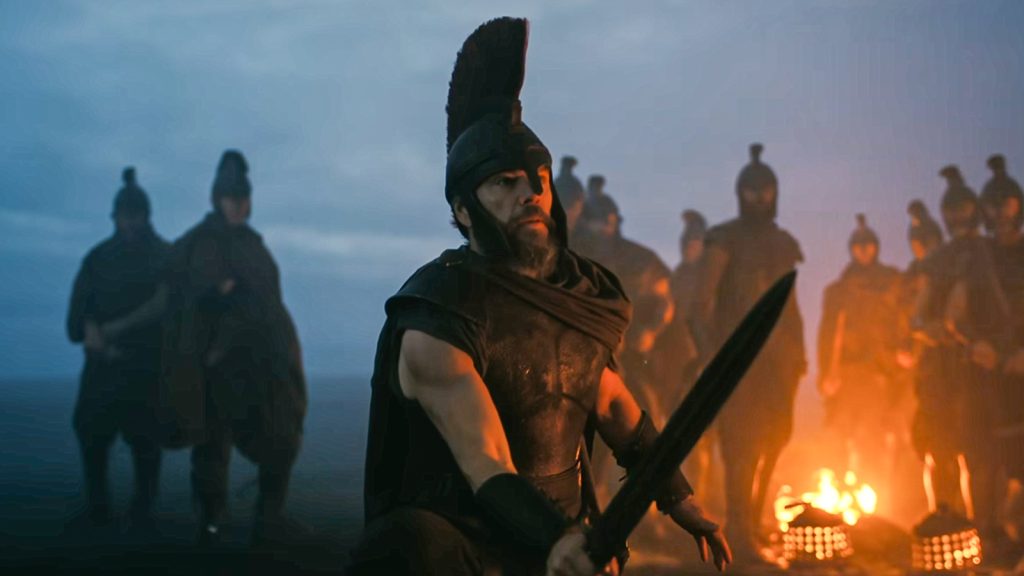 Credit: Universal Pictures
When I’m Home was written by Göransson, Blake, Scott, and Nolan, while Göransson and Blake handled production. The credit gives Nolan his first reported songwriting contribution across a directing career that began nearly three decades ago. The contemporary song attached to Homer initially sounds like the sort of decision that could pull viewers straight out of the film. Nolan has reportedly spent years insisting on physical environments, practical effects, and immersive sound, so hearing Scott after Odysseus’ voyage could have come across as a promotional trick. The placement avoids that problem by waiting until the narrative has finished.
The title gives the song its purpose. Odysseus has crossed seas, angered gods, lost companions, resisted temptations, and endured years of separation while holding onto one intention: returning home. When I’m Home carries that desire into the credits without attempting to imitate ancient music. It acknowledges that audiences have reached the end of his journey while the story continues to be retold through a different musical language.
There is no post-credits sequence attached to the film, which gives the song more room to function as the final goodbye. Once the credits begin, Christopher Nolan has finished the narrative, and viewers are left with the track instead of a sequel hint or one last revelation. After such a large production, an advertisement for another chapter would have felt cheap (per /Film).
Scott and Göransson have travelled this road with Nolan before. They collaborated on The Plan, which played during the credits of Tenet in 2020. When I’m Home expands that earlier partnership by adding Blake and giving Nolan a writing credit of his own (per Apple Music).
| When I’m Home credits | Contributor |
| Performed by | James Blake, Travis Scott, Ludwig Göransson |
| Written by | Ludwig Göransson, James Blake, Travis Scott, Christopher Nolan |
| Produced by | Ludwig Göransson, James Blake |
| Soundtrack position | Track 23 |
| Label | Back Lot Music |
| Previous Scott-Nolan song | The Plan from Tenet |
Travis Scott’s Bard Role Connects Rap With Homer
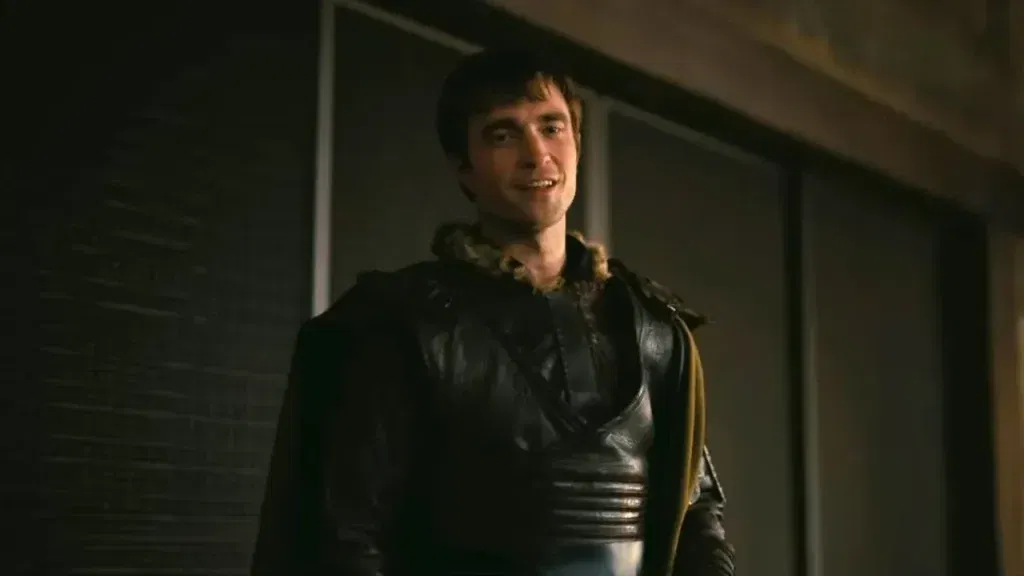 Credit: Universal Pictures
Scott appears near the beginning of The Odyssey as a bard entertaining the suitors occupying Odysseus’ home. His character sings about the Ithacan king’s victories and the fall of Troy, introducing a hero whose reputation has reached Ithaca long before the man himself can return (via /Film). The role has little effect on the mechanics of the story, but the casting was shrewder than it sounded when the first reports appeared. Homer’s poem survived through oral performance before it was fixed into the written form most readers know today.
Nolan’s explanation makes that intention explicit. Scott is there because rap offers a modern comparison for poetry performed aloud and passed between generations. The decision also creates symmetry within the film. Scott introduces Odysseus through music at the beginning, then helps close his journey through another song after the king’s return.
Before release, much of the debate surrounding The Odyssey focused on its contemporary American dialogue, unconventional armour, and whether Nolan would remove the gods and monsters to create a grounded historical drama. The completed film retains its mythological creatures and divine figures, even though Nolan rearranges parts of Homer’s chronology. Against that background, the end-credits song becomes his most openly modern decision. It comes after viewers have already accepted his version of ancient Greece, which is probably the safest place for such a gamble.
The film has started its theatrical run with a 96% Tomatometer score from 271 reviews and a 96% verified audience rating on Rotten Tomatoes. Box Office Mojo lists a reported $250 million budget, although domestic and worldwide grosses had not been posted when this article was prepared on the film’s release day. Would you keep When I’m Home as the final track, or would you have ended with Göransson’s orchestral score? Bring your verdict to the comments, and follow FandomWire for more updates from Nolan’s voyage.
The Odyssey opened in theaters on July 17, 2026.

















/https%3A%2F%2Fsportsmole-media-prod.s3.gra.io.cloud.ovh.net%2Fuploads%2F2026%2F07%2Fdaniel-mcgregor-huyer-zuma-press-wire-luciano-gonzalez-anadolu-abacapress-com-estadio-azteca-harry-kane-jude-bellingham-composite-6a49eb8857b70695441164.png)
 Bengali (BD) ·
  English (US) ·