.png)
 2 days ago
19
2 days ago
19
Twenty-nine years after it landed Brad Pitt in the middle of an international political row, Seven Years in Tibet is officially returning to Netflix in the United States in October 2026. The 1997 historical drama joins the service’s incoming licensed slate alongside films including The Prestige, Point Break, and Pearl Harbor. What’s on Netflix confirms its return to the U.S. catalog.
Calling Jean-Jacques Annaud’s movie one of Pitt’s most controversial is hardly clickbait. Its sympathetic portrayal of Tibet and the young Dalai Lama angered the Chinese government, while Pitt, co-star David Thewlis, and Annaud were reportedly barred from entering China. The fallout extended beyond the actors: Beijing also targeted Hollywood companies associated with films it considered hostile. The Los Angeles Times later reported that China banned Seven Years in Tibet and retaliated against studios behind films Beijing considered hostile, turning one movie into a much larger Hollywood headache.
Seven Years in Tibet Got Brad Pitt Banned From China
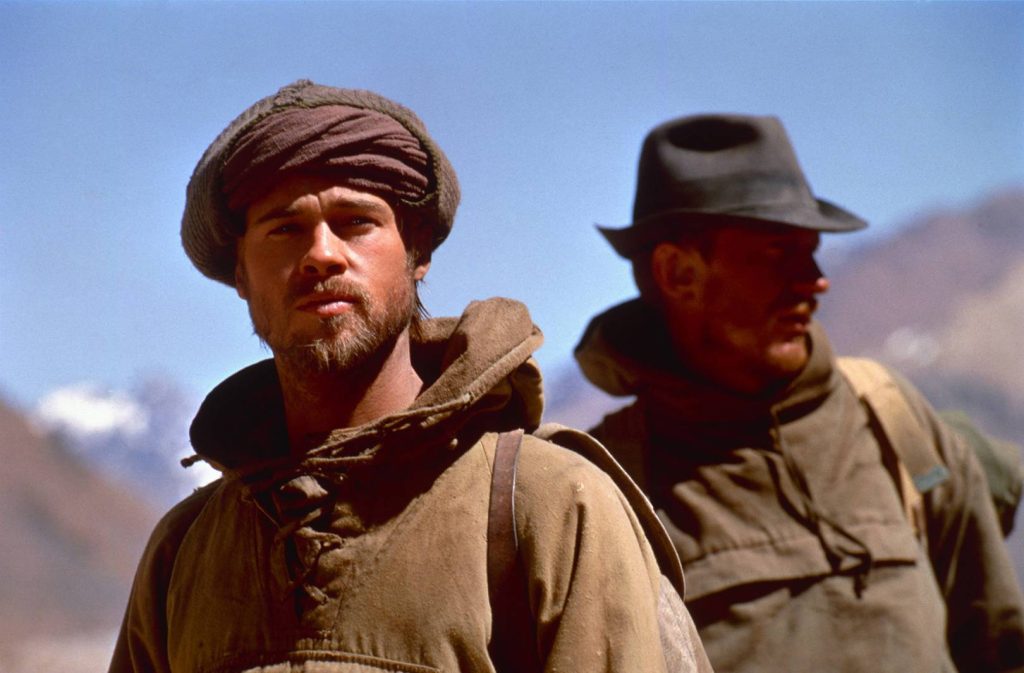 Brad Pitt and David Thewlis in Seven Years in Tibet | Credit: Sony Pictures Releasing
Seven Years in Tibet adapts Austrian mountaineer Heinrich Harrer’s memoir about his years in Tibet and friendship with the young 14th Dalai Lama. Brad Pitt plays Harrer opposite David Thewlis as Peter Aufschnaiter, while Jamyang Jamtsho Wangchuk portrays the Dalai Lama. Sony Pictures describes Harrer’s friendship with the Tibetan spiritual leader as the transformative heart of the story. The trouble was baked into the movie’s depiction of China’s occupation of Tibet.
Annaud initially hoped to film in the region, but China objected to the project. The director told the Los Angeles Times that Chinese pressure prevented production in India and that Beijing also unsuccessfully tried to persuade Argentina to block filming. The finished movie consequently combined material photographed across several continents with secretly obtained footage from Tibet.
Once the film arrived, the response became considerably more punitive. China objected to its depiction of Chinese military officers and its positive treatment of the Dalai Lama. Pitt, Thewlis, and Annaud were reportedly barred from China, while Sony discovered that one politically sensitive movie could threaten far more than its box-office business there. The Washington Post later examined the episode and its wider effect on Hollywood’s relationship with Beijing.
The prohibition was not permanent. Pitt returned to China years later, while Annaud was invited back and chaired the Shanghai International Film Festival jury in 2012. Still, few Pitt movies can claim geopolitical consequences alongside their box-office receipts.
Roger Ebert Thought Brad Pitt Was the Wrong Star
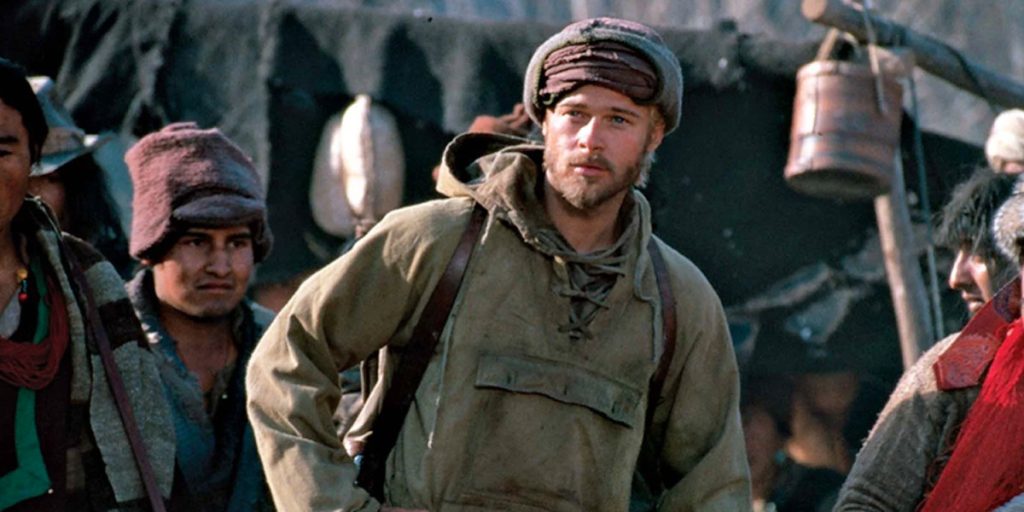 Credit: Sony Pictures Releasing
The controversy did not earn Seven Years in Tibet a free pass from critics. Roger Ebert admired its ambition and visual splendor, but his central complaint cut deeper than pacing or historical detail. He argued that the movie tells an inherently fascinating story “from the point of view of the wrong” character, devoting too much attention to Harrer when the young Dalai Lama and Tibetan society offered richer material.
Pitt’s casting compounded that problem for Ebert. He found the actor convincing only in broad strokes, writing that Pitt played Harrer at essentially two registers: initially cold and later boyishly charming. His more provocative suggestion was that David Thewlis might have made a more convincing Harrer, although Ebert acknowledged the commercial reality behind the decision. Pitt was the movie star capable of helping justify a production with a reported $70 million budget.
That criticism becomes particularly intriguing 29 years later because Pitt’s career subsequently became littered with performances that aggressively resisted conventional leading-man polish, from Fight Club and Snatch to The Assassination of Jesse James by the Coward Robert Ford. Seven Years in Tibet caught him earlier in that evolution, when his celebrity was still part of the sales pitch.
Seven Years in Tibet‘s Netflix return gives viewers a fresh opportunity to decide whether time has been kinder to the film than its original controversies were. Does the movie deserve a critical reassessment 29 years later, or was Ebert right that Pitt was simply the wrong center for this story? Tell us where you land in the comments and follow FandomWire for more Brad Pitt news.



























 Bengali (BD) ·
  English (US) ·