.png)
 2 days ago
17
2 days ago
17
BFI’s list of 50 key anime movies (via the website) spans nearly eight decades of Japanese animation, but some entries hit harder than others. These ten titles feel like the genre’s most essential achievements: era-defining classics, box-office record-breakers, and films that still shape conversations about what anime can do decades after their release.
From Miyazaki’s mythic clashes and Takahata’s quiet tragedies to Kon’s psychological spirals and Shinkai’s tearjerking romances, this ranking pulls together the films from BFI’s list most likely to convert a skeptic, reward a veteran fan, and explain exactly why anime earned a spot in serious film criticism.
10 My Neighbour Totoro Made Gentleness Into Ghibli’s Signature Magic
 My Neighbour Totoro | Credits: Studio Ghibli
Miyazaki’s gentlest film, My Neighbour Totoro, follows sisters Satsuki and Mei, who move to the countryside. At the same time, their mother recovers from illness and stumbles into a friendship with Totoro, a giant, sleepy forest spirit. Released in 1988 alongside the far heavier Grave of the Fireflies as a Ghibli double feature, it initially underperformed before its merchandise, especially the plush Totoro toy, saved the studio’s finances overall. It closes the list because it’s the gentlest entry, essential viewing, but lower-stakes than the heavier, more ambitious films ranked above it.
9 A Silent Voice Turned Teenage Guilt Into Quiet, Hard Redemption
 A Silent Voice | Credits: Kyoto Animation
Yamada’s coming-of-age drama, A Silent Voice, follows Shoya, a former bully trying hard to make amends with Shoko, the deaf classmate he once tormented, years after his own cruelty left him isolated and quietly guilt-ridden. Made by Kyoto Animation and released in 2016, it uses sign language, handwritten notebooks, and careful visual staging to show communication breaking down and slowly, painfully rebuilding. It ranks here because its emotional honesty is real, even if its themes of bullying and redemption feel smaller in scale than the films above it.
8 The Tale of the Princess Kaguya Was Takahata’s Aching Farewell
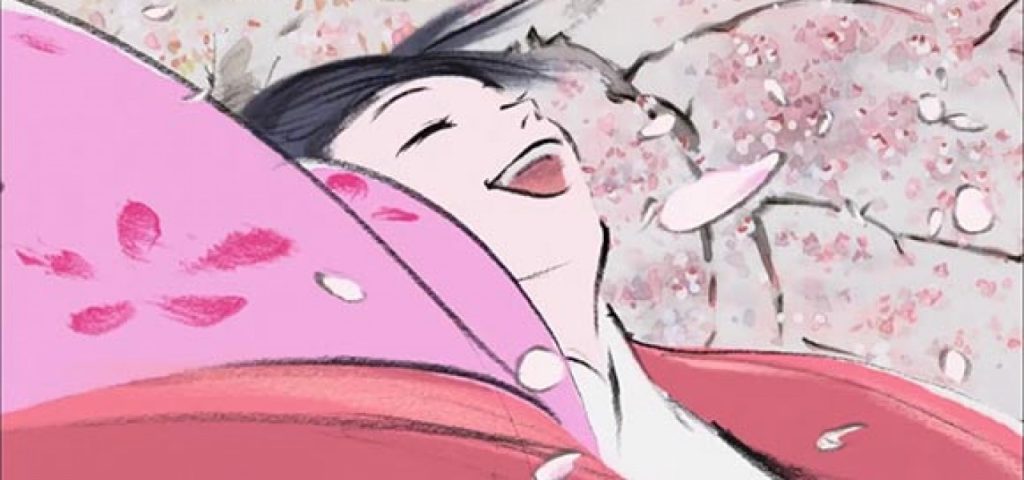 The Tale of the Princess Kaguya | Credits: Studio Ghibli
Takahata’s final film retells Japan’s oldest folktale: The Tale of the Princess Kaguya follows a tiny girl found inside a glowing bamboo stalk who grows impossibly fast, is raised as a princess, and must eventually return to the moon, leaving behind every single person who ever loved her. Drawn in loose, watercolor-like brushstrokes unlike anything else Ghibli made, it earned a 2015 Academy Award nomination and stands as Takahata’s swan song. It’s ranked here because its beauty is patient rather than immediate, a slow, melancholic experience that asks more of viewers than flashier titles.
7 Perfect Blue Turned Idol Culture Into Psychological Horror
 Perfect Blue | Credits: Madhouse
Kon’s Perfect Blue is a psychological thriller that follows Mima, a pop idol who quits her group to become an actress, only to be stalked online, haunted by visions of her old idol self, and pulled into a string of real murders. Released in Japan in 1998, it was based loosely on a novel by Yoshikazu Takeuchi and eerily predicted the anxieties of internet-era fame and identity years before social media existed. It sits here because its scares are psychological rather than spectacular, quieter than the films ranked above it but just as unsettling.
6 Akira Set the Bar for Cyberpunk Animation on a Global Scale
 Akira | Credits: TMS Entertainment
Otomo’s cyberpunk landmark follows biker gang leader Kaneda desperately chasing his childhood friend Tetsuo, whose body starts mutating into something monstrous after a shadowy government experiment goes horribly wrong, ending in Neo-Tokyo’s near-total destruction. Made on a then-record budget of roughly ¥1.1 billion for an anime production, Akira opened the door for anime in Western theaters and shaped a whole generation of sci-fi filmmakers worldwide. It ranks here because its influence is massive, but its plot gets increasingly hard to follow once the third act detonates.
5 Grave of the Fireflies Remains Anime’s Most Devastating War Story
 Grave of the Fireflies | Credits: Studio Ghibli
Grave of the Fireflies‘ wartime tragedy follows teenage Seita and his little sister Setsuko after Kobe is firebombed, their mother dies, and they’re left to survive alone on scavenged food and dwindling hope. It’s based on Akiyuki Nosaka’s semi-autobiographical novella and famously opened in Japan on the same day in 1988 as My Neighbor Totoro, as a double feature nobody was emotionally prepared for. It lands in the middle here because its power is undeniable, though its unrelenting grief makes it a harder rewatch than the films ranked above it
4 Ghost in the Shell Redefined Cyberpunk for a Digital Generation
 Ghost in the Shell | Credits: Production I.G
Oshii’s cyberpunk classic follows Major Kusanagi, a cyborg agent hunting a mysterious hacker called the Puppet Master through a rain-soaked, Hong Kong-inspired city, all while quietly unraveling what it even means to have a self when her own body is replaceable hardware. Released in 1995 and partly funded by the UK’s Manga Entertainment, it helped shape The Matrix and remains one of the most cited anime films in Western sci-fi. Ghost in the Shell 1995 sits mid-list because its ideas are massive, even if its brisk, sub-90-minute runtime keeps everything tight, almost coldly contained.
3 Belladonna of Sadness Turned Erotic Art Into a Feminist Statement
 Belladonna of Sadness | Credits: Mushi Production
This 1973 watercolor fever dream follows Jeanne, a peasant bride violated by a feudal lord, who strikes a bargain with a phallic devil and transforms into a witch capable of curing the plague and toppling the men who wronged her. Animated almost like a series of paintings set to narration, it contributed to Mushi Production’s 1973 bankruptcy and sat forgotten until a 2016 restoration finally found it an audience. It ranks here for sheer audacity, a film so far outside anime’s mainstream that it barely counts as a genre entry.
2 Your Name Turned Body-Swap Romance Into a Box Office Phenomenon
 Your Name | Credits: CoMix Wave
Makoto Shinkai’s body-swap romance follows teenagers Mitsuha, from a quiet mountain town, and Taki, from Tokyo, as they wake up in each other’s lives and start texting notes to survive their swapped days, before the story pulls a devastating twist: a comet fragment threatening to wipe out her hometown. Released in 2016, it overtook Spirited Away to become the highest-grossing anime film worldwide and turned Shinkai into anime’s biggest post-Miyazaki name. Your Name sits just below Mononoke here because its emotional scale is enormous, but its ambitions are more personal than civilizational.
1 Princess Mononoke Turns an Environmental War Into Pure Myth
 Princess Mononoke | Credits: Studio Ghibli
Miyazaki’s forest epic drops a cursed prince, Ashitaka, into a war between Irontown’s laborers and the wolf-raised warrior San, refusing to paint either side as purely right. Princess Mononoke is the moment Ghibli stopped being gentle and started asking what progress actually costs. Released in July 1997, it briefly became the highest-grossing film in Japan’s history and was the first animated feature to win the Japan Academy Prize for Picture of the Year. It leads this list because no other anime balances spectacle and moral weight so completely.
What are your thoughts on our list of the best anime movies of all time, based on the BFI (British Film Institute) list of 50 key anime films? We’d love to know your favourite movie and opinions in the comments below.




















 Bengali (BD) ·
  English (US) ·