.png)
 2 days ago
21
2 days ago
21
Hollywood rulebooks say a blockbuster needs a polished script, an extraordinary hero, and an explosive climax. Hayao Miyazaki threw all three in the trash and created a masterpiece called Spirited Away. In fact, the story has given several nods to Japanese folklore.
For instance, the film’s original Japanese title (Sen to Chihiro no Kamikakushi) centers on a traditional folklore: when a child vanishes without a trace, it was believed they had been snatched away or hidden by disgruntled spirits (kami) or yōkai. Passing through the stone tunnel and eating food meant for the gods traps Chihiro’s family in the spirit realm, triggering the classic kamikakushi motif.
On the occasion of its 25th anniversary (July 20), it’s time to remember Miyazaki’s undisputed magnum opus that redefined what animated cinema could achieve. Behind its shimmering bathhouse lies a web of deep Japanese folklore, accidental icons, and bold storytelling gambits. Read on to uncover how a sulky ten-year-old girl, an improvised background spirit, an amalgam of real-world architecture, and a historic Oscar win forever changed the landscape of Japanese animation.
| Title | Spirited Away (Sen to Chihiro no Kamikakushi) |
| Creator | Hayao Miyazaki |
| Anime Studio | Studio Ghibli |
| Release Date | July 20, 2001 |
| IMDb Rating | 8.6/10 (as of July 20, 2026) |
| Worldwide Box Office | $396 Million (via The Numbers) |
| Streaming | Max/HBO Max in the U.S, Hulu (Max add-on), Prime Video, Netflix (availability varies by region) |
1 Miyazaki Made Chihiro for Real Girls Like His Friends’ Daughters
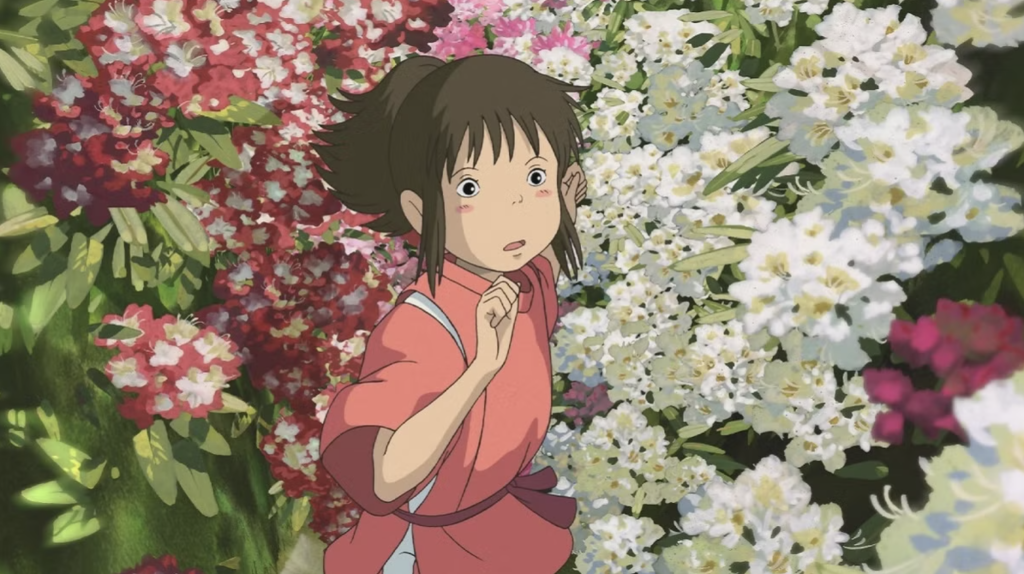 Chihiro from Spirited Away. [Credit: Studio Ghibli]
Chihiro was deliberately created as an ordinary, somewhat sulky ten-year-old girl, inspired partly by the daughters of Miyazaki’s close friends (via Midnight Eye). Especially the daughter of his closest friend and producer, Seiji Okuda. She was not a chosen one, a warrior, or a naturally gifted heroine.
That decision makes her transformation unusually convincing: she grows because she must navigate an unfamiliar world, not because destiny says she is special. Miyazaki wanted children to see themselves in her. That grounded choice gives Spirited Away a rare emotional honesty that resonates with viewers even after 25 years.
2 No-Face Was Never Meant to Become the Movie’s Biggest Star
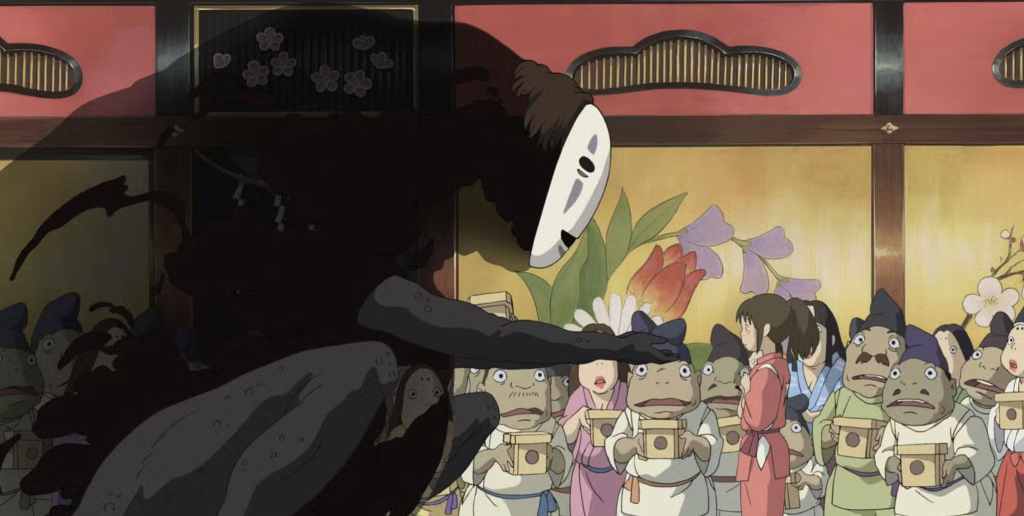 No-Face and Chihiro from Spirited Away. [Credit: Studio Ghibli]
No-Face is the most important yet underrated character in the movie. During Nippon Television’s Friday Road Show, Miyazaki reportedly revealed that the character represented “clingy people” who lacked their own identities and depended on other people (via Collider). No-Face’s transformation from silent observer to chaotic consumer reflects the bathhouse around him, making the character feel like a discovery rather than a plot device.
Plus, the formidable witch Yubaba (and her twin sister Zeniba) is directly inspired by the Yama-uba, a feared, witch-like figure from Japanese folk tales who dwells in high mountains, possesses dark magic, and lures unsuspecting travelers. Aside from No-Face, the witch Yubaba also became a loved character.
3 Spirited Away Was Inspired by More Than One Japanese Bathhouse
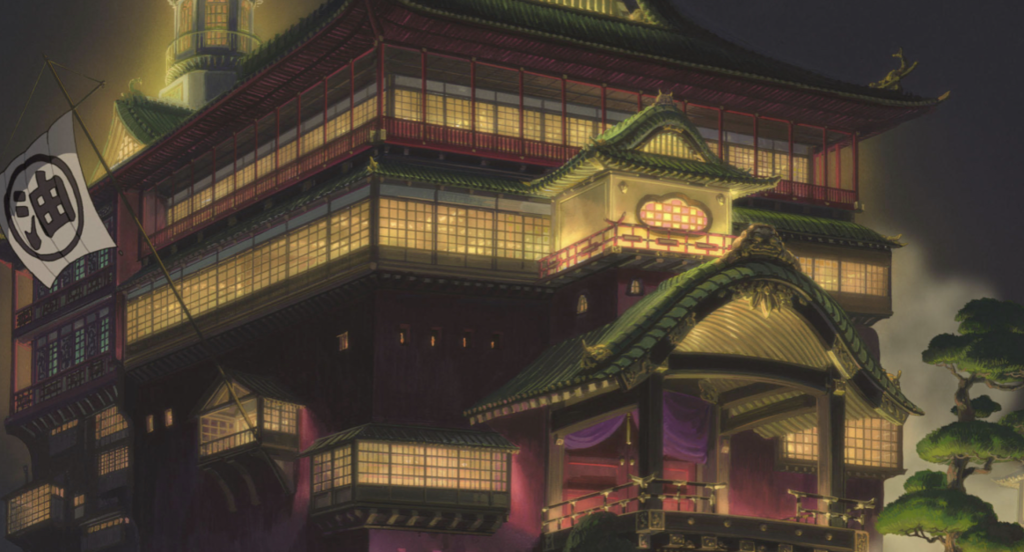 The Aburaya bathhouse from Spirited Away. [Credit: Studio Ghibli]
The bathhouse’s visual world draws from broader Japanese architectural and bathing traditions, with references ranging from Tokyo-style public bathhouses like the Sekizenkan in Shima Onsen (Gunma), Dogo Onsen (Ehime), and the Edo-Tokyo Open Air Architectural Museum. Additionally, the stationery shop Takei Sanshodo serves as a reference for Kamaji’s boiler room, while Kodakara-yu represents the richly decorated public-bathhouse tradition (via Tokyo Updates).
Plus, more Japanese folklore-inspired figures like Oshira-sama (the giant Radish Spirit) and the shadowy boat passengers that reflect yaoyorozu no kami. Both Haku (a mizuchi or river dragon spirit) and the River Spirit, misidentified as a “Stink Spirit,” embody the Shinto idea that nature suffers when polluted by humans.
4 Miyazaki Let Spirited Away Evolve Without a Conventional Script
Miyazaki’s process did not follow a rigid screenplay-first blueprint. Without a standard script to hand off to writers or directors, he wrote the movie directly with drawings. He personally penciled and storyboarded 1,415 distinct sequence shots for the entire film. Originally anticipating roughly 1,200 shots, Miyazaki noted that as the story evolved, the film itself “demanded” 200 more. That approach helped produce choices that conventional plotting might have rejected.
Hence, Chihiro simply travels, watches, and processes what she has experienced. The Japanese title, Sen to Chihiro no Kamikakushi, also captures that Chihiro is spirited away, then renamed Sen after losing part of her name. In ancient Japanese lore, a person’s true name holds mystical power over their soul and identity.
5 Spirited Away Was Japan’s Biggest Film for 19 Years
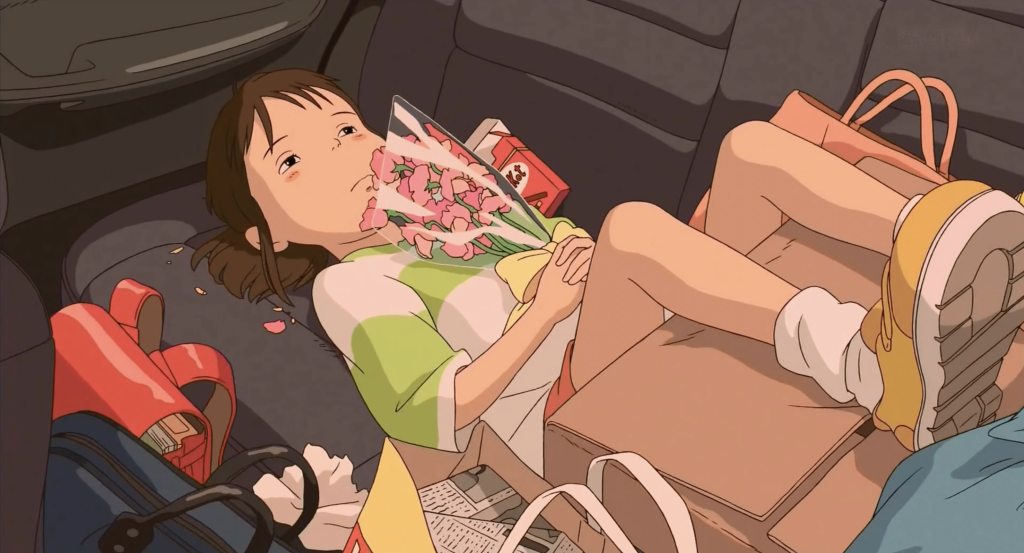 Chihiro from Spirited Away. [Credit: Studio Ghibli]
Spirited Away was not merely a successful anime movie. It became a national box-office landmark, beating Princess Mononoke (1997). It held Japan’s domestic box-office record for nearly two decades, earning over $396 million as of 2026, before Demon Slayer: Mugen Train surpassed it in 2020 (via Time).
It also won the 2003 Academy Award for Best Animated Feature, becoming the first Japanese animated feature to win the prize (via Guinness World Records). Disney’s English-language adaptation, overseen by John Lasseter’s PIXAR team, helped carry the film to wider audiences while preserving its original spirit.
Do you agree that Spirited Away is Miyazaki’s best film, or does another Ghibli classic deserve the crown? Tell us in the comments!
Spirited Away is exclusively streaming in the US on HBO Max.
















/https%3A%2F%2Fsportsmole-media-prod.s3.gra.io.cloud.ovh.net%2Fuploads%2F2026%2F03%2Ficonsport-361551-0102-1-69b560866f7b6508942731.jpg)
 Bengali (BD) ·
  English (US) ·