.png)
 2 hours ago
9
2 hours ago
9
Article content
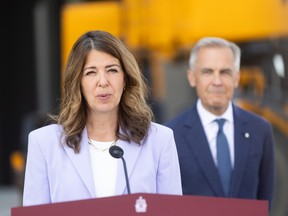
OTTAWA — Alberta Premier Danielle Smith caught some onlookers off guard on Wednesday when she said that she wanted to fix equalization, not kill it.

THIS CONTENT IS RESERVED FOR SUBSCRIBERS
Enjoy the latest local, national and international news.
- Exclusive articles by Conrad Black, Barbara Kay and others. Plus, special edition NP Platformed and First Reading newsletters and virtual events.
- Unlimited online access to National Post.
- National Post ePaper, an electronic replica of the print edition to view on any device, share and comment on.
- Daily puzzles including the New York Times Crossword.
- Support local journalism.
SUBSCRIBE FOR MORE ARTICLES
Enjoy the latest local, national and international news.
- Exclusive articles by Conrad Black, Barbara Kay and others. Plus, special edition NP Platformed and First Reading newsletters and virtual events.
- Unlimited online access to National Post.
- National Post ePaper, an electronic replica of the print edition to view on any device, share and comment on.
- Daily puzzles including the New York Times Crossword.
- Support local journalism.
REGISTER / SIGN IN TO UNLOCK MORE ARTICLES
Create an account or sign in to continue with your reading experience.
- Access articles from across Canada with one account.
- Share your thoughts and join the conversation in the comments.
- Enjoy additional articles per month.
- Get email updates from your favourite authors.
THIS ARTICLE IS FREE TO READ REGISTER TO UNLOCK.
Create an account or sign in to continue with your reading experience.
- Access articles from across Canada with one account
- Share your thoughts and join the conversation in the comments
- Enjoy additional articles per month
- Get email updates from your favourite authors
Sign In or Create an Account
or
Article content
Smith said her immediate focus is reversing the escalator the Harper government added to the equalization program in 2009, ensuring the funding pot grows with the economy.
Article content
Article content
“(The escalator) is kind of counter-intuitive, because if the economy is growing and everybody’s doing better, they should be less they should be less reliant on the equalization,” Smith told reporters in Red Deer, Alta., where she was joined by Prime Minister Mark Carney for an unrelated housing announcement.
Article content
Article content
Smith said that her “pitch” to the prime minister was to get rid of the escalator, equalize “to the point of need” and give whatever’s left to the provinces on an “equal per capita basis.”
Article content
She also said that Ontario, Canada’s largest provincial economy, should stop collecting equalization.
Article content
“You don’t just cut a cheque to Ontario, who clearly doesn’t need it. They’re a powerful economy, they shouldn’t be getting equalization from smaller provinces,” said Smith.
Article content
She added that she would eventually like to see equalization payments tied to per capita spending. The current rules use a complex formula that calculates fiscal capacity, or each province’s theoretical ability to raise revenues.
Article content
Smith said in a televised address to Albertans last year that large provincial economies like Ontario and Quebec shouldn’t be eligible for equalization.
Article content
Here’s what you need to know about the Alberta premier’s plan to fix the contentious equalization program.
Article content
What is equalization?
Article content
The principle of equalization stems from the longstanding view that each province should be able to provide reasonably comparable public services at similar levels of taxation.
Article content
Article content
A formal equalization system was rolled out in 1957, initially tying payments to the per-capita revenues of Canada’s two wealthiest provinces: Ontario and B.C. This was later lowered to the national average among provinces.
Article content
The principle of equalization became part of Canada’s Constitution in 1982.
Article content
What is the ‘escalator’ and why is it controversial?
Article content
With the global financial crisis creating massive uncertainty, the Harper government brought in a new rule in 2009 that linked equalization payments to overall national economic growth. While meant at the time to make equalization costs more predictable and manageable, the so-called “escalator” had some unintended effects once the crisis ended and growth returned to normal.
Article content
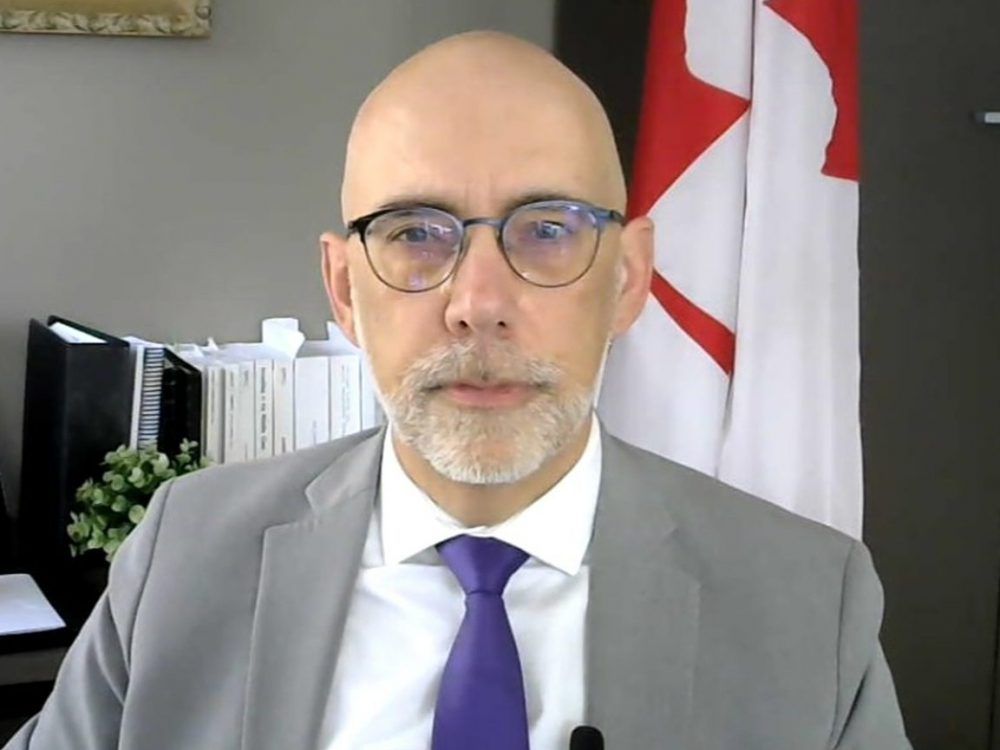
Trevor Tombe, an economist at the University of Calgary and expert on equalization, says the escalator has disconnected equalization payments from interprovincial inequalities.
Article content
“Right now, (equalization) is paying out more than what it’s own formula wants to, because inequality is less than the total dollars available,” says Tombe.
























/https%3A%2F%2Fsportsmole-media-prod.s3.gra.io.cloud.ovh.net%2Fuploads%2F2026%2F07%2Fwc26-stencil-generic-1-player-email-6a5efced3be22784676779.jpg)
 Bengali (BD) ·
  English (US) ·