.png)
 3 hours ago
12
3 hours ago
12
There is no escaping the obvious comparison when you first hear about Honkai: Nexus Anima. HoYoverse is making a game about collecting strange and adorable creatures. You can build a team around them while exploring the world and uncovering the story, and all the while bonding with the monsters you encounter.
Honkai: Nexus Anima at gamescom 2026!
We’re thrilled to bring Honkai: Nexus Anima to gamescom this year! Visit us in Hall 6.1 to get hands-on with the latest demo. Join the activities at our booth and collect a variety of exclusive goodies while you’re there.
Are you ready to… pic.twitter.com/6qsc3vjLhp
If your first thought is “So, it’s Pokémon, but made by the people behind Genshin Impact and Honkai: Star Rail,” I really can’t blame you. But after getting some hands-on time with the Honkai: Nexus Anima Evolution Test, I came away feeling that the comparison only tells half the story. Let me tell you all about it.
Honkai: Nexus Anima is the Perfect Next Project For HoYoverse
-

Image Credit: HoYoverse
-

Image Credit: HoYoverse
-

Image Credit: HoYoverse
-

Image Credit: HoYoverse
-

Image Credit: HoYoverse


The first thing that stood out to me during the Evolution Test was just how quickly Nexus Anima establishes its own identity.
The creature-collecting formula is obviously familiar. Anima roam the world, you battle them, and once you’ve weakened one sufficiently, you can attempt to bond with it using Nexus Skeins. Finding a new Anima and adding it to the collection is satisfying, especially if you find one that looks interesting enough to make you want to build a team around it.
The Anima themselves are also one of the game’s biggest strengths. HoYoverse has already demonstrated that it knows how to make memorable characters, and it has somehow managed to apply that same design philosophy to creatures. Some are cute, some are bizarre, and others look like they have absolutely no business existing in the same universe as one another.
I think that variety will be a big part of making exploration rewarding. I frequently found myself more interested in seeing what creature might be around the next corner than simply going to the next story objective. And then you get into a battle, and the Pokémon comparison starts to fall apart.
Nexus Anima doesn’t give you a list of attacks and ask you to select one every turn. Instead, battles play out automatically after you’ve assembled your team. Your main job is deciding which Anima to deploy, where to position them, and how their abilities and traits work together.
Frontline Anima are the tanks, while you also have ranged attackers and support Anima that are generally better suited to the back. Each of them has abilities. Some are used best with specific positioning, while others can damage or support multiple targets. On top of that, matching Anima with the same Aspect can unlock additional bonuses and change the way your entire team works.
It sounds simple at first, and it is to a certain degree. But there is considerably more going on than “put five monsters on the field and watch them fight.” I actually found this much more engaging than I expected.
The Combat Has More Depth Than I Expected
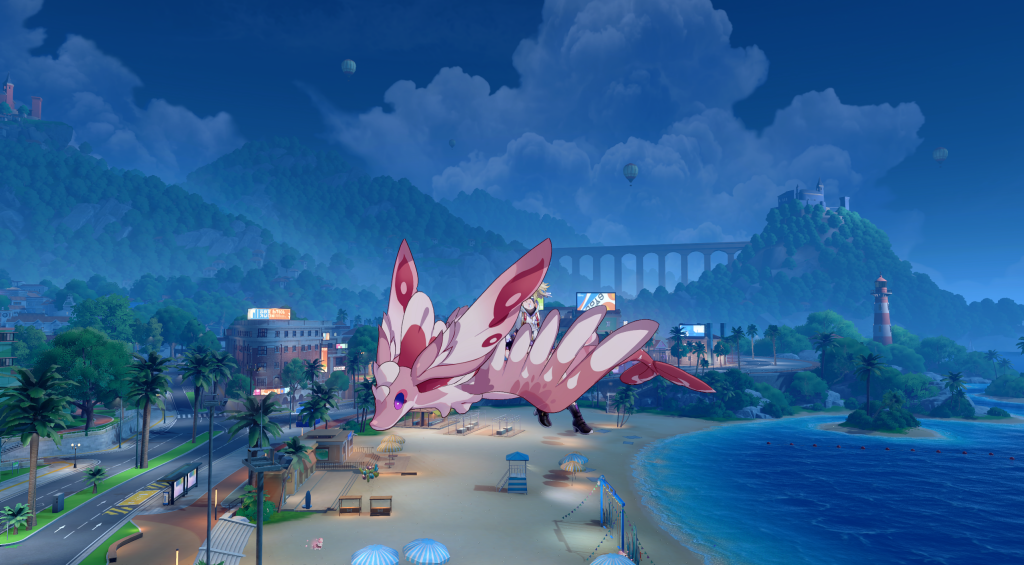 Image Credit: HoYoverse
The combat system was easily my favorite part of the Evolution Test.
There is something satisfying about looking at a team and thinking about how its individual pieces fit together rather than simply asking which creature has the highest numbers.
Anima have different roles, traits, Aspects, and abilities, and figuring out how those elements interact becomes an important part of building a successful squad. A durable creature can hold the frontline while a ranged Anima attacks from safety, for example, while another creature provides healing or buffs.
The Aspect system adds another layer on top of that. Building around multiple creatures belonging to the same Aspect can provide bonuses, giving you another reason to think about your composition before entering a battle.
This is where the game starts to feel more like an auto-battler than a traditional monster collector.
And that’s a good thing.
I’ve played plenty of games where auto-battle eventually turns into an excuse to stop interacting with the game. Nexus Anima doesn’t completely avoid that problem, but during the beta, I generally felt like I still had a reason to pay attention.
The system is also easy to understand. You don’t need to spend hours learning complicated mechanics before you can put together a functional team. At the same time, there is clearly room for players who want to dig deeper into traits, synergies, positioning, and optimal team compositions.
That balance will be important for the game’s long-term success.
The biggest question is whether the full game can eventually make these mechanics sufficiently deep. The early content is relatively forgiving, and that means some of the more interesting strategic decisions don’t always feel necessary. But this was still a test build, and I’d much rather see HoYoverse err on the side of accessibility early on than make the opening hours unnecessarily complicated.
If later content pushes players to genuinely understand their teams rather than simply fielding their strongest Anima, the combat could become one of Nexus Anima‘s strongest selling points.
The World And Story Are Undeniably the Real Stars
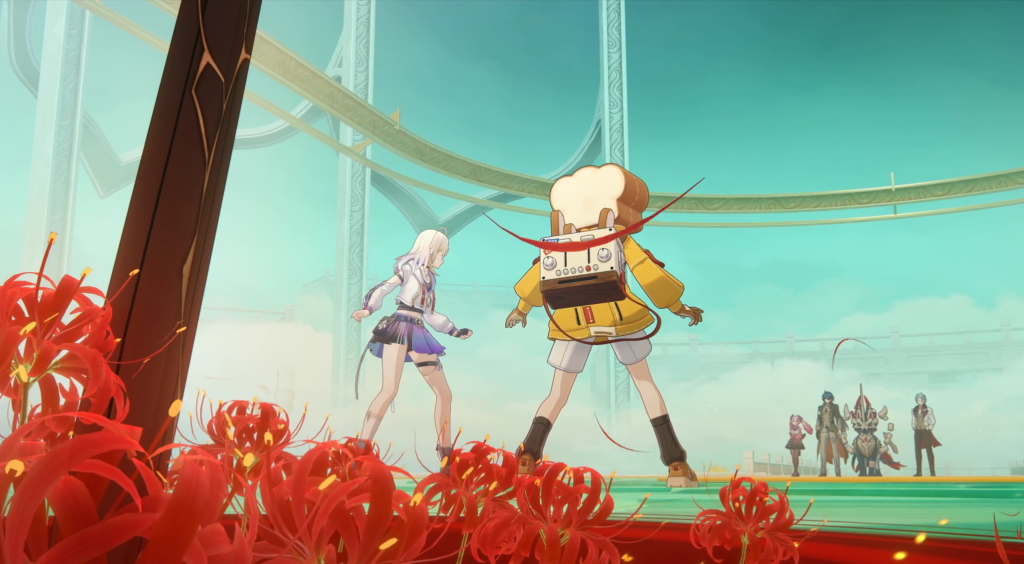 Image Credit: HoYoverse
While combat was the biggest surprise for me, exploration was probably the part of the game I enjoyed most. This is where HoYoverse’s experience with games like Genshin Impact and Honkai: Star Rail becomes particularly obvious.
The early sections feature smaller, more contained areas filled with NPCs, quests, resources, and little interactions. Eventually, though, the game starts opening up into larger environments that feel much more like the open-world spaces HoYoverse has become known for.
And there is a nice reason to explore beyond simply checking another objective off a map. The Anima aren’t just a part of the combat. They are also part of the world itself, and collecting them encourages you to pay attention to your surroundings. There are creatures to find, resources to gather, and areas that become more interesting as your collection grows.
I also liked that the game doesn’t make its world feel completely lifeless. You’ll find NPCs going about their business, shops and activities to discover, and plenty of small details that make the environments feel like places rather than giant quest hubs. It gives Nexus Anima that familiar HoYoverse feeling without simply making it another Genshin Impact clone.
The story follows a similarly familiar formula, though.
You play as an amnesiac protagonist caught up in a much larger mystery involving the Sundering, Anima, different dimensions, and powerful Sovereigns. The opening throws plenty of terminology and lore at you, and if you’ve played a HoYoverse game before, you’ll probably recognize the idea.
There is a lot to take in. But I didn’t come away from the beta thinking the story was a weakness. If anything, I found myself curious about what was actually happening, which is probably the most important thing an early preview can accomplish.
The protagonist’s attributes also add an interesting twist. Choices involving things such as Strength, Charisma, and Intelligence can influence which dialogue options are available, allowing the player to approach certain situations differently.
It’s not a revolutionary RPG system, but it’s a welcome change from simply selecting one dialogue option and moving on. Some choices can also have conditions attached to them, suggesting that decisions could have consequences later in the story. Exactly how substantial those consequences will be remains something we’ll have to wait and see.
And Then There’s the “Gacha” Part
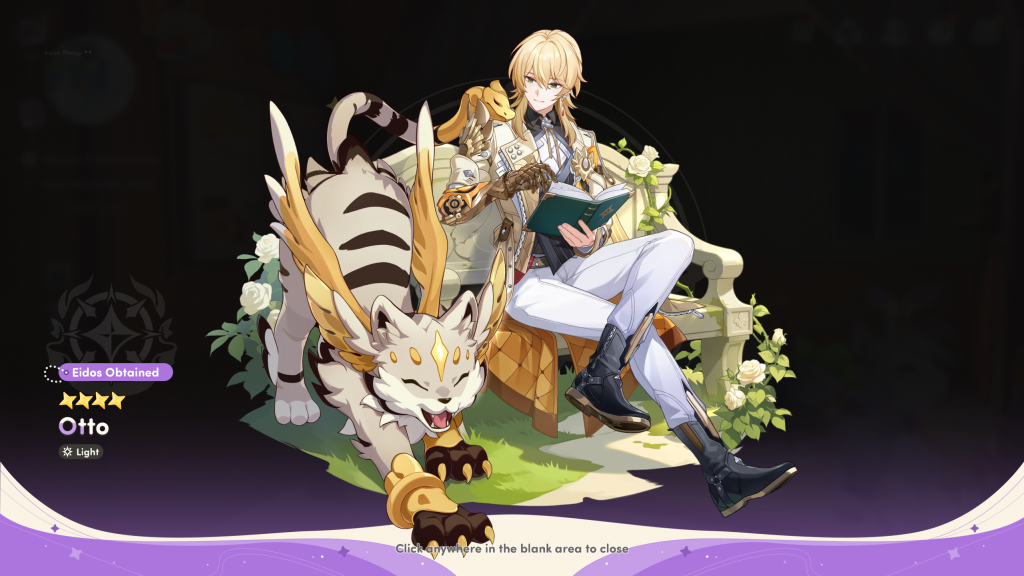 Image Credit: HoYoverse
There is one elephant in the room that is impossible to ignore. This is a HoYoverse game. Which means, yes, Honkai: Nexus Anima has gacha. The game isn’t simply a creature collector where everything you encounter is obtained through exploration and bonding. There are also gacha systems tied to characters and Anima, and that introduces an entirely different set of questions about progression.
This is probably the area I’m most cautious about. The creature-collecting fantasy works because finding a new Anima feels like an adventure. You see something interesting, battle it, figure out how to bond with it, and then decide whether you want to incorporate it into your team.
If the strongest or most desirable Anima aren’t a part of that collection loop, it could undermine one of the game’s biggest strengths. The same is true for the game’s human characters and their associated abilities. Since they can provide powerful effects during combat, the balance between freely obtainable units and gacha-exclusive ones will be extremely important.
I don’t think the existence of gacha automatically ruins Nexus Anima. That’s obviously something players will have to make their own judgments about, and HoYoverse has plenty of experience building free-to-play games around these systems. But the studio needs to make sure that the game’s strategic depth doesn’t turn into a progression wall.
If a difficult battle eventually becomes less about understanding your Anima and more about whether you’ve pulled the correct character or have spent enough resources, that would be a major disappointment. The Evolution Test isn’t enough to make that judgment yet. Monetization, drop rates, progression, and the overall economy can all change before launch.
For now, it’s simply the part of the game to watch most closely.
Overall, Honkai: Nexus Anima is distinctly HoYoverse. The auto-battle combat, positioning, Aspect synergies, character abilities, exploration, dialogue choices, gacha systems, and story create something that feels much closer to a creature collector crossed with an auto-battler and a traditional HoYoverse adventure.
And that’s why I came away from the beta more interested than I expected to be. This is a game that has its own ideas and, more importantly, seems confident enough to build around them.
There are still plenty of things HoYoverse needs to get right. The combat needs to become deeper as the game progresses, the story needs to keep its many mysteries coherent, and the gacha system needs to avoid overwhelming the actual creature-collecting experience. But the foundation is there.
Most importantly, I can already see the appeal of spending hours wandering around the world, finding another weird little Anima, convincing myself that I absolutely need to add it to my team, and then completely rebuilding that team because I found something even cuter five minutes later.
For a game that could so easily have been dismissed as “HoYoverse’s Pokémon,” Honkai: Nexus Anima has done enough during the Evolution Test to convince me that it deserves to be judged on its own merits.
Honkai: Nexus Anima is currently in development for PCs and mobile. The game doesn’t have a release date yet, so make sure to stay tuned to find out more!



























 Bengali (BD) ·
  English (US) ·