.png)
 2 hours ago
9
2 hours ago
9
Drogon melted the Iron Throne, torched armies, and spent Game of Thrones behaving like Daenerys Targaryen’s personal nuclear option. Put him into the Dance of the Dragons, though, and the big lad suddenly finds himself swimming with sharks. That comes down largely to age. Drogon hatched in 299 AC, making him remarkably young during Daenerys’ conquest. George R.R. Martin’s lore establishes that dragons continue growing when they have sufficient food and freedom, while their fire becomes more destructive with age. The veterans roaming Westeros during House of the Dragon therefore possess advantages that Drogon never had time to develop.
This ranking weighs size, age, battle experience, durability, speed, and proven dragon-on-dragon capability. Since Martin never wrote Drogon into a cage match with these beasts, the final verdict involves informed comparison rather than canon certainty.
5 Silverwing Has Age and Size on Her Side
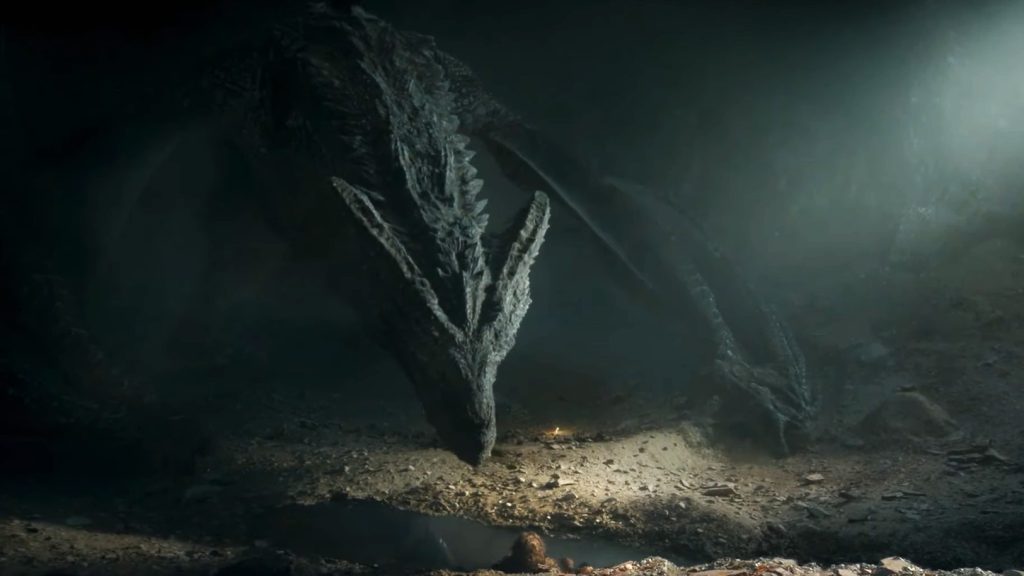 Silverwing in House of the Dragon / Credits: HBO
Silverwing may lack the savage reputation of the dragons higher up, but sleeping on her would be playing with fire. The silver she-dragon was already decades old before the Dance and once belonged to Queen Alysanne Targaryen. During the war, Ulf White eventually claimed her. Martin’s history gives Silverwing genuine battlefield credentials: she participated in the Battle of the Gullet alongside Vermithor, Seasmoke, Sheepstealer and Vermax against the Triarchy fleet.
Her advantage over Drogon comes from maturity. Drogon is ferocious and unusually large for his age, but Silverwing had enjoyed decades of growth before he would even have been considered an egg. She takes fifth because temperament matters. Silverwing was comparatively docile, while Drogon fights like someone kicked his favorite sheep.
4 Meleys Has the Speed to Challenge Drogon
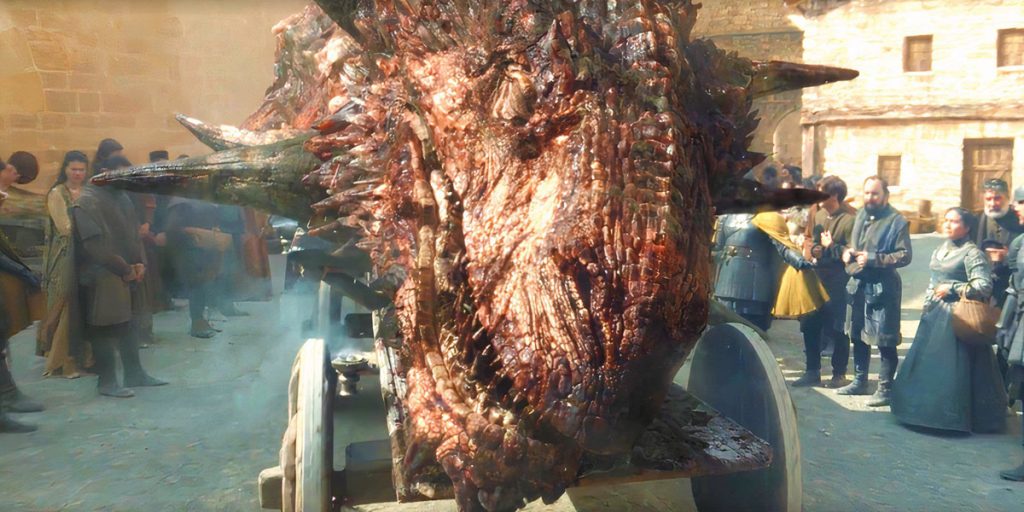 Meleys’ head in House of the Dragon / HBO
Speed kills, and Meleys was built to prove the proverb painfully literal. The Red Queen was once regarded as one of Westeros’ fastest dragons and could outpace both Caraxes and Vhagar. Even as she aged, Meleys remained formidable and cunning. Then came Rook’s Rest. Rhaenys Targaryen and Meleys confronted Sunfyre and Vhagar, with Meleys managing to seize Sunfyre by the neck before Vhagar entered the melee. The encounter ultimately killed Meleys, but surviving long enough to seriously threaten another mature dragon while Westeros’ biggest living monster joined the fight says plenty.
Drogon possesses tremendous straight-line destructive power. Meleys offers something nastier in a duel: speed married to experience.
3 Caraxes is a Battle-Tested Predator
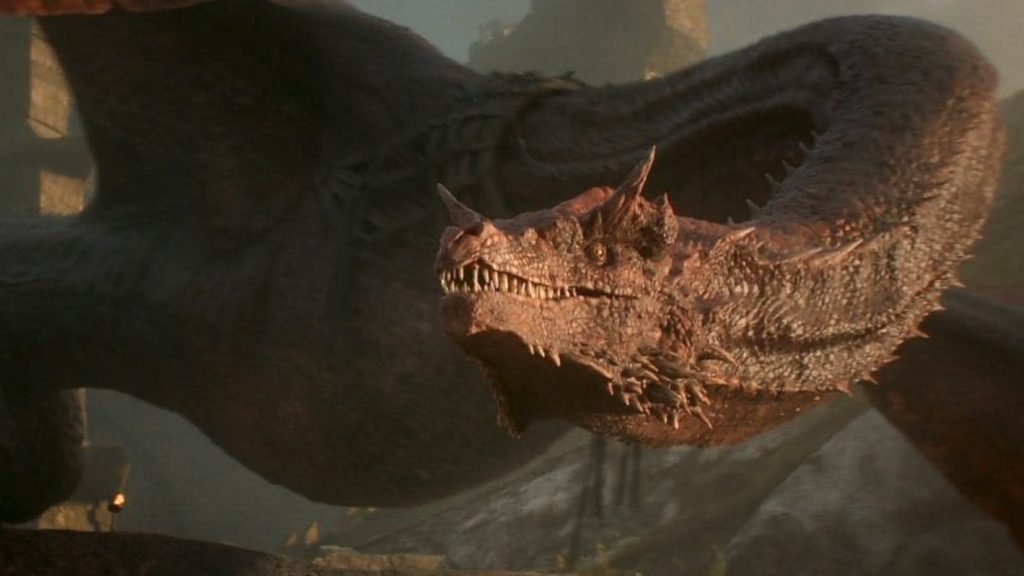 Caraxes in House of the Dragon / Credits: HBO
Caraxes looks as though somebody stretched a dragon until it became angry about the entire process. That peculiar build conceals an absolute menace. The Blood Wyrm was described as huge, lean, formidable, experienced, and eventually old and cunning. During the Dance, he measured roughly half Vhagar’s size. Half of Vhagar is still an awful lot of dragon. More importantly, Caraxes had spent years bonded with Daemon Targaryen, a rider who actually understood aerial warfare. Drogon and Daenerys shared a fierce connection, but neither accumulated anything approaching Daemon and Caraxes’ lifetime of combat experience.
Caraxes earns third because he represents the opponent Drogon would hate most: vicious, seasoned, agile enough to exploit openings, and perfectly willing to make a fight ugly. Bigger muscles do little good when the other bloke has been in the pub brawl a hundred times before.
2 Vermithor is Bigger and Far More Experienced
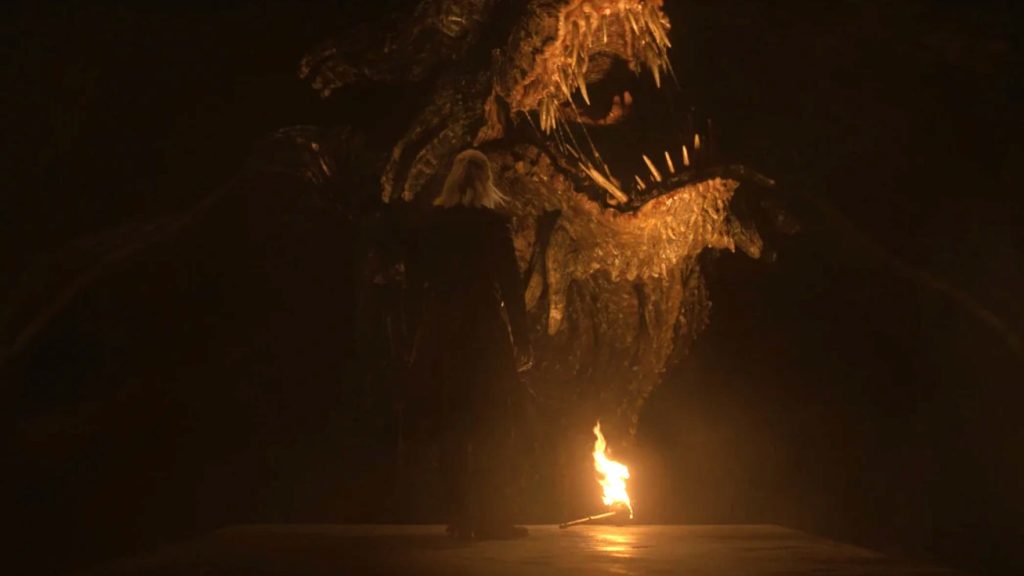 Vermithor in House of the Dragon / Credits: HBO
If Drogon wandered into Vermithor’s territory looking for trouble, he would learn there is always a bigger fish. The Bronze Fury was nearly a century old during the Dance and ranked among the largest Targaryen dragons, behind giants such as Balerion and Vhagar. Age also gives dragons hotter fire and tougher scales, giving Vermithor decades of physical development Drogon never reached. Daenerys’ dragon may have devastated King’s Landing, but Vermithor had nearly a century to become an airborne furnace. He comes close to the crown, but one older monster keeps the Bronze Fury in second place.
1 Vhagar is in a Different League
 Credits: HBO
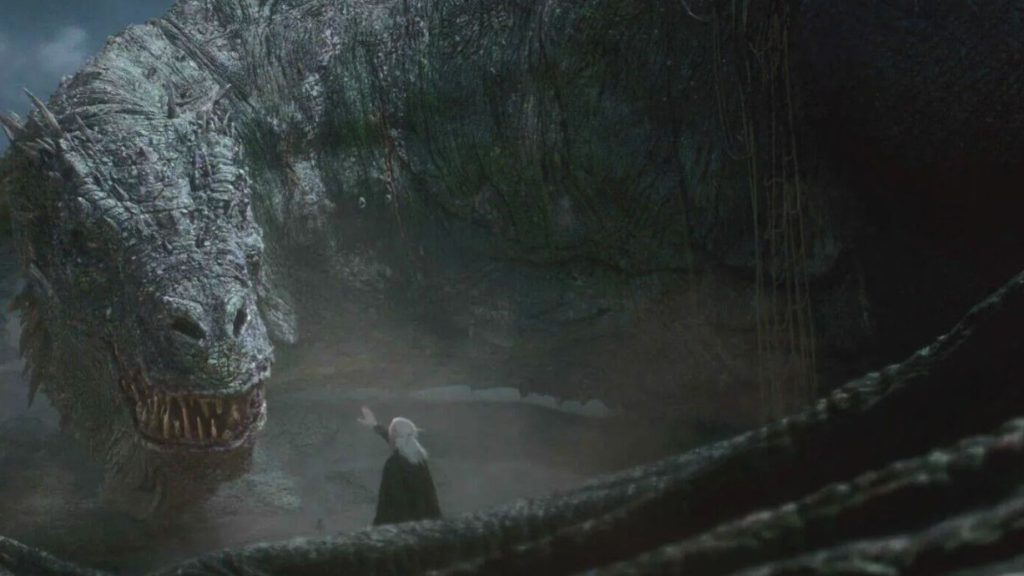
There is no need to beat around the bush: Vhagar is the nightmare matchup. By the Dance of the Dragons, Vhagar was Westeros’ oldest and largest living dragon, had survived around a century and a half, and had grown nearly as large as Balerion the Black Dread. Martin’s history describes her as a hardened veteran of countless battles whose size and ferocity were unmatched among living dragons.
She had fought during Aegon’s Conquest era, participated in wars across generations, and later turned the skies over Westeros into Aemond Targaryen’s hunting ground. Drogon could exploit Vhagar’s slower movement, and youth gives him more agility. But getting within biting distance creates another problem: Vhagar is enormous enough to make younger dragons look like appetizers.
Caraxes could challenge her through experience and maneuverability. Meleys could pressure her with speed. Drogon possesses neither their decades of aerial combat nor equivalent maturity. That settles the ranking. Drogon was perhaps the most terrifying dragon of his age, with frightening potential had he lived for another century. Against Vhagar at her peak during the Dance, however, potential does not pay the bills.
Which beast are you backing if Drogon enters the Dance? Sound off, and follow FandomWire for more updates!
All three seasons of House of the Dragon are now streaming on HBO Max in the United States.




























 Bengali (BD) ·
  English (US) ·