.png)
 1 hour ago
4
1 hour ago
4
There is a special kind of dread that hits when production houses announce a live-action adaptation of anime. Somewhere in the distance, an anime fan quietly whispers, “Please don’t ruin it.” And honestly, the concern is understandable. How do you turn impossible hair, larger-than-life characters, outrageous powers, fantastical worlds, and wildly expressive storytelling into something that works with actual human beings standing in front of a camera?
More often than not, the answer has been… painfully awkward. But every once in a while, an adaptation looks at those impossible odds and says, “challenge accepted.” Rurouni Kenshin, One Piece, and even Death Note found different ways around the live-action curse. They did not simply copy their source material. They understood what made it tick.
Here are 5 such live-action adaptations that impressed the world:
1 Rurouni Kenshin Turns Its Samurai Action Into a Live-Action Spectacle
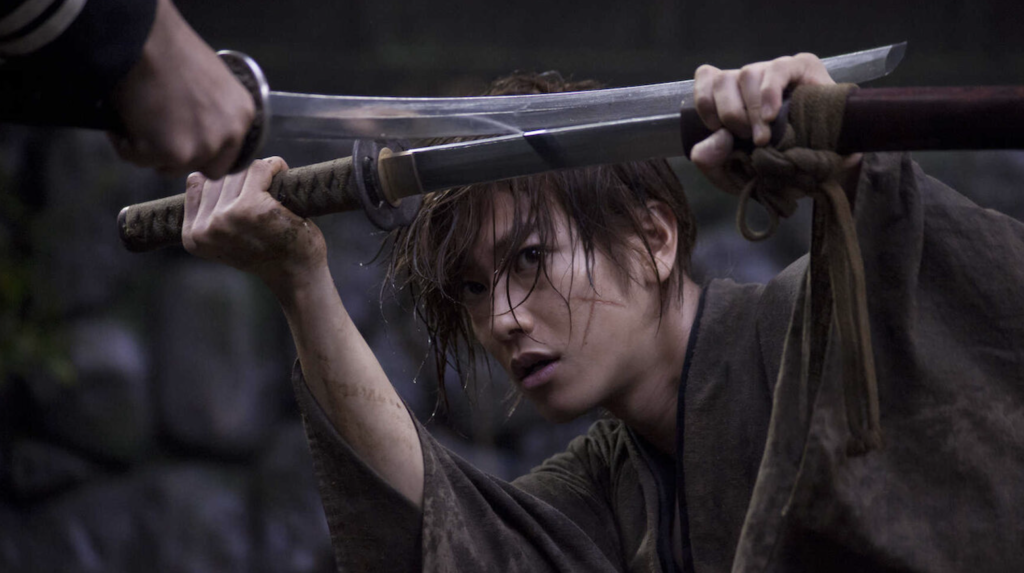 Kenshin Himura in the 2012 live-action film Rurouni Kenshin: Origins. [Credit: Warner Bros. Pictures Japan, Amuse]
Nobuhiro Watsuki’s Rurouni Kenshin blends samurai drama, redemption, and wildly kinetic swordplay, making it almost tailor-made to expose the weaknesses of lesser live-action adaptations. The 2012 film, directed by Keishi Otomo and starring Takeru Satoh as wandering former assassin Kenshin Himura, understood that the fights could not simply be recreated as static choreography. Satoh’s performance gives Kenshin the necessary contradiction: gentle enough to believe in his vow, yet frighteningly capable when forced to draw his blade.
Otomo also emphasized costumes designed specifically for movement, while the films escalated their combat into increasingly elaborate set pieces. The result feels less like anime cosplay and more like a genuine sword-fighting epic that happens to retain Kenshin’s heightened identity. It truly rivals its original anime with sheer precision.
2 One Piece Proves Its Wildest World Can Actually Work in Live Action
Few anime seemed less suited to live action than One Piece. Eiichiro Oda’s manga, which debuted in 1997, is packed with rubber-bodied heroes, impossible islands, bizarre creatures, and characters whose silhouettes practically dare reality to object. Netflix’s 2023 series survived that challenge by understanding that the heart of One Piece was never realism. Iñaki Godoy, Mackenyu, Emily Rudd, Jacob Romero Gibson, and Taz Skylar formed a Straw Hat crew whose chemistry made the eccentricity feel human.
It was a challenge, since Toei Animation had already brought to life Oda’s vision in anime form. Interestingly, the live-action series holds its ground and emerges as a true rival, showcasing the events through sheer sincerity and grace. For example, enormous practical sets gave places such as the Baratie and Arlong Park physical weight. Its 18.5 million views in four days and No. 1 debuts in 46 countries showed just how successfully that gamble landed. Before Season 3 arrives, it’s time to watch the previous two seasons if you haven’t already.
3 Death Note Makes the Anime’s Psychological Duel Feel Even Tighter
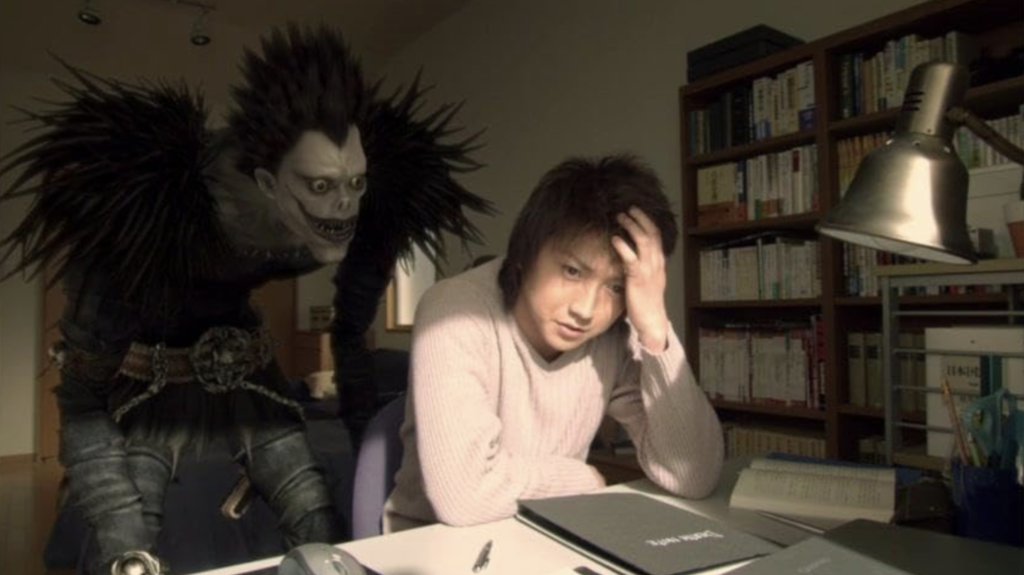 A still from Death Note live-action. [Credit: Warner Bros. Pictures]
The 2006 Death Note films had an advantage many adaptations squander: they understood that the series’ greatest special effect was the battle of wits between Light Yagami and L. The two Japanese films arrived in June and November 2006, just as the television anime was beginning its own run. Tatsuya Fujiwara plays Light while Kenichi Matsuyama’s eccentric L becomes the perfect counterweight.
Compared with the anime’s deliberately expansive 37-episode story, the films compress the conflict and eventually take a different route, giving the live-action version its own conclusion. That change is precisely why it works as a counterpart rather than a substitute.
4 Speed Racer Turns Anime’s Impossible Racing Into Pure Live-Action Spectacle
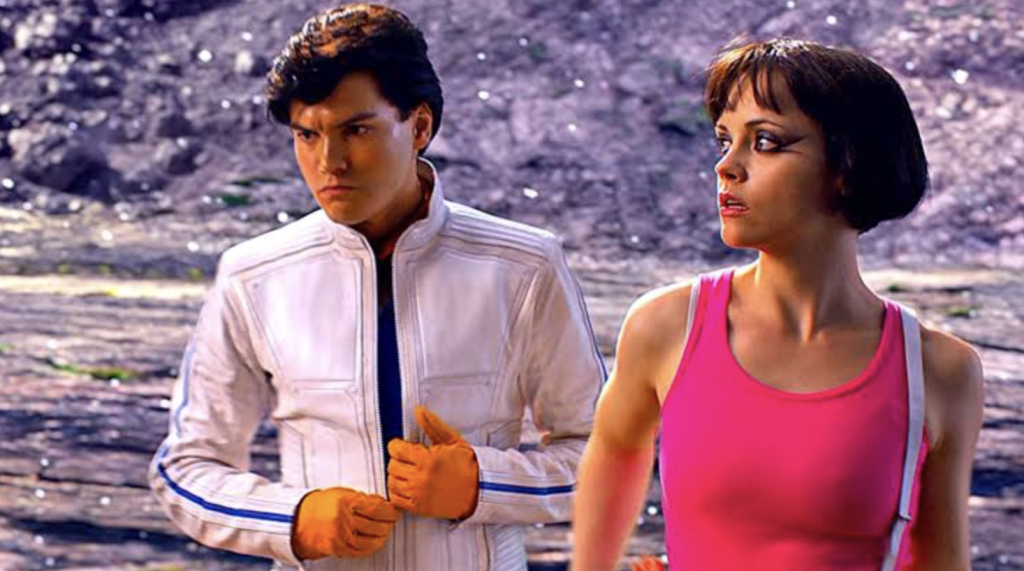 A still from Speed Racer live-action. [Credit: Warner Bros. Pictures]
The 2008 Speed Racer film had one enormous problem before the first car even crossed the finish line: the Wachowskis were adapting an anime whose entire identity was built around speed, impossible turns, screaming colors, and physics that existed mostly on their own terms. Based on Tatsuo Yoshida’s Mach GoGoGo, the film stars Emile Hirsch as Speed, Christina Ricci as Trixie, and Matthew Fox as Racer X.
Rather than making the world gritty or realistic, the Wachowskis went in the opposite direction, using elaborate sets, rear projection, digital environments, and deliberately heightened visuals to recreate the sensation of watching animation. The approach was divisive on release, but that is precisely what makes the film fascinating today.
5 Gintama Turns Anime’s Absurdity Into Its Greatest Live-Action Weapon
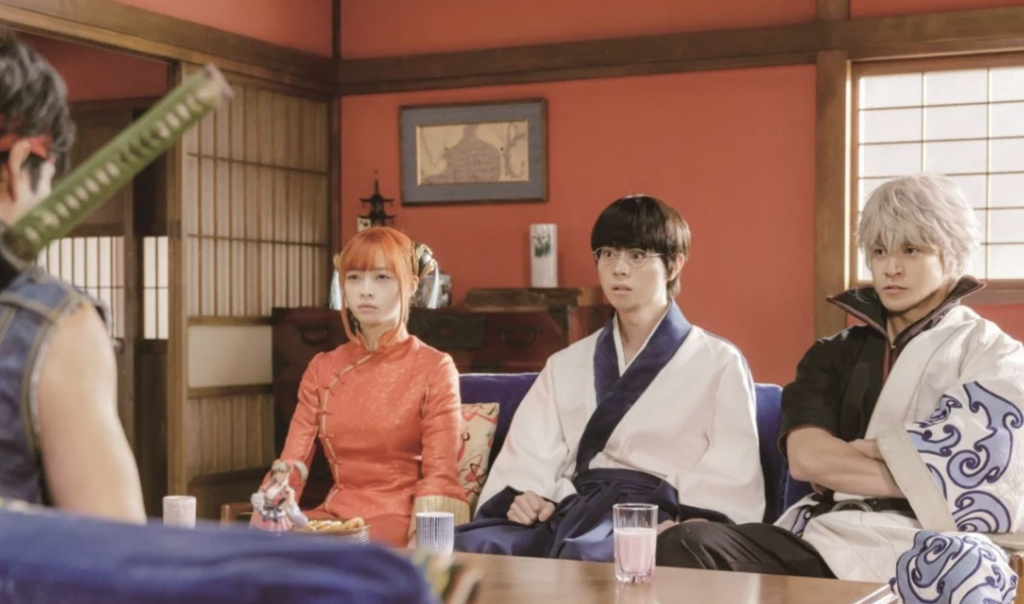 A still from Gintama live-action. [Credit: Aniplex, BNP]
If One Piece looked impossible to adapt because of its world, Gintama looked impossible because of its tone. Hideaki Sorachi’s series mixes samurai drama, science fiction, slapstick comedy, emotional character arcs, and enough fourth-wall destruction to make a straight adaptation sound like a terrible idea. The 2017 live-action film, directed by Yuichi Fukuda and starring Shun Oguri as Gintoki Sakata, embraced exactly that madness.
Oguri’s deliberately unserious performance is crucial because Gintoki can switch from idiot to formidable swordsman in seconds. Where the anime can exaggerate timing and facial expressions through animation, the film uses actors’ physical comedy and unapologetically theatrical performances.
Which anime adaptation do you think deserves a spot on this list? Tell us in the comments below!



















 Bengali (BD) ·
  English (US) ·