.png)
 1 hour ago
6
1 hour ago
6
There are few Dragon Ball Z transformations as gloriously ridiculous as Trunks suddenly becoming a human tank. One moment, Future Trunks is the familiar lean Super Saiyan; the next, his shoulders balloon, his muscles swell to absurd proportions, and his veins look ready to file for their own screen time.
This happens during the Cell Saga after Trunks trains with Vegeta in the Room of Spirit and Time, desperately trying to close the gap between the Saiyans and Perfect Cell. The resulting transformation, commonly called Super Saiyan Third Grade, is essentially Trunks deciding that if he cannot overpower Cell normally, he might as well become the Hulk. The joke, however, is that the extra muscle is exactly what ruins his chances. The form delivers tremendous power, but sacrifices the speed needed to actually hit Cell.
Super Saiyan Third Grade Was Trunks’ Most Absurd Power-Up at a Terrible Cost
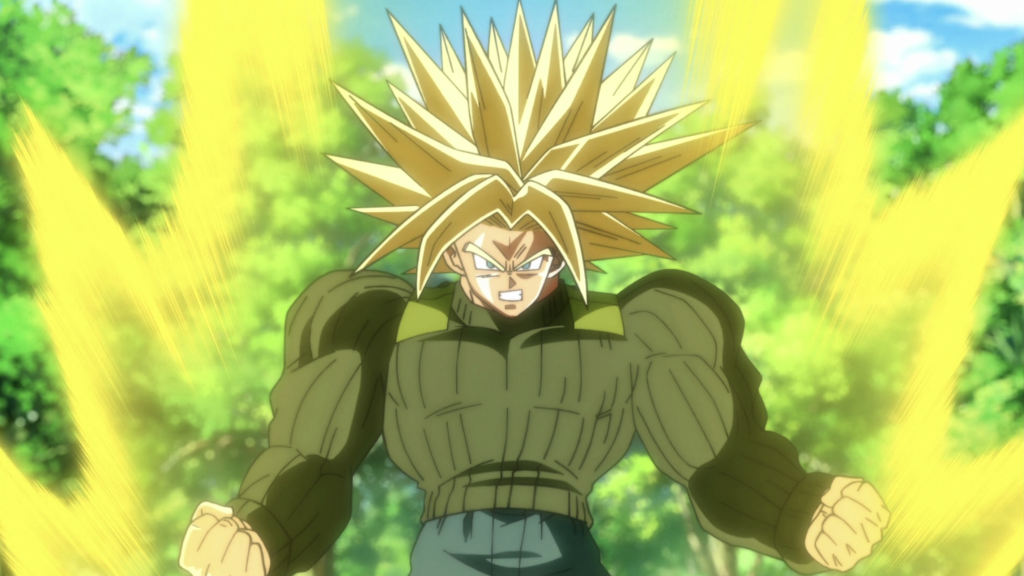 Future Trunks from Dragon Ball Super. [Credit: Toei Animation]
Trunks’ mistake begins with a perfectly understandable Saiyan instinct: get stronger. After Vegeta’s earlier success with the bulked-up Super Saiyan Grade 2, Trunks pushes the same basic idea even further. Instead of simply increasing his strength, he pours an enormous amount of energy into his muscles, producing the hulking form known as Super Saiyan Third Grade or Ultra Super Saiyan. The transformation is part of the expanded Super Saiyan states explored during the Cell Saga rather than a completely separate tier like Super Saiyan 2.
Visually, it looks devastating. Trunks’ body becomes enormous, his muscles swell dramatically, and his silhouette practically screams POWER. And for a moment, that seems to be the point. Then Cell moves. The problem is beautifully simple: Trunks has increased his power without preserving the speed required to use it. Cell can evade him, leaving all those glorious muscles with nobody to punch. Official Dragon Ball material later summarized the lesson bluntly: Trunks gained tremendous strength but lost so much speed that he could not keep up with Cell.
That is also why Vegeta’s approach matters. Trunks realizes that his father had avoided taking the same path to its extreme because raw power alone was not enough. Goku and Gohan subsequently pursue a different solution inside the Room of Spirit and Time: mastering Super Saiyan itself and reducing the transformation’s strain rather than simply piling on more muscle. In other words, Trunks basically hit the gym, ignored the cardio, and challenged a guy who could teleport around the ring.
The defeat hurts precisely because Trunks had genuinely become stronger. His failure is not that he lacked power; it is that he misunderstood what usable power meant. The official character showcase describes him ultimately admitting defeat after the flaw in his approach becomes clear.
Why Trunks’ “Worst” Super Saiyan Form Became Peak Dragon Ball Z Design
Calling Toriyama’s “worst” Super Saiyan design peak might sound ironic or juxtaposed, but that’s how Dragon Ball has always been. Its ridiculousness is the entire point. The transformation looks like a Super Saiyan pushed through a bodybuilding apocalypse. Trunks’ normally athletic frame becomes absurdly broad, his muscles dominate the silhouette, and his hair appears even more aggressive against that enlarged body. It is practically visual shorthand for someone screaming, “I HAVE MORE POWER NOW.”
And that makes the design unusually effective. The form does not merely look powerful. It communicates the character’s mistake before the fight has even finished. Trunks has taken the obvious route of making the number go up: more muscle, more ki, more force. His body is telling us he has maximized one statistic while neglecting the rest. That visual storytelling is part of why the form remains so recognizable decades later. Even people who cannot remember the terminology often remember the giant Trunks.
Interestingly, its reputation has survived partly because the franchise itself keeps returning to the idea. Modern official material still highlights Trunks’ Cell-era transformation, while Dragon Ball-related commentary continues to use his battle as a memorable example of why strength without speed can become a liability.
There is also an important manga-history wrinkle: the chapters surrounding the fight were published in 1992, including Chapter 386, Super Trunks Surpasses His Father! and Chapter 387, The Balance of Super Power. Those titles practically summarize the joke—Trunks does surpass his father in a particular measure of power, but balance is what he lacks. That is why the form has aged so well. It is simultaneously cool, stupid, intimidating, and completely impractical.
Trunks’ Third Grade transformation may be one of the least useful Super Saiyan states in Dragon Ball Z, but that is exactly what makes it such a perfect snapshot of the Cell Saga. It turns a character’s desperation into a silhouette, his misunderstanding into a battle strategy, and his failure into a lesson. Thirty-four years later, the giant-haired, vein-popping, Hulk-sized Trunks still looks gloriously unhinged. And honestly? That is peak DBZ.
Was Ultra Super Saiyan Trunks actually peak DBZ, or the biggest power-up fail? Tell us what you think in the comments!
Dragon Ball Z is available on Crunchyroll.





















 Bengali (BD) ·
  English (US) ·