.png)
 3 hours ago
3
3 hours ago
3
Sixteen years later, Pain’s words still land with an uncomfortable kind of force. Standing before Naruto amid the aftermath of his devastating attack on Konoha, Nagato wasn’t simply defending what he had done. He was laying out his bleakest belief about humanity itself:
Just by living, people hurt others without even realizing it. So long as humanity exists, hate will also exist. True peace cannot exist in this cursed world!
It is the kind of statement that sounds almost too cynical to come from a Naruto villain until you understand the life that created Pain. That question reaches its sharpest point in Naruto: Shippuden Episode 174, “Tale of Naruto Uzumaki,” which originally aired in Japan on August 19, 2010. The episode comes after Naruto defeats Pain’s Six Paths and finally meets the broken man controlling them. Pain’s (Nagato) argument is brutally simple: suffering creates hatred, hatred creates revenge, and revenge creates more suffering. Humanity keeps feeding the machine.
And the uncomfortable part? He isn’t completely wrong about the machine. His solution, however, is where everything goes horribly sideways.
Pain’s 16-Year-Old Words Still Capture Naruto‘s Darkest Truth About Humanity
Coming from another character, those words might sound like standard villain philosophy. Coming from Nagato, they land differently because he has spent his entire life collecting evidence for them. As a child in the war-torn Hidden Rain, Nagato loses his parents after Leaf shinobi mistakenly kill them during the Second Great Ninja War. He is subsequently left to survive alongside Yahiko and Konan, two other war orphans. Their lives change when Jiraiya finds them and chooses to teach them ninjutsu instead of simply walking away.
For a while, the three genuinely believe they can change their country. Then Yahiko dies. That moment shatters Nagato’s faith in the peaceful future Jiraiya once imagined. The boy who wanted to protect his friends gradually becomes Pain, a figure who believes people can only understand suffering after experiencing it themselves. He doesn’t see hatred as some random flaw possessed by evil people. He sees it as something produced by grief. Someone loses a loved one, blames another person, seeks revenge, creates another victim, and leaves behind another reason for someone else to hate.
Konoha’s own history is full of wars, political rivalries, revenge missions, and children inheriting conflicts they never started. In a way, Naruto‘s biggest villain was the Hidden Leaf Village; not even Madara. So, Nagato’s suffering before he became Pain is connected to violence between villages. Pain therefore believes he is exposing the system everyone else has learned to tolerate.
Pain wants peace badly enough to destroy an entire village to achieve it. His plan is to create a weapon so terrifying that nations will fear another war. Periods of peace would supposedly emerge because everyone remembers what catastrophic suffering feels like. He attempts to break the cycle of violence by becoming its most efficient participant. The destruction of Konoha isn’t merely a demonstration of Pain’s power. It is the philosophical flaw in his argument made physical. He understands suffering. He simply mistakes understanding suffering for having the right to inflict it.
Why Pain’s Lesson About Hate and True Peace Still Resonates With Us
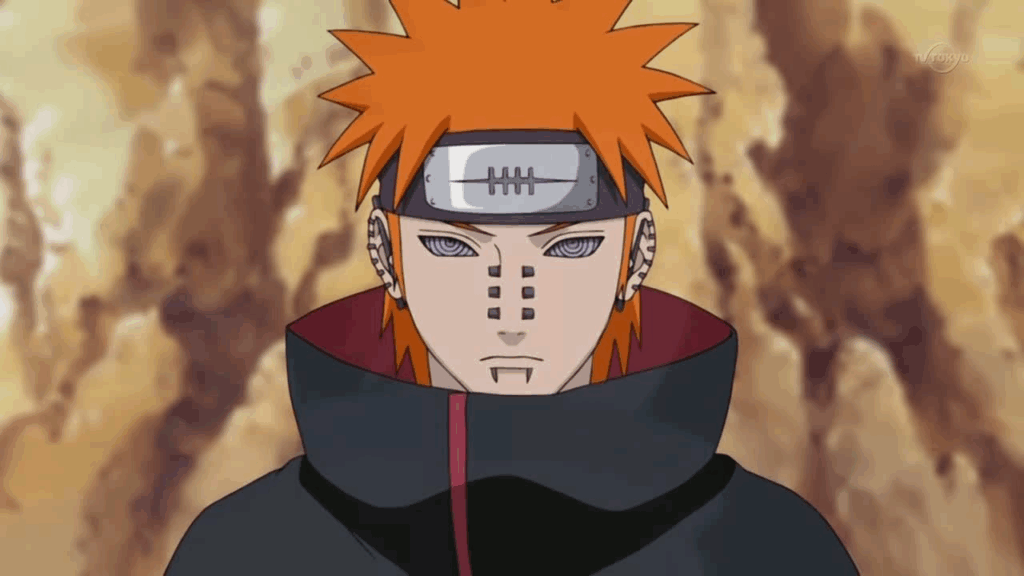 Pain from Naruto: Shippuden. [Credit: Studio Pierrot]
What makes the scene survive sixteen years later isn’t that Pain supposedly “had a point.” Plenty of villains have a point. It is that Naruto refuses to give him an easy rebuttal. Naruto has experienced loneliness, rejection, and loss just like Nagato/Pain. He understands why hatred can become seductive. When Pain kills Jiraiya and destroys Konoha, Naruto is pushed dangerously close to accepting the same logic.
Naruto doesn’t defeat Pain’s ideology by pretending the cycle doesn’t exist. He acknowledges it and refuses to continue it. After hearing Nagato’s history, Naruto admits that he cannot simply forgive what happened. But he also refuses to abandon Jiraiya’s belief that peace is worth pursuing. Naruto claims that if someone has to stop the cycle somewhere, then he will try. So, Naruto promises Pain that he will bring true peace to this world, a promise he failed to keep.
The physical battle ends when Naruto defeats Pain. The ideological battle ends when Naruto refuses to become another Pain. And Nagato recognizes the difference. Naruto’s response moves him because it reminds him of the person he once was before becoming Pain: a child who believed suffering did not have to determine the future. The series never promises that hatred will disappear forever. In fact, later conflicts continue to test the same question. But that is precisely the lesson. Peace isn’t valuable because it is guaranteed. It is valuable because someone has to choose it despite knowing how easily hatred can return.
Sixteen years later, Pain’s words still sting because they identify something painfully human: we can hurt people without intending to, inherit grudges we never created, and mistake revenge for justice when we’re wounded enough.
Was Pain completely wrong? Tell us where you stand in the comments.
Naruto and Naruto: Shippuden are available on Netflix and Crunchyroll.




















 Bengali (BD) ·
  English (US) ·