.png)
 18 hours ago
13
Bleach has never been short on monstrous enemies, ancient grudges, or secrets buried beneath the elegant façade of Soul Society. But beneath all the spectacular sword fights lies a far more disturbing question: what if the world the Soul Reapers protect was built on an unforgivable crime?
The Original Sin of Soul Society is one of Tite Kubo’s most consequential pieces of mythology. It explains why the existing order deserves scrutiny, yet the original manga ends without presenting a complete account of how that order came to exist. Even the latest TYBW adaptation, which ended on October 27, 2026, didn’t answer it. Supplementary material fills in substantial gaps, but the distinction matters: knowing the crime is not the same as understanding every decision, motive, and consequence behind it.
Bleach Finale Ends After 22 Years Without Explaining the Original Sin
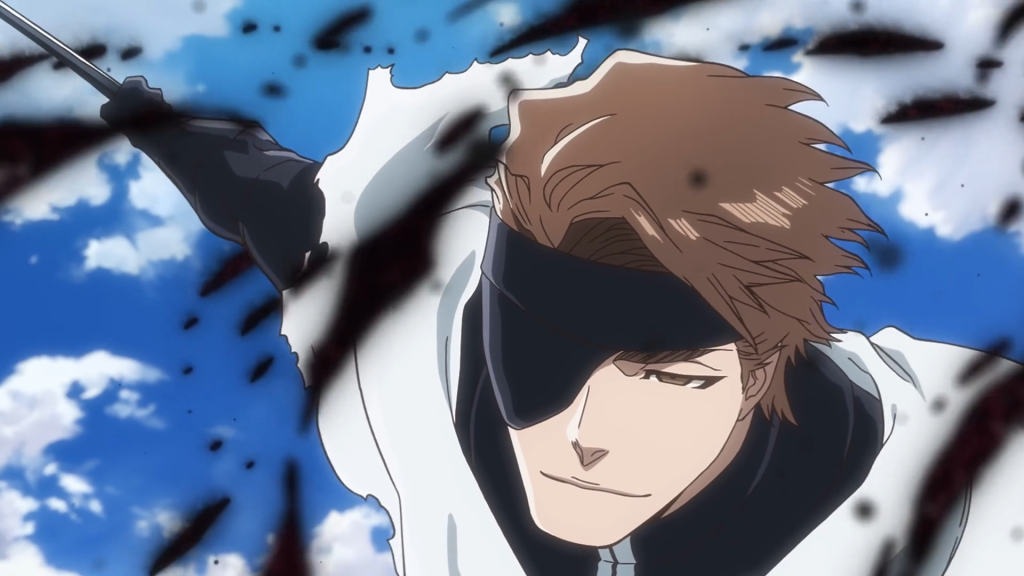 Aizen from Bleach. [Credit: Pierrot]
The original Bleach manga concluded in 2016 with Chapter 686, “Death & Strawberry,” wrapping up Ichigo’s battle against Yhwach and offering a glimpse into the next generation. Its anime adaptation (the original Bleach anime commenced in 2004) eventually brought this climax to the screen on October 26, 2026. However, neither medium ever delivered a full account of the Original Sin that established Soul Society’s existing world order.
According to the Bleach lore, millions of years ago, the world was one without the concept of life and death. The primordial realm existed in a singular form, where life and death were undivided. It took years for this chaotic world to cool down. Eventually, the Hollows were born, and they began threatening its inhabitants. Just when the realm was succumbing to stagnation, a being who became the Soul King emerged to protect the world with his extraordinary power.
The Soul King destroyed the Hollows and turned them into Reishi sands and allowed the circulation of the souls again. However, the Soul King’s power continued to annihilate the Hollow souls, similar to the Quincy. Therefore, the world would have succumbed to chaos yet again. At that moment, five individuals, who would later be known as the founding fathers of the Five Noble clans: Tsunayashiro, Kuchiki, Shiba, Shihoin, and a fifth, assembled.
Led primarily by the Tsunayashiro ancestor, they committed a horrifying betrayal: they sealed, disemboweled, and dismembered the Soul King, using his mutilated body as the passive linchpin to separate the realms and regulate the cycle of souls.
While Chapter 621 of the manga briefly reveals the Soul King’s severed limbs moving independently, Kubo never exposed this grotesque origin story in the primary narrative. It wasn’t until Ryōgo Narita’s canon light novel series, Bleach: Can’t Fear Your Own World, that these dark details were formally penned under Tite Kubo’s supervision.
As far as the core series conclusion is concerned, the narrative completely skipped a proper historical reckoning. Ichigo defeats Yhwach, the Gotei 13 carry on, and the systemic, primordial lie at the heart of the universe remains neatly swept under the rug.
Why Soul Society’s Original Sin Remains Bleach’s Greatest Mystery
The Original Sin isn’t just an obscure piece of historical trivia; it is the absolute backbone of Bleach’s moral ambiguity. By keeping the full extent of this ancient conspiracy out of the main manga narrative, the series presents the Soul Reapers as heroic defenders of order while quietly masking the fact that they are enforcing an empire built on a cosmic murder.
The noble ancestors (most notably the Tsunayashiro Clan) did not merely create a nexus between realms; they mutilated a willing god out of existential paranoia. This contextualizes every antagonist in the franchise:
- Sosuke Aizen’s refusal to kneel before “that thing” (Chapter 421) wasn’t just megalomania; it was a rebellion against a corrupted, hollowed-out deity.
- Yhwach’s war was a son’s brutal effort to undo his father’s unnatural, stagnant imprisonment.
This revelation also casts the Great Noble Clans in a darker light. Families such as the Kuchiki and Shihōin are associated with authority, tradition, and the administration of Soul Society, while the Shiba family’s history reveals a different relationship with the original decision. The Tsunayashiro clan’s role is particularly disturbing because its ancestor helped shape the system that later generations inherited.
The novels connect the Soul King’s divided body to the wider mythology of the Quincy and Fullbringers, while the Soul King’s relationship with Yhwach adds a deeply personal dimension to the conflict. Yhwach’s desire to restore a world without the established separation of life and death is no longer just a villain’s grand ambition; it becomes a challenge to a system founded on sacrifice.
Share your thoughts in the comments below.
Bleach anime is streaming on Hulu in the US and Disney+ globally.





















 Bengali (BD) ·
 English (US) ·