.png)
 3 hours ago
6
3 hours ago
6
For nearly five decades, Mobile Suit Gundam has defined the mecha genre, influencing everything from military sci-fi to model-kit culture. Yet giant robots alone have never been what makes great mecha anime memorable. The very best series distinguish themselves through psychological depth, political storytelling, emotional character arcs, visual innovation, or genre-defining creativity.
This ranking doesn’t argue that these anime replace Gundam as the greatest mecha franchise. Instead, each one objectively surpasses Gundam in a specific storytelling category where it reached an even higher standard.
Here’s why these 10 classics deserve recognition as the genre’s greatest specialists.
10 SSSS.Gridman Breathed New Life Into a Forgotten Genre
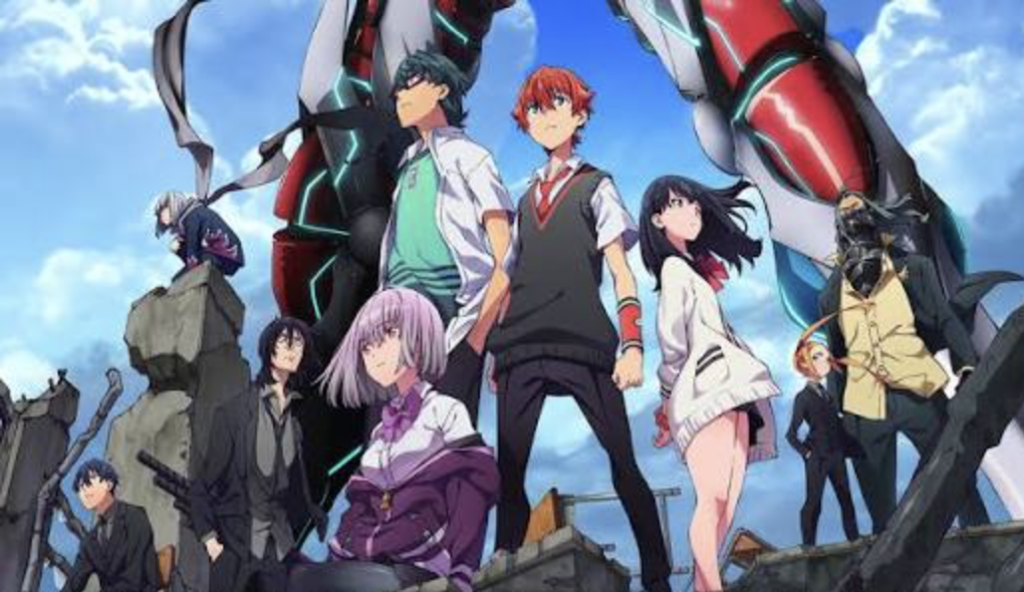 The official poster of SSSS.Gridman. [Credit: Trigger]
When SSSS.Gridman premiered, the classic tokusatsu-inspired super robot formula felt like a relic of another era. Director Akira Amemiya and Studio Trigger reinvented it through modern character drama, existential mystery, and stunning cinematic direction. The reveal that Akane created the city’s artificial world transforms what initially appears to be a monster-of-the-week series into a deeply personal story about loneliness and escapism.
Every kaiju battle reflects Akane’s emotional state rather than existing for spectacle alone. It sits at #10 because it successfully modernizes a nearly forgotten style of mecha storytelling without abandoning its roots, but SSSS.Gridman fell short compared to the others on this list.
9 Patlabor Proved Mecha Stories Could Thrive Without Constant Action
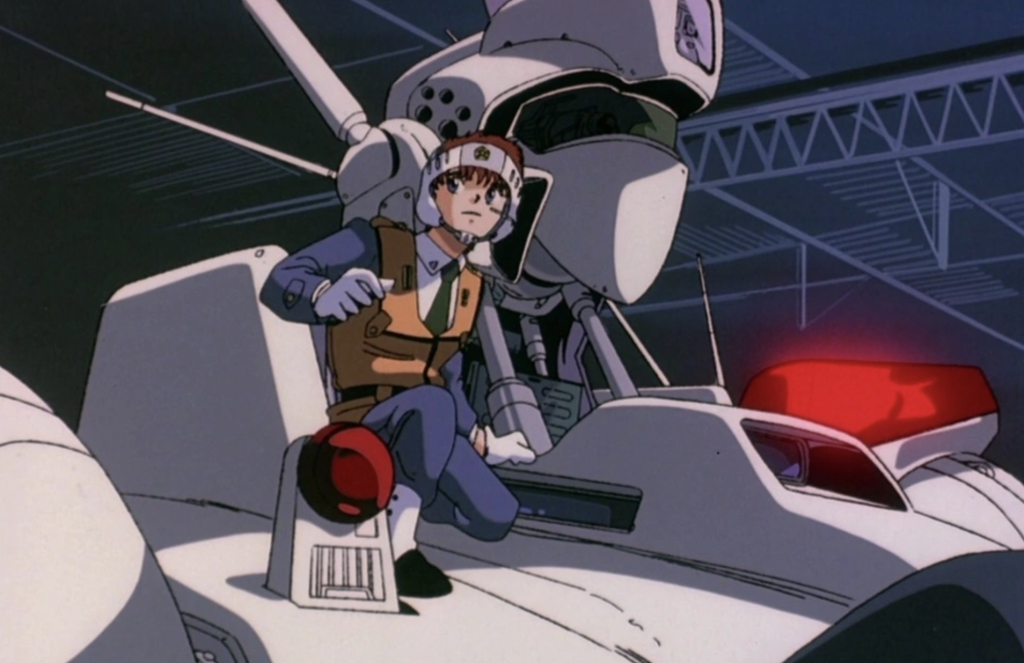 Noa and her mecha, AV-98 Ingram 1, from Patlabor: The TV Series. [Credit: Headgear]
Mamoru Oshii’s Patlabor (1988; 7 episodes) elevated the mecha genre by shifting the spotlight away from giant robot battles and toward grounded police work, workplace dynamics, and political intrigue. Rather than treating Labors as ultimate weapons, the series presents them as everyday machines that create new legal, social, and ethical challenges.
By making bureaucracy, criminal investigations, and believable characters just as compelling as its mecha action, Patlabor objectively surpasses Gundam in portraying how giant robots would realistically exist within everyday society, earning it the ninth place on this list.
8 Bokurano Made Every Victory Feel Like a Tragedy
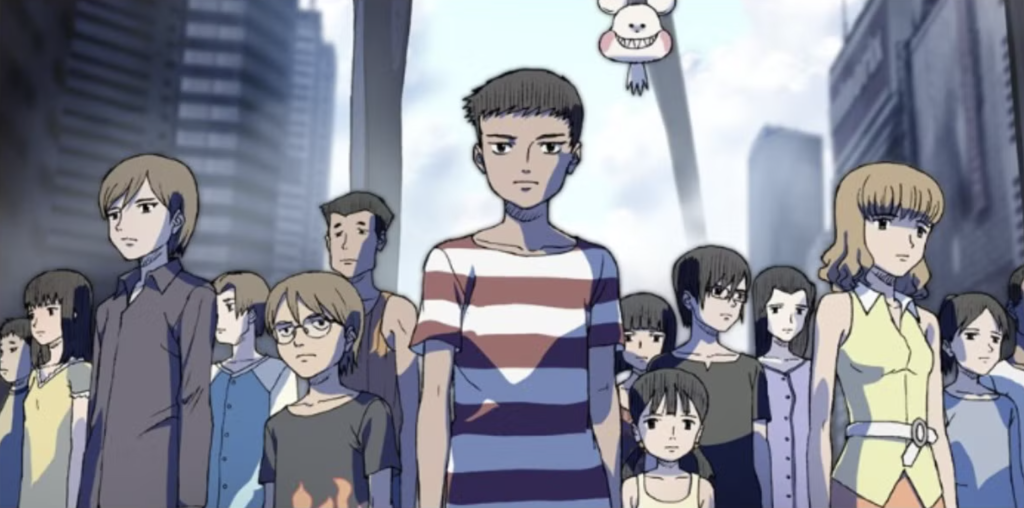 A still from Bokurano. [Credit: Gonzo]
Few anime have ever made heroism feel as devastating as Bokurano. Every child who pilots Zearth learns that using the giant robot guarantees their own death after victory. This single narrative rule transforms every battle into an emotional countdown instead of an action set piece, which makes it one of the anime with the most tragic endings. Jun’s heartbreaking sacrifice and Kana’s quiet acceptance demonstrate how ordinary children respond differently when faced with unavoidable mortality.
Rather than glorifying courage, the series examines responsibility, fear, and regret with brutal honesty. Gundam often mourns war’s casualties, but Bokurano makes every single victory emotionally unbearable in a way few anime have matched. That’s why it takes the eighth spot.
7 Macross Plus Still Outclasses Most Sci-Fi Anime Decades Later
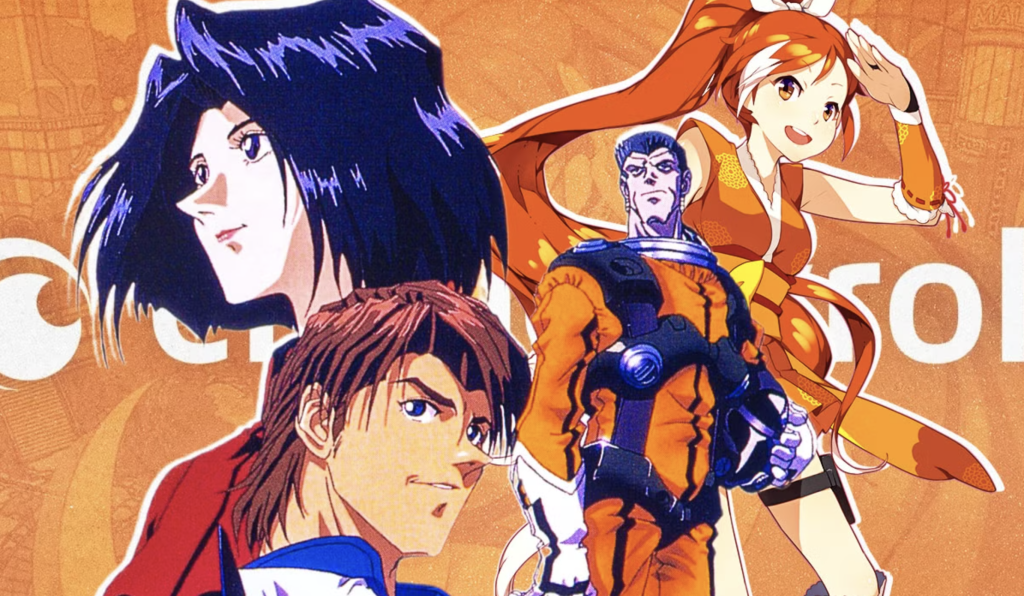 A still from Macross Plus anime series. [Credit: Triangle Staff]
Even decades after its release, Macross Plus remains astonishingly modern thanks to its ambitious blend of artificial intelligence, virtual entertainment, and human emotion. Shinichiro Watanabe’s direction, Keiko Nobumoto’s writing, and Yoko Kanno’s legendary soundtrack elevate every scene. Sharon Apple’s concert, where digital music manipulates thousands of people simultaneously, feels even more relevant in today’s AI-driven world.
Meanwhile, the rivalry between Isamu Dyson and Guld Goa Bowman grounds the futuristic concepts in painfully human emotions. While Gundam excels at military science fiction, Macross Plus explores technology’s relationship with identity and creativity with remarkable foresight, which is why it perfectly sits at number seven.
6 The Vision of Escaflowne Achieved What Few Genre Blends Ever Do
Blending fantasy and mecha has defeated many anime, but The Vision of Escaflowne made it look effortless. Rather than treating its medieval setting and giant robots as separate concepts, the series fuses destiny, romance, political conflict, and magical mythology into one cohesive narrative. Hitomi’s visions constantly blur fate and free will, culminating in emotionally charged moments where her choices reshape history instead of merely predicting it.
Yoko Kanno’s orchestral score reinforces the epic fantasy atmosphere throughout. Gundam largely stays grounded in military realism, whereas Escaflowne proves mecha can thrive equally within sweeping fantasy storytelling, earning the sixth spot.
5 Eureka Seven Perfected the Coming-of-Age Anime Formula
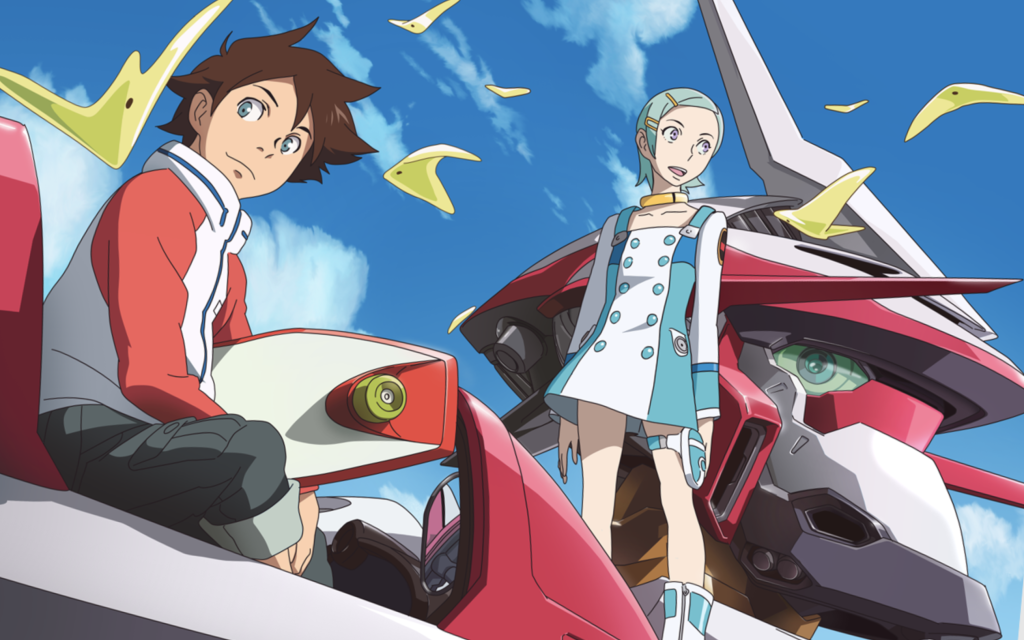 Mecha Nirvash, Renton, and Eureka from Eureka Seven. [Credit: Bones]
At its core, Eureka Seven is less about robots than about growing up. Renton Thurston begins as an impulsive teenager obsessed with adventure, only to discover that love, family, and responsibility demand painful maturity. His evolving relationship with Eureka feels authentic because both characters continually challenge each other’s worldview rather than simply falling in love.
By tying every mecha battle directly to emotional growth, Eureka Seven delivers one of anime’s most complete coming-of-age stories, surpassing Gundam in this specific narrative focus. Hence, it justifies its fifth placement on this list.
4 86: Eighty-Six Set a New Benchmark for Modern War Anime
86: Eighty-Six strips away the romanticism often associated with military fiction by confronting systemic discrimination and dehumanization head-on. The Republic’s refusal to acknowledge the Eighty-Six as human turns every battlefield victory into a reminder of institutional cruelty. One unforgettable moment occurs when Lena desperately communicates with Spearhead Squadron during their final mission, only to realize the government has already abandoned them.
Gundam pioneered realistic war storytelling, but 86 updates those ideas with extraordinary emotional precision and contemporary relevance, earning its much-deserved fourth spot.
3 Gurren Lagann Turned Impossible Dreams Into Perfect Storytelling
 Simon from Gurren Lagann. [Credit: Gainax]
Everything about Gurren Lagann grows larger with each episode, yet its emotional core never loses focus. Simon’s transformation from a timid digger into humanity’s greatest champion mirrors the show’s escalating scale perfectly. Kamina’s death remains one of anime’s defining turning points because it shifts the story from borrowed confidence to genuine self-belief. The final battle literally throws galaxies as weapons, but the spectacle succeeds because it represents limitless human potential.
Where Gundam often emphasizes realism and consequence, Gurren Lagann crafts perhaps anime’s greatest celebration of hope, ambition, and inspirational storytelling. Plus, it has a higher MAL rating than Gundam, making it a justified placeholder in the top 3.
2 Code Geass Turned Mecha Into Anime’s Greatest Chess Match
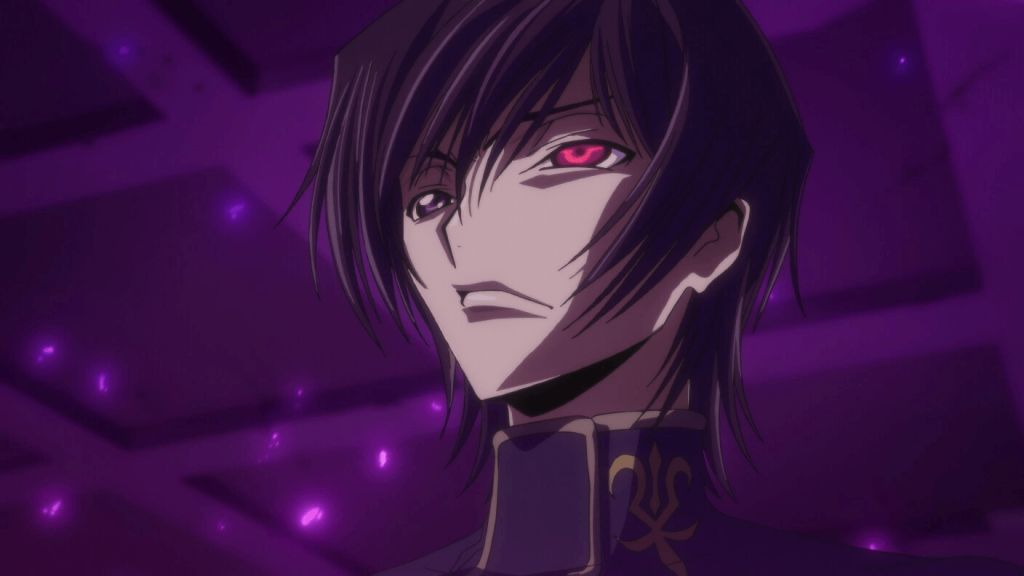 Lelouch from Code Geass. [Credit: Sunrise]
Unlike most mecha series, Code Geass wins battles primarily through intellect instead of superior machines. Every confrontation feels like a carefully planned chess match where Lelouch vi Britannia manipulates information, psychology, and timing to outmaneuver stronger opponents. The Battle of Narita perfectly demonstrates this philosophy as Lelouch engineers an avalanche to destroy an entire military offensive with strategic brilliance rather than firepower.
Gundam has brilliant tacticians, but no mecha anime has integrated strategic warfare into its narrative as consistently or brilliantly as Code Geass. And that’s precisely why it ranks second.
1 Neon Genesis Evangelion Became the Gold Standard for Psychological Anime
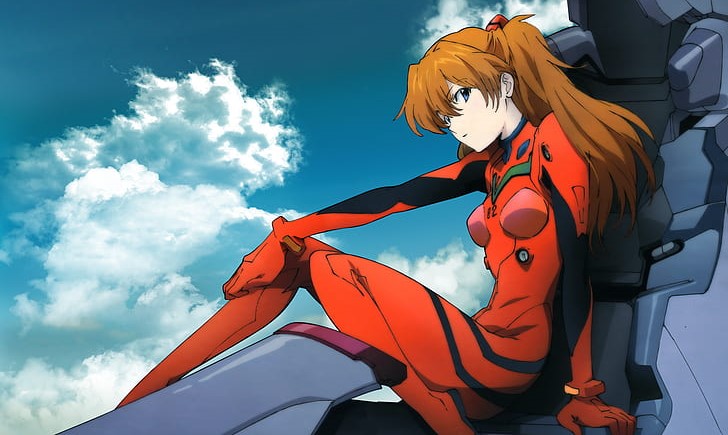 Asuka from Neon Genesis Evangelion. [Credit: Gainax]
Hideaki Anno fundamentally changed anime by turning the greatest conflict inward. Instead of focusing on humanity’s fight against Angels, Neon Genesis Evangelion explores depression, identity, trauma, and the desperate desire for acceptance. Episodes 25 and 26 abandon conventional storytelling entirely, using abstract imagery, internal monologues, and symbolic visuals to portray psychological collapse. The End of Evangelion pushes those very ideas even further.
Gundam has always explored its characters’ emotional struggles, but Evangelion elevated psychological storytelling, establishing a benchmark the genre still measures itself against today. Plus, it inspired one of the characters in Avatar: The Last Airbender, which is why it takes the crown.
Here’s a ranking table:
Which mecha anime do you think outshines Gundam in its own specialty? Share your ranking in the comments below!


















/https%3A%2F%2Fsportsmole-media-prod.s3.gra.io.cloud.ovh.net%2Fuploads%2F2026%2F06%2Fimago-xinhua-nestory-irankunda-celebrates-scoring-for-australia-in-the-world-cup-on-june-14-2026-6a2f348854d1b663111439.jpg)

/https%3A%2F%2Fsportsmole-media-prod.s3.gra.io.cloud.ovh.net%2Fuploads%2F2026%2F06%2Fjarell-quansah-2-6a405306ed40a243376273.jpg)
 Bengali (BD) ·
  English (US) ·