.png)
 2 hours ago
10
2 hours ago
10
Jon Favreau did not want Tony Stark to die in Avengers: Endgame, and the reason was painfully simple: he knew exactly how much Robert Downey Jr.’s Iron Man meant to people. Favreau, the filmmaker who helped ignite the Marvel Cinematic Universe by casting Robert Downey Jr. in 2008’s Iron Man, has now admitted that he warned Joe Russo and Anthony Russo against making that final choice.
On Jimmy Kimmel Live!, Jon Favreau recalled:
I called the Russos. I was like, ‘I don’t know about — I don’t think people — I don’t know if people are going to like — I don’t know! I think it’s going to really impact people because there they were kids that grew up with that character.’
Jon Favreau was not thinking like a studio strategist. He was thinking like someone who had watched Tony Stark grow from a risky casting bet into a cultural pillar. Joe Russo had previously revealed just how strongly Jon Favreau pushed back, saying (via Vanity Fair):
I remember pacing on the corner of a stage on the phone with Favreau trying to talk him off a ledge because he’s like, ‘You can’t do this. It’s gonna devastate people, and you don’t want them walking out of the theater and into traffic.’
Still, Favreau has now made peace with it. “But I have to tell you, it was handled so well by them,” he added.
And Gwyneth [Paltrow] and Robert [Downey Jr.] did such a wonderful job acting, and I think it added a poignancy to it. I think they did a wonderful job. I was wrong. I was wrong. I was choked up! Even though it’s a movie, those characters have been part of my life for so long.
Downey Jr. is now returning to Marvel as Doctor Doom in Avengers: Doomsday, which is scheduled for December 2026. But that comeback does not erase what Tony Stark’s ending meant, nor does it soften why Favreau resisted it so fiercely at the time.
Surprising Connection Between Wolverine’s Death and Iron Man’s Sacrifice
The most striking detail here is that Tony Stark’s farewell was not shaped in a vacuum. Kevin Feige has said that Hugh Jackman’s ending in Logan became a benchmark for what Marvel wanted to achieve with Robert Downey Jr. in Avengers: Endgame. In Disney+ documentary Assembled: The Making of Deadpool & Wolverine, Kevin Feige explained (GeekTyrant):
I had always been very vocal with Hugh that he had one of the best endings of any fictional character ever. And I told him that is so amazing, what he was able to accomplish in Logan, that’s what we were striving for with Robert Downey Jr. in Endgame, to give this incredible iconic fictional character an amazing ending.
That context also sharpens Jon Favreau’s concern. If Marvel was aiming for a grand, definitive send-off like Logan, then Tony Stark’s death was never meant to be a cheap shock. It was meant to close a chapter with gravity. Jon Favreau’s objection was not that the choice lacked craft. It was that the choice carried so much emotional force that audiences might not be ready for it. In hindsight, that fear almost proves why the scene worked.
It also helps explain why Endgame did not treat Tony Stark’s death like a flashy mic-drop. The film treated it like a farewell with consequence. Kevin Feige’s comparison to Logan makes that plain. Marvel wanted Tony Stark’s ending to feel final, dignified, and emotionally complete, not merely dramatic. In that light, Jon Favreau’s original resistance reads less like creative disagreement and more like parental panic. He knew the goodbye would hurt because it was supposed to hurt.
Emotional Similarities Between Iron Man and Wolverine’s Final Scenes
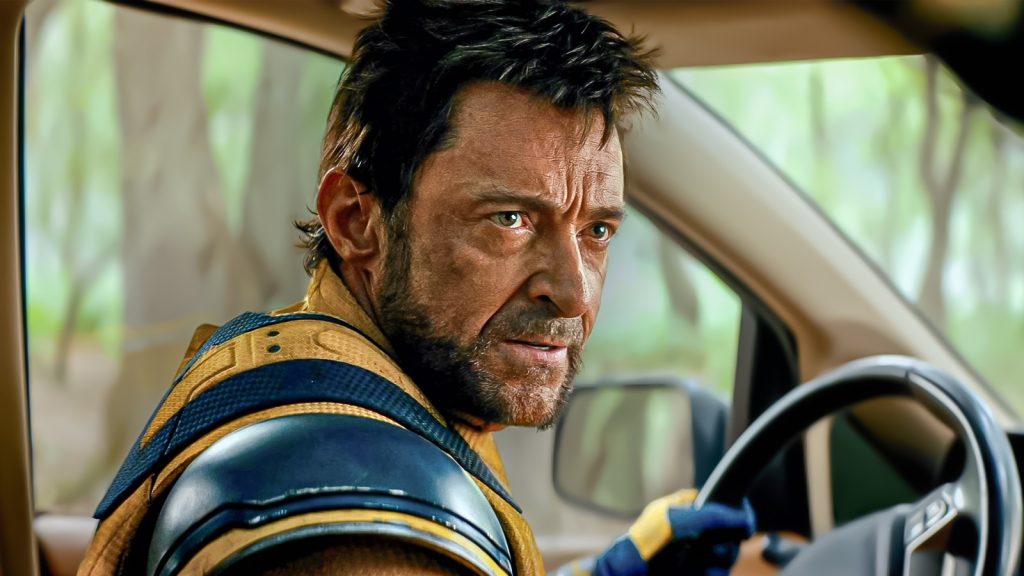
The emotional kinship between these two endings is not hard to spot. In Logan, Hugh Jackman’s Wolverine dies after choosing protection over survival. In Avengers: Endgame, Robert Downey Jr.’s Tony Stark dies after choosing salvation over self-preservation. In both cases, the hero pays the highest price so others can live. That is why both scenes land with such force.
They are not sad merely because a beloved character dies. They are sad because the death completes the character’s moral journey. Wolverine, who spent years carrying rage and regret, dies in an act of guardianship. Tony Stark, who began as a self-absorbed genius, dies in an act of total selflessness.
That parallel is where Jon Favreau’s worry becomes even more understandable. Tony Stark had been with audiences since 2008. Jackman’s Wolverine had been around even longer. Killing off either one was never going to feel casual. Their endings needed tenderness after the violence, and both films understood that. Logan gives Wolverine a deeply personal goodbye. Avengers: Endgame gives Tony Stark a final stretch filled with grief, love, and stunned silence.
There is also a structural neatness to this comparison that makes it hard to ignore. Jackman and Downey Jr. were not just stars playing superheroes. They were, for many viewers, the human face of two different Marvel eras. One belonged to Fox’s mutant universe, the other to Marvel Studios’ empire-building machine. Their final scenes had to carry years of audience memory, fan loyalty, and character history without collapsing under the weight of any of it. Somehow, both films pulled that off. That is rare.
Do you think Jon Favreau had the right instinct, or do you think Joe Russo and Anthony Russo made the only ending that ever truly fit Tony Stark? Drop your take in the comments, and follow FandomWire for more updates!
Avengers: Endgame is streaming on Disney+.















 Bengali (BD) ·
  English (US) ·