.png)
 6 hours ago
11
6 hours ago
11
Article content
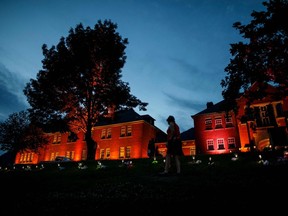
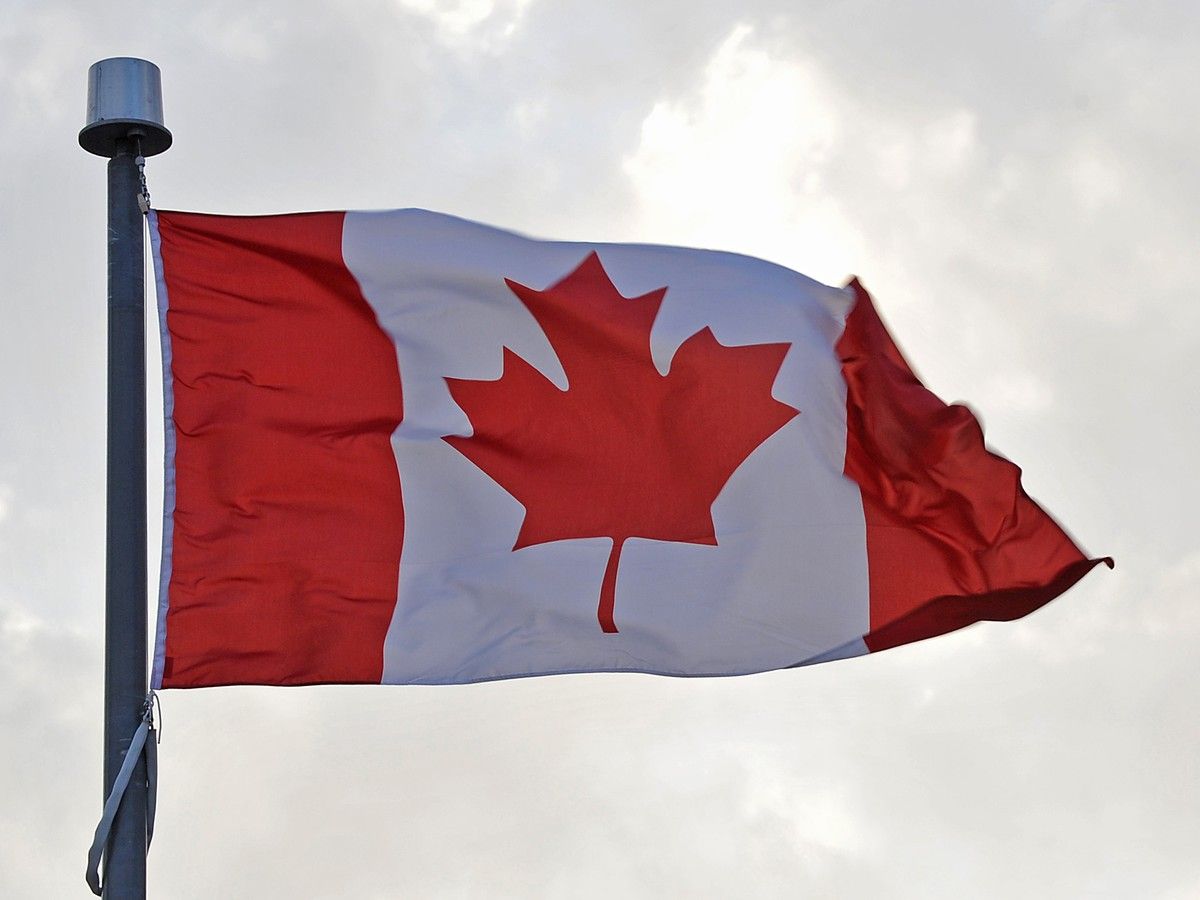
On the last weekend in May, 2021, former Prime Minister Justin Trudeau issued an order to lower the flags on Parliament Hill, and on the Monday he ordered the flags to be lowered on all federal buildings across Canada. It was an extraordinary, unprecedented exercise arising from a shocking claim reported around the world that the bodies of 215 children had been discovered in a mass grave at a long-shuttered Roman Catholic Indian residential school in Kamloops, British Columbia.

THIS CONTENT IS RESERVED FOR SUBSCRIBERS
Enjoy the latest local, national and international news.
- Exclusive articles by Conrad Black, Barbara Kay and others. Plus, special edition NP Platformed and First Reading newsletters and virtual events.
- Unlimited online access to National Post.
- National Post ePaper, an electronic replica of the print edition to view on any device, share and comment on.
- Daily puzzles including the New York Times Crossword.
- Support local journalism.
SUBSCRIBE FOR MORE ARTICLES
Enjoy the latest local, national and international news.
- Exclusive articles by Conrad Black, Barbara Kay and others. Plus, special edition NP Platformed and First Reading newsletters and virtual events.
- Unlimited online access to National Post.
- National Post ePaper, an electronic replica of the print edition to view on any device, share and comment on.
- Daily puzzles including the New York Times Crossword.
- Support local journalism.
REGISTER / SIGN IN TO UNLOCK MORE ARTICLES
Create an account or sign in to continue with your reading experience.
- Access articles from across Canada with one account.
- Share your thoughts and join the conversation in the comments.
- Enjoy additional articles per month.
- Get email updates from your favourite authors.
THIS ARTICLE IS FREE TO READ REGISTER TO UNLOCK.
Create an account or sign in to continue with your reading experience.
- Access articles from across Canada with one account
- Share your thoughts and join the conversation in the comments
- Enjoy additional articles per month
- Get email updates from your favourite authors
Sign In or Create an Account
or
Article content
Article content
The flags remained at half-mast for more than five months during a national paroxysm of hysteria, bigotry, rioting and bedlam, punctuated by reports of similarly gruesome discoveries at residential schools across the country, each accompanied by maudlin expressions of shock and dismay uttered by Trudeau and his ministers. It was all part of what was consistently reported as a “long overdue reckoning” with Canada’s dismal residential schools legacy.
Article content
Article content
By signing up you consent to receive the above newsletter from Postmedia Network Inc.
Article content
Canada Day celebrations were cancelled in several cities and towns or replaced by street demonstrations proclaiming Canada’s disgrace as an illegitimate, genocidal colonial settler state. Statues of John A. Macdonald, Queen Victoria, Queen Elizabeth, Egerton Ryerson, Joseph Hugonard, James Cook and other historical figures were toppled by mobs or formally removed by local officials in Charlottetown, Winnipeg, Toronto, Kingston, Hamilton and Victoria.
Article content
Dozens of churches were desecrated and vandalized, and several were burned to the ground. Before the year was over the RCMP reported a 260 per cent spike in anti-Catholic hate crimes and Statistics Canada noted “the highest number of hate crimes targeting a religion since comparable data have been recorded.” Trudeau called the frenzies “unacceptable” but understandable: “The anger is real.”
Article content
Article content
Article content
It was the incitement that was real
Article content
If the anger was real, it was incited by the Trudeau government and by headlines like these.
Article content
New York Times, May 28, 2021: “‘Horrible History’: Mass Grave of Indigenous Children Reported in Canada.” Washington Post, June 24, 2021: “Hundreds of Graves Found at Former Residential School for Indigenous Children in Canada.” CBC, June 30, 2021. “182 Unmarked Graves Discovered Near Residential School in B.C.’s Interior, First Nation Says.” The Guardian, UK, July 13: “A First Nations community in western Canada has announced the discovery of at least 160 unmarked graves close to a former residential school.”
Article content
None of these stories were true. In the case of the Kamloops horror story, more than 50 officers had been assigned to the Native Indian Residential Schools Task Force, which carried out an eight-year investigation that concluded in 2003. “Each of these allegations were thoroughly investigated by both the Task Force and the applicable Sub-Division Major Crime Unit. Not one of these allegations has ever been substantiated, much less proven.”
Advertisement 1
Advertisement 2
Article content
No “mass grave” was discovered at the site of the Kamloops Indian residential school five years ago. Even the Tkemlúps te Secwepemc Nation at Kamloops refuted that characterization within a week of the initial round of shocking headlines. Ever since, the Tkemlúps have gone back and forth on the subject, aided by $12.1 million in federal funds, from “probable burials” to graves to “signatures that resemble burials.”
Article content
The hundreds of graves “found” at Marieval in Saskatchewan, where Trudeau famously posed kneeling at a gravesite holding a teddy bear, were ordinary burials in a Cowesses community cemetery where gravestones had been removed. Cowessess elder and former Marieval student Lloyd Lerat said this about the graves: “We’ve always known these were there.… It’s just the fact that the media picked up on unmarked graves, and the story actually created itself from there because that’s how it happens.”
Article content
The 182 graves “discovered” near the old St. Eugene’s residential school in B.C. at the Ktunaxa community of ʔAq’am were burials in a former pioneer cemetery later associated with a hospital and a Catholic mission that had lost its wooden crosses to grass fires over the years. “There’s no discovery, we knew it was there, it’s a graveyard,” Sophie Pierre, a former St. Eugene’s student who served for 25 years as the Ktunaxa tribal chair, explained later. “The fact there are graves inside a graveyard shouldn’t be a surprise to anyone.”
Article content
Article content
The 160 “unmarked graves” reported on Penelakut Island were not newly discovered. Some were associated with a cemetery, others were inferred from ground penetrating radar research, and more were the result of archeological surveys on the island’s foreshore. Twenty years earlier the RCMP had excavated a rumoured residential-school burial site on the island and came up with nothing.
Article content
Before the summer of 2021 was over, the remains of roughly 1,300 Indigenous children were reported to have been discovered on the grounds of long-shuttered residential schools across Canada. The stories were not true, and the horror stories did not end when the flags were raised again after Remembrance Day in 2021.
Article content
By then, the Trudeau government had set aside a $321-million fund to continue the search for graves, and so the search goes on, and the stories about clandestine burials of Indigenous children have become embedded in the way the federal government and several provincial governments expect Canadians to understand their history.
Article content
Following the Hamas massacres in Israel on October 7, 2023, much of the street activism associated with the graves uproars evolved into “From Turtle Island to Palestine” sloganeering, situating Israel along with Canada in the same status as a racist, colonial settler state. The church burnings and desecrations continued, but at a much slower place, while attacks on synagogues and antisemitic hate crimes skyrocketed. Last month, the B’Nai Brith organization reported that it had documented 6,800 antisemitic incidents in 2025, the worst of any year since B’Nai Brith began monitoring the phenomenon in 1982.
Article content
Article content
Something broke five years ago.
Article content
It was during those months of intense moral panic between May to November, 2021 that the constitutionally-mandated reconciliation process anticipated by Section 35 of the Constitution Act of 1982 was transformed into something else altogether, especially in British Columbia, home to roughly one third of Canada’s 630 First Nation communities.
Article content
Public debates about land claims, Canada’s history and the various roles Indigenous people played in that history have become minefields of speech-policing, extremist rhetoric and alarmist nonsense about aboriginal title sweeping away private property rights from coast to coast. Whatever you make of it, this is not what “reconciliation” looks like.
Article content
If you “downplay” the excesses of the residential-school era by expressing the view that Canada’s residential schools should never be mentioned even in the same sentence as Auschwitz, Treblinka or Sobibor, good luck to you. A proposal to include the amorphous, catch-all transgression of “residential schools denialism” in the same section of the Criminal Code as Holocaust denial remains a going concern on Parliament Hill.
Article content
At Senate committee hearings just last week, Linda Debassige, Grand Council Chief of Ontario’s Anishinabek Nation, argued explicitly that “residential schools denialism” should be seen through the same lens as the law sees Holocaust denial. In March, Tk’emlups chief Rosanne Casimir justified the time it’s taking for some objective evidence to confirm stories about residential school children being made to bury their murdered classmates in an old Kamloops apple orchard this way: “Holocaust investigations have continued for more than 75 years.”
Article content
Residential schools denialism is a wholly unique construct, defined so broadly by its proponents as to encompass skepticism or expressions of disbelief in stories about students at the Kamloops Indian residential school being forced to bury their dead classmates under the light of the moon or the existence of an archipelago of clandestine burial grounds at residential school sites across Canada.
Article content
The most recent Angus Reid polling suggests that the majority of Canadians, including Indigenous people, may well be guilty of the proposed crime of “residential schools denialism.” The majority of respondents said they’d prefer evidence first.
Article content
Article content
The Enforcement of an Official Version of History
Article content
There is a dark irony in all this.
Article content
After British Columbia entered Confederation in 1871 and well into the late 20th century, successive provincial governments variously insisted that the Royal Proclamation of 1763 did not apply West of the Rockies, that treaty negotiations were unnecessary, that there was no such thing as aboriginal title on Canada’s west coast and that if there ever was, it was “extinguished” by provincial laws that came into effect after 1871.
Article content
This was an untenable posture, as a succession of Supreme Court rulings have made plain going back to the Calder case in 1973. It was untenable In the early 20th Century, too, when tribal delegations in 1906 and 1926 travelled to London to press their case. Until 1949, the Judicial Council of the Privy Council in London was Canada’s highest court.
Article content
To head off a defeat of B.C.’s position at the Privy Council, the Indian Act was amended in 1927 to criminalize Indigenous legal challenges. The federal government added Section 141 to the Act, which barred lawyers from advancing Indigenous grievances in the courts. Unauthorized gatherings were outlawed and several Indigenous organizations were forced to disband. The law stayed on the books until 1951.
Article content
Article content
And here we are, a quarter of the way through the 21st century, and “residential schools denialism” is proposed to outlaw objections to the establishment’s polemics about residential schools (the essay you’re reading here would surely be illegal).
Article content
Even at the extremes, there is no constituency in Canada that denies that terrible harms were done during the residential school era. At the height of their operation between the late 1800s and the early 1970s, about a third of Canada’s Indigenous people had spent at least some of their childhood in a residential school.
Article content
While many former students insist that their memories of those days are happy ones, the effect of the unchallenged post-Kamloops “narrative” is that the real-world experiences of hundreds of genuine and still-living victims of abuse at the schools have been relegated to a bloodcurdling horror genre of unwanted babies being burned in incinerators, and students hanged, beheaded, murdered and secretly buried.
Article content
That jumbled “narrative” is now bundled into an understanding of “reconciliation” that was never anticipated by Section 35, which recognized and affirmed the existing aboriginal and treaty rights of Canada’s Indigenous peoples. The Supreme Court of Canada has consistently explained that the point of Section 35 is the reconciliation of Crown sovereignty with aboriginal rights and title. But according to Heritage Canada, public commemoration of “the tragic and painful history and ongoing impacts of residential schools” is now a “vital component” of the reconciliation process.
Article content
The irony has lately grown darker. In an apparent effort to make a contribution to the paranoid atmosphere set in motion by last August’s Court of Appeals ruling that aboriginal title remains a burden on the Crown title underlying private fee-simple interests in the vicinity of an old Cowichan fishing site on the Fraser River, Conservative leader Pierre Poilievre has lately taken up the argument Prime Minister Mark Carney should be arguing the long-dead case for aboriginal title’s “extinguishment.”
Article content
The Cowichan decision is currently the subject of court-ordered talks between the Crown and the Cowichan. It’s also being appealed and cross-appealed and subject to applications for intervenor status by local private property owners, whose fee-simple interests were explicitly excluded from the Cowichan claim.
Article content
Let’s stop blaming the Constitution
Article content
Section 35 did not create aboriginal rights or treaty rights, but the Supreme Court of Canada has explained more than once that it does mean governments are obliged by a fiduciary duty to uphold the honour of the Crown by engaging in meaningful consultations with Indigenous people to ensure their rights are not unjustifiably infringed.
Article content
Article content
Instead, both Ottawa and B.C. have construed their constitutional obligations under Section 35 in such a way as to also include the 47 articles of the 2007 United Nations Declaration on the Rights of Indigenous Peoples (UNDRIP) along with the 94 “calls to action” contained in the final report of Judge Murray Sinclair’s expansive 2008-2015 Truth and Reconciliation Commission. The Liberals have accepted all 94 calls to action.
Article content
All this elaborate layering-on has left little room or opportunity to establish certainty and finality either in modern-day treaties or in court to settle the “Indian land question” in British Columbia, where the absence of treaties has left aboriginal title unextinguished across almost the entire landmass.
Article content
The consequences are almost comical.
Article content
Like the federal government, in 2019 B.C. adopted enabling legislation to ensure that all B.C. laws were consistent with UNDRIP. At the time, the Liberal opposition MLAs assented to the move. But the B.C. Liberals, later B.C. United, joined the B.C. Conservative opposition, and then imploded, partly because of internal objections to the established narrative about the alleged Kamloops graves. The Conservatives are conducting a leadership vote this weekend.
Article content
Article content
Premier David Eby’s New Democrats also descended into chaos because the UNDRIP law was found in court to be justiciable, throwing the whole project into a weird loop that has involved Eby threatening to suspend the UNDRIP law, then backing down owing to First Nations protests.
Article content
The latest: The Lilwat Nation is going to court against the provincial government and B.C. Hydro over low renewal rates for a power project that the Lilwat partly own. The Lilwat say the B.C. government isn’t applying its own UNDRIP implementation law properly.
Article content
To be fair, progress on reconciliation in B.C. has been subjected to scare stories about secret plots to transfer ownership of private property to First Nations and to relinquish public access to Crown lands by way of backroom deals. There have been successes, not least the federal-provincial Haida Agreement, but that arrangement, which leaves Haida title intact, has also attracted loud alarms about threats to private property.
Article content
B.C. and Ottawa finally got around to establishing a treaty process with First Nations in 1992. Only seven treaties have been concluded. The First Nations were originally expected to resolve their “overlapping claims” with neighbouring nations, but that commitment has fallen by the wayside. The latest treaty, with the K’ómoks First Nation, was concluded in March. It is hotly contested by the neighbouring Vancouver Island Wei Wai Kum First Nation on the grounds that Victoria and Ottawa have recognized 80 per cent of their territories as falling within K’ómoks territory. Earlier this week, Wei Wai Kum threatened to protest by disrupting vehicle traffic on the Island Highway, along with marine terminals and cruise ship traffic in the Inside Passage.
Article content
The Kitselas and Kitsumkalum nations signed treaties with the federal and provincial governments last year over the objections of several neighbouring First Nations citing the treaty’s overlapping infringements on their territories. The Union of B.C. Indian Chiefs, meanwhile, has called for a pause in treaty-making because the process violates UNDRIP.
Article content
It’s a mess. But it’s not the fault of Section 35 of the Constitution Act, 1982.
Article content
Why hasn’t someone called the police?
Article content
It’s one of the enduring peculiarities of the claim that at least 200 children were killed and buried in a secret grave adjacent to the Kamloops Indian Residential School: Why wasn’t the RCMP called in?
Article content
They weren’t, but the Mounties were involved, briefly. An investigation was opened the week the flags were lowered but the RCMP immediately scaled back its engagement to a “supporting role” after the former Truth and Reconciliation head Murray Sinclair accused them of intimidating the people who “made this story available.”
Article content
That was how the story was reported, anyway, and it never made much sense. And this is where the Native Indian Residential Schools Task Force comes in. The RCMP had already looked into complaints about “unlawful and suspicious deaths” at 14 B.C. residential schools, including Kamloops, including reports that children had been killed and buried on the residential school grounds.
Article content
Article content
In its 2003 report, under the heading Unlawful / Suspicious Deaths, the Task Force found: “These ranged from outright allegations of murder to deaths caused by negligence, and even included allegations that babies were being killed and buried on the school grounds. Each of these allegations were thoroughly investigated by both the Task Force and the applicable Sub-Division Major Crime Unit. Not one of these allegations has ever been substantiated, much less proven, and in many cases, investigation has established that the death was due to either disease or some other natural cause: in some cases, the alleged victim was found to be alive several years after his supposed death.”
Article content
The stories about the deaths of infants often involved nuns or students giving birth to stillborn babies that were buried in unmarked graves located somewhere on the school property. “One such allegation was more involved: in this case, the complainant stated that a baby was deliberately killed minutes after a nun gave birth, and that this baby was subsequently buried in the school basement.” Even more bizarre was a claim that a baby was sacrificed in the woods at yet another school late at night “as part of a satanic ritual.
Article content
Article content
“No evidence was found to substantiate either of these allegations.”
Article content
The recurrence of stories like these was noticed by the investigators. They’re not easily put to rest. Popularized by the defrocked Protestant minister Kevin Annett, the stories tend to take on a life of their own. One such story involved a 14-year-old girl allegedly killed when she was pushed down a flight of stairs by a priest at the Alberni Residential School. Annett alleged the murder was then covered up. In fact, the girl died of acute rheumatic pericarditis, following an eight day hospitalization. She was never pushed down any stairs.
Article content
“Despite the evidence that this incident never happened, the story has been kept alive and continues to resurface year after year, resulting in continued media coverage.”
Article content
Where the real world collides with the horror genre
Article content
The Task Force investigated 974 separate allegations of criminal acts. Most of the alleged offenders were adult males. Women were identified as suspects in about a third of the physical assaults, mostly “slapping, the administration of corporal punishment, or striking the student on his or her hands or body using a ruler or other similar object.”
Article content
Charges were laid against 14 individuals, but “dozens more will never be charged,” the report concluded, because they had already died, or because evidence was lacking.
Article content
“More importantly, the residential school system has scarred generations of Native Canadians who are still struggling to deal with this legacy. We can only hope this investigation will have helped the healing process and that these events will never be repeated.”
Article content
National Post
Article content
















/https%3A%2F%2Fsportsmole-media-prod.s3.gra.io.cloud.ovh.net%2Fuploads%2F2025%2F08%2Fimago1064957868-1-68b054b89f2ee835169758.jpg)
 Bengali (BD) ·
  English (US) ·