.png)
 3 hours ago
11
3 hours ago
11

Article content
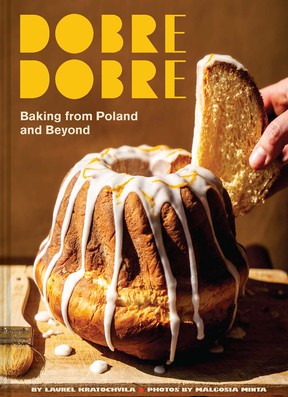
Our cookbook of the week is Dobre Dobre: Baking from Poland and Beyond by Laurel Kratochvila.

THIS CONTENT IS RESERVED FOR SUBSCRIBERS
Enjoy the latest local, national and international news.
- Exclusive articles by Conrad Black, Barbara Kay and others. Plus, special edition NP Platformed and First Reading newsletters and virtual events.
- Unlimited online access to National Post.
- National Post ePaper, an electronic replica of the print edition to view on any device, share and comment on.
- Daily puzzles including the New York Times Crossword.
- Support local journalism.
SUBSCRIBE FOR MORE ARTICLES
Enjoy the latest local, national and international news.
- Exclusive articles by Conrad Black, Barbara Kay and others. Plus, special edition NP Platformed and First Reading newsletters and virtual events.
- Unlimited online access to National Post.
- National Post ePaper, an electronic replica of the print edition to view on any device, share and comment on.
- Daily puzzles including the New York Times Crossword.
- Support local journalism.
REGISTER / SIGN IN TO UNLOCK MORE ARTICLES
Create an account or sign in to continue with your reading experience.
- Access articles from across Canada with one account.
- Share your thoughts and join the conversation in the comments.
- Enjoy additional articles per month.
- Get email updates from your favourite authors.
THIS ARTICLE IS FREE TO READ REGISTER TO UNLOCK.
Create an account or sign in to continue with your reading experience.
- Access articles from across Canada with one account
- Share your thoughts and join the conversation in the comments
- Enjoy additional articles per month
- Get email updates from your favourite authors
Sign In or Create an Account
or
Article content
Jump to the recipes: twisted Kraków bagels, loaded potato knishes, and sour cherry and salty sheep’s cheese danishes.
Article content
Article content
A quest for pickles took Laurel Kratochvila across the border from the Czech Republic into Poland. But it was her first bite of chałka, a braided egg bread, that ended up sending her on a Polish baking journey. “It was very much an aha moment, both just in terms of pure excitement over delicious food, but also in making a connection in my own childhood pastry consumption and bringing something a little full circle,” says the American-born, France-trained, Berlin-based baker and cookbook author.
Article content
Article content
Tucking into the golden braid brought Kratochvila back to the challah she had grown up eating, made by Jewish bakeries in Boston. She immediately sensed the link between the loaf and her own Jewish heritage — and the challah her great-grandparents had baked in a village outside of Warsaw.
Article content
By signing up you consent to receive the above newsletter from Postmedia Network Inc.
Article content
Since that first trip in 2009, Kratochvila has immersed herself in Polish baking culture. “In a way, I’ve been researching this book for almost 17 years,” she says of her second cookbook, Dobre Dobre.
Article content
While writing her debut, New European Baking (2022), she and photographer Malgosia Minta found themselves returning to Poland. Kratochvila often gives talks at the POLIN Museum of the History of Polish Jews in Warsaw and has many baking colleagues there. It felt natural to do a deep dive on the country’s baking culture, and in Dobre Dobre, Kratochvila does just that. “I hate this phrase, because people say this about cookbooks, but it was a bit of a love letter. I am a sap for Polish baking.”
Article content
Article content
This conversation has been edited and condensed for clarity.
Article content
Your love for Polish baking, your deep knowledge of it, and the connections you’ve made really come through in the book.
Article content
Article content
I’m very lucky to know so many bakers in Poland, because that helped facilitate writing the book, and I wanted to include their stories. I couldn’t include everybody, but I featured a few of my favourite bakers and my favourite projects.
Article content
Article content
I had a chef in Paris who always said, “Bakery is a team sport,” and I really believe that. None of us knows everything, and we’re always learning from each other. Even a real novice can teach you something. So, because baking is so collaborative, I like talking about other people in my writing.
Article content
It’s nice how you show not just how Polish baking is expressed in Poland but also in the diaspora.
Article content
That was essential for me. That was definitely a sticking point when I started to write the book. In part because I had seen a lot of European cookbooks or Eastern European cookbooks that missed the Jewish diaspora. That isn’t to throw shade or anything. But especially with a country like Poland, where, before the war, 10 per cent of the population was Jewish, in major urban centres, like Warsaw, 30 per cent of the population would be Jewish.
Article content
There isn’t an exact number on Jewish representation in the bakery world, but there’s speculation that it could have been up to 50 per cent of bakers in Poland. There were towns in Poland where all the bakeries were Jewish. Because that’s no longer there, but it does exist outside of Poland, in a way, I would be telling a very incomplete story, and I would be being very inauthentic to myself if I didn’t talk about the diaspora — both the Jewish diaspora and the Polish diaspora.
Advertisement 1
Advertisement 2
Article content
You put it so well in the book, too. Whether people recognize it or not, the Jewish community was the biggest influence on Polish baking today.
Article content
Absolutely, and there are traces everywhere. Before the war, the overlap of the baking culture was so complete that you couldn’t disentangle it. And very often, it is kind of silly to say, “Oh, this is a Jewish thing. This is a Polish thing,” because it was all of a place. Sometimes it’s only in diaspora that something becomes identifiably Jewish.
Article content
There were a lot of things that I grew up thinking, “Oh, this is purely a Jewish thing.” And then when I started going to Poland, I realized, “No, no, no. This is everywhere there.” Rugelach are a great example of that. There were a lot of discoveries like that.
Article content
What excites you most about the baking scene in Poland today?
Article content
What excites me most is what excites me most about a lot of contemporary baking scenes, which is a return to a certain kind of food values with local grains and local milling. In the bread world, you do have that very Scandinavian sourdough influence, but Polish baking has always been very rye- and sourdough-oriented. So, when you apply the principles of, “OK, we’re not going to use factory flour. We’re going to use something local,” you have wonderful results.
Article content
Article content
And I suppose the same in terms of everything’s homemade, getting rid of industrial fillings that became popular during communism, and using what’s seasonal. One thing I love so much about bakeries in Poland is the use of seasonal fruit. So, on the one hand, it’s about maintaining tradition, but also about digging into food origins and craft.
Article content
What was most important for you to communicate about Polish baking in the book?
Article content
It’s going to sound so cheesy, but I wanted to communicate what a great baking tradition it is. I feel like France gets all the credit, and I could have written that book, but it’s been written a million times before. I wanted to communicate how exciting the whole gamut, the whole canon of Polish baking is, and get other people into it who might not know or who might have that history, so they can reach into it and touch it.
Article content
TWISTED KRAKÓW BAGELS
Article content

Article content
Obwarzanki
Article content
Makes: 12 obwarzanki
Article content
Dough:
5 1/2 cups plus 2 tbsp (700 g) bread flour
2 1/4 tsp (7 g) instant yeast
2 tsp (12 g) kosher salt
1 1/2 tbsp (30 g) honey
1 2/3 cups (400 g) lukewarm water
Article content
Article content
For boiling:
4 1/2 cups (1 L) water
2 tbsp (40 g) kosher salt
2 tbsp (42 g) honey
Article content
Topping:
Sesame seeds, poppy seeds or nigella seeds
Article content
Step 1
Article content
Begin by mixing the dough. In the bowl of your stand mixer fitted with the dough hook attachment, mix the flour, yeast, salt, honey and water on low speed for 10 minutes, until a medium-stiff and smooth dough forms. Remove from the mixer and give it another few minutes of kneading by hand. Form the dough into a ball, cover with a damp tea towel on your work surface, and allow to rise for 45 minutes, or until the dough has grown by almost two thirds in size.
Article content
Step 2
Article content
Once the dough has risen, preshape the dough. Divide the dough with a bench knife into 24 even portions of about 1 3/4 oz (50 g) each. Form each portion into a tight ball. Cover the balls with plastic wrap or a damp tea towel and allow to rest for 15 minutes.
Article content
Step 3
Article content
Line two baking sheets with parchment paper and set aside. Once the dough has rested, shape the bagels. Form the balls into logs and roll out into 10 in (25 cm) strands.
Article content
Step 4
Article content
To form the obwarzanki, lay two strands touching lengthwise side-by-side on the unfloured work surface. Put your hands on each end of the strands and move the left hand down and the right hand up to give the strands the signature twist. Move the right side clockwise and the left side counterclockwise to meet in a ring — the direction is important as to not unwind the twist! Overlap the two ends of the twist by about 1 in (2.5 cm), then tuck and pinch together well. Set on a lined baking sheet and repeat for the remaining dough. The obwarzanki should be spaced at least 1 in (2.5 cm) apart. Cover the sheets loosely with plastic wrap or a plastic bag, then refrigerate for 12 to 18 hours overnight. Your fridge settings should be low, between 37 and 41F (3 and 5C).
Article content
Step 5
Article content
The next morning, preheat the oven to 425F (220C) with the convection setting turned on. Combine the water, salt and honey in a medium saucepan, adding more water if needed to make sure it is at least 4 in (10 cm) deep. Bring to a boil, and boil each obwarzanek for 1 minute, or until slightly puffed, flipping halfway with a slotted spatula. Remove from the water and allow each obwarzanek to drain over the pot before placing it back onto the baking sheet lined with parchment paper, 1 in (2.5 cm) apart. Top with any seeds immediately after removing from water — that’s when they’re stickiest! Bake for 12 to 15 minutes, or until golden brown.
Article content
Step 6
Article content
Serve immediately or let cool and store in the freezer in an airtight plastic bag with the air sucked out for up to 2 months. When you’d like to eat them, thaw, then toast.
Article content
Note: All the hard work in this recipe starts the night before. The long fermentation means a more complex and delicious flavour profile. The final boil-and-bake is minimal effort for a hot breakfast.
Article content
LOADED POTATO KNISHES
Article content

Article content
Knysze Ziemniaczane
Article content
Makes: 18 medium knishes
Article content
Article content
Dough:
3 cups (375 g) all-purpose flour
1 tsp double-acting baking powder (such as Magic Baking Powder)
1/2 tsp kosher salt
1/3 cup (75 g) sunflower oil or any neutral oil
1 egg
1/2 cup plus 2 tbsp (150 g) room-temperature water
1 tsp dark soy sauce or tamari
Article content
Filling:
3 lb 5 oz (1.5 kg) small to medium potatoes (waxy varieties work well here)
3 to 4 tbsp (45 to 60 g) olive oil
3 or 4 medium yellow onions, halved and cut into thin strings (3 cups/325 g)
1 garlic clove, finely diced
1 1/2 tsp kosher salt
2 tsp ground black pepper
2 tsp red wine vinegar or apple cider vinegar
14 oz (400 g) full-fat sour cream
1 3/4 cups (150 g) shredded cheddar cheese
1/4 cup (10 g) chopped flat-leaf parsley
Article content
Egg wash:
1 egg, beaten
Article content
Step 1
Article content
Begin by mixing the dough. In a medium mixing bowl, whisk together the flour, baking powder and salt until combined. In the bowl of your stand mixer, whisk together the sunflower oil and egg to emulsify, then add the water and soy sauce and whisk until even. (The soy sauce will mimic the umami flavour of schmaltz.) Add the dry ingredients to the oil mixture, then, using the dough hook attachment, mix on low speed until just combined. Increase the speed to medium and mix for 10 minutes. The final dough will be quite loose and supple and slightly tacky. Coat your hands with a bit of oil to handle the dough and move it to a lightly oiled medium mixing bowl. Fold the dough under itself a few times to give it tension and form into a smoother ball shape, then cover airtight and let it rest in the fridge for 1 hour or up to a day.
Article content
Article content
Step 2
Article content
While the dough rests, make the filling. Bring a large pot of salted water to a boil, then add your potatoes, whole. Boil until soft, then drain the water and run cold tap water over the potatoes until they’re cool enough to handle. The skins should peel off easily with your hands or a small paring knife. In a large mixing bowl, give the potatoes a rough mash, and set aside.
Article content
Step 3
Article content
In a medium skillet, heat the olive oil over medium-high heat until a piece of onion sizzles when thrown in the pan. Add the onions, garlic, salt and pepper, and give a quick stir, coating the onions in oil and spices. Allow the onions to brown, stirring occasionally as needed. Once the onions are translucent and browned, add the vinegar and give them a quick stir, deglazing any bits stuck to the pan. As soon as the vinegar has evaporated, remove the pan from the heat and allow the onions to cool for about 15 minutes. After the onions have cooled, add them to the mashed potatoes along with the sour cream, cheese and parsley, and mix until combined. Preheat the oven to 350F (180C) with the convection setting turned on, then start shaping your knishes.
Article content
Step 4
Article content
Remove the dough from the fridge and generously flour both your work surface and the dough. Roll the dough into a very thin square, running your hands occasionally under the dough to allow it to rest and contract before continuing to roll. If the dough rips a tiny bit, don’t worry, it’ll be fine. Once your square is about 23 in (58 cm) long on each side, use a flat knife or pizza cutter to trim a little less than 1/2 in (1 cm) from each side of the square to create tidy ends and divide it into three long rectangles. Divide the filling evenly between each rectangle, laying it down the middle of each rectangle, forming it into a fat sausage of filling, leaving 1 or 2 in (2.5 to 5 cm) of dough unfilled at the end of each rectangle. Then, like you’re folding a burrito, fold up the short uncovered ends of the dough, cover the filling on each dough rectangle, and fold each long side of dough up and over the filling, overlapping by about 1 inch (2.5 cm). Turn the roll seam-side down on your work surface, then slice the roll at eight even intervals — these are your knishes. Pick up a knish and, on one of the open sides, pinch together the dough to seal — this is your bottom. Place it sealed-side down on a baking sheet lined with parchment paper, about 1 in (2.5 cm) apart, then press down a bit and shape into a fat round with a little open window of potato filling. Repeat for the rest of the knishes, making two pans of nine. Brush with egg wash, then bake for 30 minutes, or until golden brown.
Article content
Article content
Step 5
Article content
Serve hot or cold with an extra helping of sour cream or some spicy mustard. Any extra knishes can be refrigerated for up to 4 days or frozen for up to 2 months and reheated in a warm oven.
Article content
SOUR CHERRY AND SALTY SHEEP’S CHEESE DANISHES
Article content

Article content
Drożdżówki z Bryndzą i Wiśniami
Article content
Makes: 12 drożdżówki
Article content
Dough:
1 batch Chałka Dough (recipe follows)
Article content
Filling:
6 cups (1 kg) sour cherries, pitted fresh or thawed if frozen
1/2 cup (110 g) demerara sugar
9 oz (255 g) bryndzą or feta, drained
7 oz (200 g) thick full-fat sour cream
1 tbsp all-purpose flour
1 egg
2 tsp dried thyme
1 tsp ground black pepper
Article content
Egg wash:
1 egg and 3 tbsp (45 g) whole milk, whisked until smooth
Article content
Garnish:
1/3 cup (115 g) pourable honey
Fresh thyme sprigs
Article content
Step 1
Article content
Prepare your chałka dough according to the recipe below, through the bulk proof.
Article content
Step 2
Article content
Once your dough is ready, turn it out onto a floured work surface and divide it into 12 portions of 2 3/4 oz (80 g). Form the divided dough into tight balls and arrange smooth-side up onto two baking sheets lined with parchment paper, evenly spaced at least 4 in (10 cm) apart. These have to be far apart because you’ll press them out to shape after they rise. Brush each ball with egg wash and set aside to rise for 2 1/2 hours, until light and puffed.
Article content
Article content
Step 3
Article content
While the dough balls are rising, prepare the filling. Mix the cherries with the demerara sugar in a small bowl and set aside to soften. To prepare your cheese filling, in a medium bowl, mix the bryndzą, sour cream, flour, egg, thyme and pepper until all the ingredients are fully incorporated. Set aside.
Article content
Step 4
Article content
Shortly before the balls have fully risen, preheat the oven to 350F (180C) with the convection setting turned on. Brush the balls a second time with egg wash, then dip a large spoon in the remaining egg wash and press down on the middle of each ball to form a pizza shape about 5 in (13 cm) across, each with a flattened middle and a 1 in (2.5 cm) thick rim. If the spoon sticks while you’re doing this, dip it again in the egg wash.
Article content
Step 5
Article content
Spoon a generous portion of the cheese filling into the centre of each bun, spread to the inner edge of the rim, then press a handful of sour cherries into the middle of the filling. Bake for about 15 minutes, or until the pastry is golden brown, then drizzle all over with honey and garnish with fresh thyme.
Article content
Step 6
Article content
These are best served the same day, but can be extended 1 or 2 days when stored airtight at room temperature. Reheat in the oven to warm the cheese before serving, if you like.
Article content
Note: For a morning bake, prepare your dough the night before and allow to proof in the fridge according to the recipe below.
Article content
SOFT MILK DOUGH
Article content
Chałka Dough
Article content
Makes: about 34 oz (960 g) of dough (about 12 medium buns or 2 large loaves)
Article content
Sponge (rozczyn):
1 1/4 cups (150 g) all-purpose flour
3/4 cup plus 3 tbsp (225 g) whole milk, at room temperature
2 1/4 tsp (7 g) instant yeast
2 1/4 tsp (10 g) sugar
Article content
Dough:
All of the Sponge
5 egg yolks
1 tsp vanilla extract
2 3/4 cups (350 g) all-purpose flour
1 tbsp (15 g) sugar
1 1/4 tsp (9 g) kosher salt
7 tbsp (100 g) unsalted butter, cubed and at room temperature
Article content
Step 1
Article content
Begin by preparing the sponge. In a medium mixing bowl, whisk together the flour, milk, yeast and sugar, then cover with a damp tea towel and allow to rise for 1 hour. When the sponge has bubbled and doubled in size with a domed top on the verge of collapse, it’s ready to use.
Article content
Step 2
Article content
To make the dough, in the bowl of your stand mixer, combine the sponge, egg yolks and vanilla and whisk together until smooth. Add the flour, sugar, salt and butter, then, using the dough hook attachment, mix on low speed. Once the butter has fully incorporated into the dough and there are no dry pockets of flour, increase the speed to medium-low and continue mixing for 10 minutes, until the dough is smooth and supple and pulls away from the sides of the bowl. Pull off a small piece of dough. The dough should be able to stretch until it’s thin and transparent without tearing and passes the windowpane test (see note).
Article content
Article content
Step 3
Article content
With lightly greased or oiled hands, remove the dough and place it in a lightly oiled or greased bowl. Pick up the dough with two hands and allow gravity to stretch the overhanging dough under itself. Turn the bowl and repeat, until you have a smooth ball of dough. Cover the bowl airtight with room for expansion and bulk proof. You can do this in one of two ways:
Article content
OPTION 1: Allow to rise at room temperature for about 1 hour 15 minutes, or until almost doubled in size and a finger pressed into the dough springs back slowly about halfway.
Article content
OPTION 2: Let the dough rest at room temperature for about 30 minutes, then chill in the fridge (set between 37 and 46F/3 and 8C) for at least 8 hours or up to 36 hours. (See note.)
Article content
Step 4
Article content
However you choose to bulk proof the dough, now it’s ready to shape according to the recipes or your creativity. After shaping, factor in a final proof of 2 to 2 1/2 hours before baking.
Article content
Notes: Hold the dough up to a window and if you can see the light from behind it without it ripping, it has passed what’s called the windowpane test. This means your dough has enough stretch. If it rips, give your dough a few more minutes of kneading.
Article content
Article content
This recipe can be bulk-proofed at room temperature or in the fridge, but there are a few advantages to a refrigerated bulk proof. The first is that the resulting dough will be stiff and easier to shape. The second is that you can make your dough the night before, making for a much easier morning bake for serving at breakfast or brunch. The third is that a longer, slower ferment will make your bread more flavourful and easier to digest.
Article content
Recipes and images excerpted from Dobre Dobre: Baking from Poland and Beyond by Laurel Kratochvila. Text copyright ©2025 by Laurel Kratochvila. Photographs copyright ©2025 by Malgosia Minta. Reproduced by permission of Chronicle Books. All rights reserved.
Article content
Our website is the place for the latest breaking news, exclusive scoops, longreads and provocative commentary. Please bookmark nationalpost.com and sign up for our cookbook and recipe newsletter, Cook This, here.
Article content























/https%3A%2F%2Fsportsmole-media-prod.s3.gra.io.cloud.ovh.net%2Fuploads%2F2025%2F08%2Fimago1064957868-1-68b054b89f2ee835169758.jpg)


 Bengali (BD) ·
  English (US) ·