.png)
 1 week ago
23
1 week ago
23

Article content
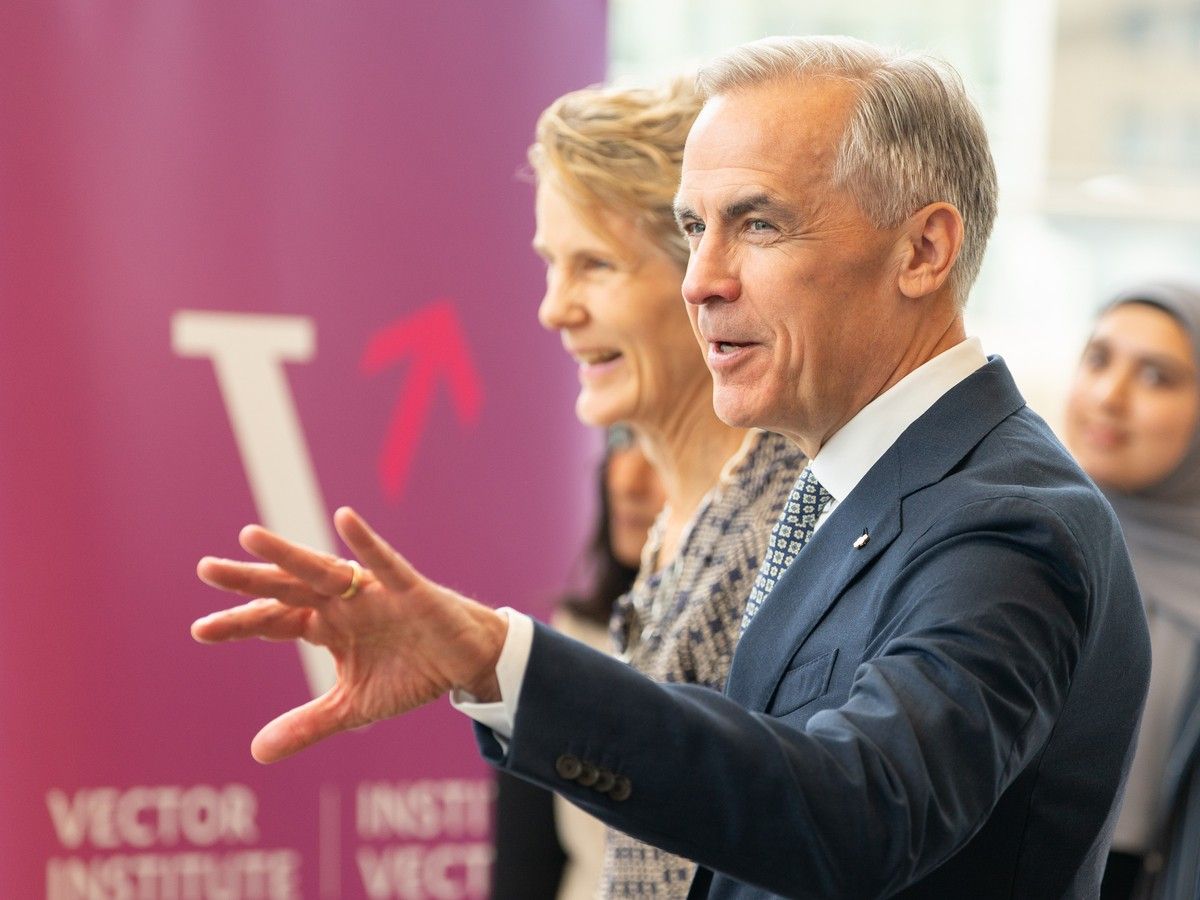
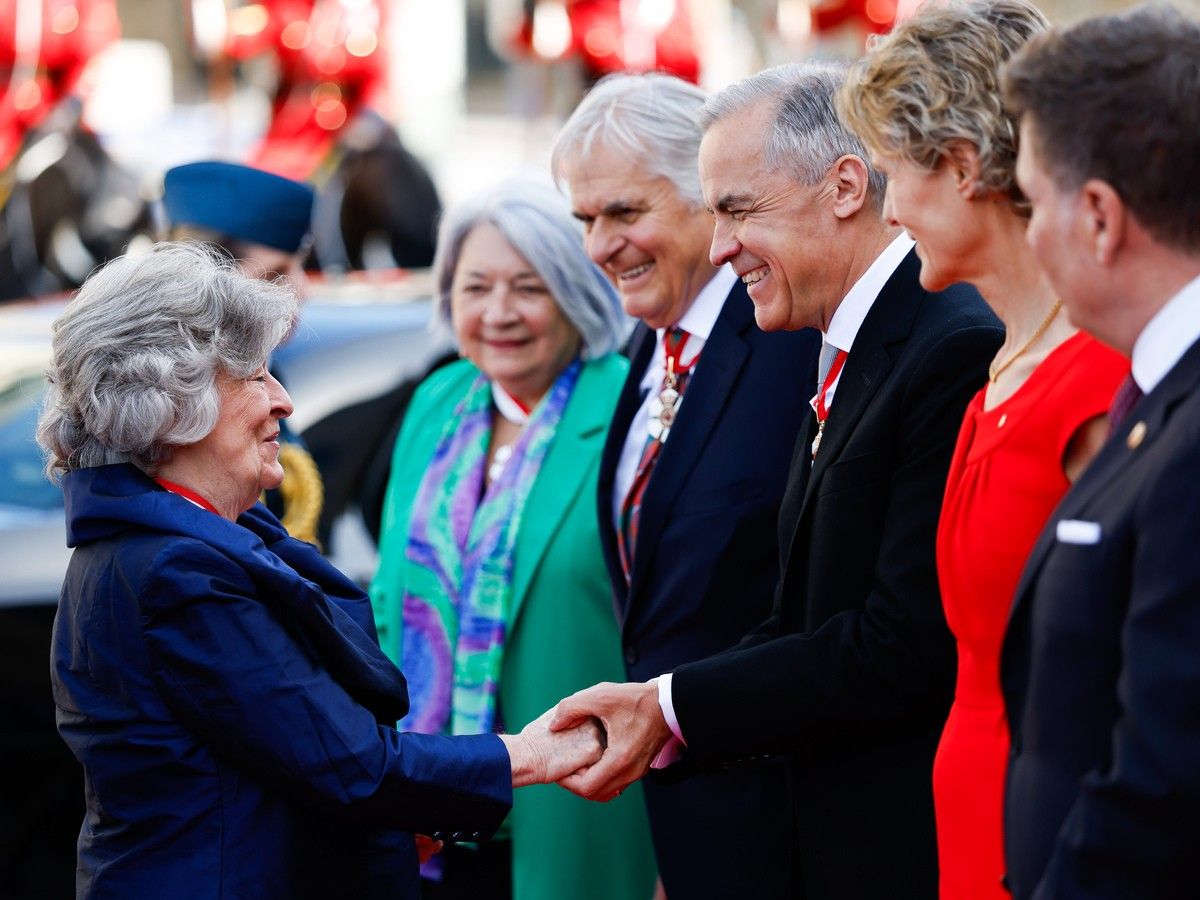
In a speech in Toronto on Monday, Prime Minister Mark Carney declared that the country’s civic compact “is failing Jewish Canadians,” who are being “brutally targeted” amid a crisis of antisemitism in the country.

THIS CONTENT IS RESERVED FOR SUBSCRIBERS
Enjoy the latest local, national and international news.
- Exclusive articles by Conrad Black, Barbara Kay and others. Plus, special edition NP Platformed and First Reading newsletters and virtual events.
- Unlimited online access to National Post.
- National Post ePaper, an electronic replica of the print edition to view on any device, share and comment on.
- Daily puzzles including the New York Times Crossword.
- Support local journalism.
SUBSCRIBE FOR MORE ARTICLES
Enjoy the latest local, national and international news.
- Exclusive articles by Conrad Black, Barbara Kay and others. Plus, special edition NP Platformed and First Reading newsletters and virtual events.
- Unlimited online access to National Post.
- National Post ePaper, an electronic replica of the print edition to view on any device, share and comment on.
- Daily puzzles including the New York Times Crossword.
- Support local journalism.
REGISTER / SIGN IN TO UNLOCK MORE ARTICLES
Create an account or sign in to continue with your reading experience.
- Access articles from across Canada with one account.
- Share your thoughts and join the conversation in the comments.
- Enjoy additional articles per month.
- Get email updates from your favourite authors.
THIS ARTICLE IS FREE TO READ REGISTER TO UNLOCK.
Create an account or sign in to continue with your reading experience.
- Access articles from across Canada with one account
- Share your thoughts and join the conversation in the comments
- Enjoy additional articles per month
- Get email updates from your favourite authors
Sign In or Create an Account
or
Article content
Carney said that more than two-thirds of all religiously-motivated hate crimes were directed at Jewish Canadians last year, even though they only make up one per cent of the population, and argued that it “demands a targeted response.”
Article content
Article content
Article content
Read the full text of Carney’s speech:
Article content
Article content
Thank you, Leslie and Evan, for that introduction.
Article content
I would like to thank Cantor David Rosen for welcoming me to Holy Blossom Temple, and Rabbi Splansky for her video greeting, and her stewardship of this synagogue of belonging, learning, and spirituality.
Article content
For three thousand years, Jewish tradition has taught us that a society should not be judged by its wealth or its power, but by how it treats its most vulnerable.
Article content
The Hebrew prophets returned repeatedly to this lesson.
Article content
Isaiah called on rulers to “Learn to do good. Devote yourselves to justice; aid the wronged. Uphold the rights of the orphan; defend the cause of the widow.”
Article content
Amos warned against societies that prosper while neglecting the weak.
Article content
The message of the prophets to us was that a just society is sustained, not merely by law, but also by the obligations we owe each other.
Article content
Centuries later, Aristotle described this as civic friendship – the bond that holds a state together.
Article content
By friendship, he did not mean intimacy, affection, or fellow feeling.
Article content
He meant something more demanding and durable: the mutual recognition between citizens that each is pursuing a good life under the same political roof, and that the conditions of your flourishing are the same as mine.
Article content
Article content
This is the covenant that makes Canada possible.
Article content
And this is the covenant being tested today by the scourge of antisemitism.
Article content
I want to speak today about that terrible reality and how we can restore the full promise of Canadian citizenship to all.
Article content
Canada was not founded on a single creed, race, language, or faith.
Article content
Instead, we have held our differences in common, beginning—after a long period of struggle and oppression—with the French and English accommodation.
Article content
This deepened with Confederation.
Article content
It has carried through successive generations of immigration from every continent and of every faith. It continues to be travelled in the long journey of reconciliation with Indigenous peoples, the original stewards of this land.
Article content
(Translated from French) Respect for—indeed, celebration of—differences is enshrined in the Charter of Rights and Freedoms, specifically in section 27, which states that any interpretation of the Charter must be consistent with the objective of promoting the preservation and enhancement of the multicultural heritage of Canadians.
Article content
This commitment rests on a concept that one of Canada’s great philosophers, Charles Taylor, called “recognition.”
Advertisement 1
Advertisement 2
Article content
According to him, recognition is more than mere tolerance.
Article content
It is rather about actively recognizing that each citizen is constituted, in part, by the identity they carry within them—through their faith, language, traditions, and history—and that their dignity is preserved only when these aspects of their identity are taken into account.
Article content
To be recognised is to be received as who you are.
Article content
Pluralism in Canada is not the exception to the framework. Pluralism is the framework.
Article content
Our secularism is open. The state takes no side in matters of belief, and the institutions of public life are not captured by any particular faith.
Article content
In Canada, state neutrality does not empty the public square but ensures that no conception of the good — including humanism or atheism — is privileged by state power, and that every Canadian has the freedom of conscience to live as they believe.
Article content
This means that the state—above the responsibilities we all have as citizens—has a special responsibility to ensure that no culture, faith, race, gender, or identity is threatened or suppressed.
Article content
And it goes further to the responsibility of ensuring that that everyone can be their whole selves in Canada.
Article content
Article content
Canada’s fundamental insight is that unity is not uniformity.
Article content
That our differences are strengths to be nurtured, not risks to be managed.
Article content
In Canada, faith, language, heritage, and tradition are not concessions to citizenship.
Article content
They are expressions of it.
Article content
In Canada, the visibility of our differences is not an obstacle to belonging, but the substance of our mutual respect.
Article content
This is how we hold ourselves together.
Article content
I do not pretend this is always easy. Differences generate friction.
Article content
Accommodation of competing claims is real work. We will always have our legitimate debates about where the lines properly fall. But those debates are part of how our pluralistic country sustains itself.
Article content
Today, that nature is being tested, as one of our communities is being particularly and brutally targeted.
Article content
Across our country, antisemitism has surged to levels not seen in the post-war period.
Article content
Last year, over two-thirds of all religion-motivated hate crimes were directed at Jewish Canadians who make up only 1% of the population.
Article content
Antisemites in Canada have fired bullets at Jewish schools.
Article content
Article content
They have thrown firebombs at synagogues and attacked community centres. They have targeted Jewish-owned businesses. Harassed Jewish patients at hospitals.
Article content
Drove Jewish students from the common spaces on our university campuses. And desecrated our Holocaust memorials.
Article content
(Translated from French) Canadian parents are now having to ask themselves whether it’s safe to send their children to a Jewish school.
Article content
Observant Canadians are thinking twice before wearing a kippah on the subway.
Article content
The same scourge is raging in Europe and the United States. It is also affecting the United Kingdom, where the terrorist attacks in Heaton Park and Golders Green deeply shook Jewish communities.
Article content
And Australia, where, last December, fifteen people were murdered at Bondi Beach on the first night of Hanukkah.
Article content
Let me personalise this. Last October, I attended the opening of the Chabad Jewish Centre at the University of Ottawa.
Article content
This Jewish student centre made possible by the philanthropy of one of Canada’s leading entrepreneurs, Harley Finkelstein, who, as a student, had benefitted from the teachings and friendship of Rabbi Chaim Boyarsky, who remains the heart of Jewish student life at the University.
Article content
The otherwise joyous event occurred under heavy police presence and was interrupted by angry shouts of some passers-by.
Article content
I would next see Rabbi Boyarsky on a bitterly cold Sunday afternoon in December as we lit the first Menorah candle at Ottawa city hall and mourned the victims of Bondi beach which included his friend and Chabad colleague, Rabbi Eli Schlanger.
Article content
The pain, threats, and fears can appear relentless.
Article content
The horror and shame are global. Our actions must be local.
Article content
They start with clearly admitting that Canada’s civic compact is failing Jewish Canadians.
Article content
And they extend to all Canadians recognising that, if that covenant fails for one of our communities, it fails us all.
Article content
Since being elected a little over a year ago, our government has been acting first and foremost on the most fundamental responsibility of government: protecting our citizens.
Article content
We have introduced six pieces of legislation to bolster public safety and to combat antisemitism and other forms of hatred.
Article content
Foremost of these, Bill C-9, the Combatting Hate Act, addresses directly the rise in antisemitism, hate-motivated violence, and the targeting of communities.
Article content
Article content
It significantly strengthens the Criminal Code by creating new offences for intimidation and obstruction at places of worship, schools, community centres, and other institutions used by identifiable communities.
Article content
(Translated from French) We also reaffirmed the importance of the working definition of antisemitism formulated by the International Holocaust Remembrance Alliance and adopted by Canada in 2019 as part of its Canadian Anti-Racism Strategy.
Article content
This definition allows for legitimate criticism of any government, including the government of the State of Israel, while also naming hatred against Jewish people for what it is.
Article content
We are advancing work to confront hate online and violent extremism, including through the Canada Centre for Community Engagement and Prevention of Violence, which leads Canada’s work on countering radicalisation to violence and supports prevention, research, and front-line intervention through the Community Resilience Fund.
Article content
Last year, the Government announced more than $36 million for projects to help counter violent extremism, including early prevention in schools and communities and work to understand and respond to extremist movements online and offline.
Article content
Article content
This April, we committed an additional $75 million through the Canada Community Security Program — for synagogues, for Jewish day schools, for community centres, and for the institutions of every faith community whose safety is at risk.
Article content
We are working with provinces, municipalities, and with our intelligence and law enforcement agencies, to coordinate that protection.
Article content
And I would like to commend Chief Carrique, Deputy Commissioner Larkin, and Chief Demkiw and the Toronto Police Service for their efforts for enforcement.
Article content
(Translated from French) These measures are necessary. However, they are far from sufficient on their own.
Article content
A country where Jewish schools require security guards, where synagogues need barriers, and where Jewish children attend schools secluded within a protected perimeter is a country that protects its citizens but fails to uphold its civic duty.
Article content
The deeper work is the renewal of the Canadian covenant itself.
Article content
To that end, I am pleased to announce the launch and membership of Canada’s new Ministerial Advisory Council on Rights, Equality, and Inclusion to be chaired by the Minister of Canadian Identity and Culture, Marc Miller.
Article content
The Council has a clear mission: to combat racism and hate in all their forms, and to guide the Government of Canada as we build a fairer, more just, more inclusive country.
Article content
I am also honoured to announce that Senator Marc Gold, one of Canada’s most collaborative, effective, and principled voices on the scourge of antisemitism, has agreed to join the Council.
Article content
I have directed the Council to begin work by addressing antisemitism from four different directions.
Article content
First, the Council will reassess the nature, scale, and drivers of antisemitism in Canada – including across our public institutions, workplaces, campuses, public services, professional bodies and online spaces.
Article content
These are the places where the habits of civic life are formed, and where, if those habits fracture, the fracture spreads.
Article content
Second, the Council will coordinate a whole-of-federal-government approach to antisemitism because combating antisemitism is a responsibility we all share.
Article content
This will ensure that federal policies, workplaces, public safety programs, and community initiatives are aligned in protecting Jewish Canadians, confronting hate and promoting inclusion.
Article content
Article content
Third, the Council will improve research and the collection of data on hate incidents.
Article content
It will build stronger data-sharing systems, so all orders of government, schools, and police services are working with the same facts.
Article content
Finally, the Council will measure the impact of our efforts, to reinforce those investments in education, prevention, training, and community safety that are delivering real results and helping to build a safer, more inclusive Canada for all.
Article content
I want to be clear about what these potential measures are, and what they are not.
Article content
They are not curtailments of freedom of expression. They are not constraints on legitimate criticism of any government on any subject anywhere.
Article content
They are the basic standards we owe one another, in our shared public institutions, to ensure that no Canadian community is driven from those institutions by hatred.
Article content
Institutional measures, even the strongest ones, cannot do the deeper work of true recognition alone.
Article content
That deeper work falls to each of us, and to all of us in how we treat each other.
Article content
As the Nobel Peace Prize laureate, and Holocaust survivor, Elie Wiesel once observed, “The opposite of love is not hate; it is indifference.”
Article content
Article content
Canadians must stand up for each other.
Article content
This means all Canadians must speak out when we see antisemitism creep into our social media feeds, our classrooms, and our workplaces.
Article content
Because history teaches us that hatred metastasises when a society grow indifferent to it, when intimidation becomes routine, when conspiracy becomes discourse, and when citizens choose to look away.
Article content
We must learn from our history, from our times of love and indifference.
Article content
(Translated from French) At Pier 21 in Halifax, over the past century, nearly a million people have set foot in Canada.
Article content
They came from Europe in the aftermath of two world wars, from countries torn apart by conflict, from regions plagued by poverty and persecution.
Article content
They arrived with their stories, their beliefs, their languages, and their hopes. They arrived with a heritage that has since become Canada’s.
Article content
And the pact they made—the pact that has since become the very essence of Canadian citizenship—is clear.
Article content
We welcome the peoples of the world and their diversity in all its splendour.
Article content
We do not welcome the world’s hatreds.
Article content
When you come to Canada, you bring your faith, your tradition, your language, your story. You leave behind your wars and your animosities.
Article content
We have not always lived up to that promise. In 1939, the M.S. St. Louis, carrying 907 Jewish refugees fleeing Nazi Germany, sailed up the Atlantic coast seeking refuge.
Article content
Cuba turned them away. The United States turned them away.
Article content
And Canada? We looked away, too.
Article content
The ship returned to Europe, and hundreds of those passengers were murdered in the Holocaust.
Article content
The St. Louis is the face of the promise denied. Prime Minister Trudeau rightly apologised for it in 2018.
Article content
The covenant we must renew today is, in part, the covenant we failed to honour then.
Article content
What does that require, in this moment?
Article content
It requires that we do not transpose foreign conflicts onto each other.
Article content
It requires all of us to stand up and protect our fellow citizens.
Article content
It requires all of us to raise our voices in disgust and defiance when we see the ugly face of antisemitism.
Article content
It requires that no Canadian child goes to school is seen as a representative of any foreign state.
Article content
(Translated from French) This means that no Canadian going about their daily life should be held responsible for the actions of any government, wherever they may be.
Article content
Article content
Whether they are on the subway, in a store, at a hospital, at a university, in a synagogue, a mosque, a gurdwara, or a temple.
Article content
This requires holding political debates in Parliament and in the public sphere, and not targeting private businesses, homes, and communities.
Article content
The covenant runs in every direction.
Article content
Antisemitism breaks it. Islamophobia breaks it. Burning churches breaks it.
Article content
Transphobia breaks it.
Article content
The targeting of any Canadian for their faith, their origin, or their identity breaks it.
Article content
I want to be clear, particularly to the Jewish community: naming these assaults is not equivalence.
Article content
The crisis of antisemitism in Canada today is specific, severe, and demands a targeted response. Our government is fully committed to that response.
Article content
But the covenant we are renewing is comprehensive. It protects all of us by binding all of us.
Article content
That is its strength; the source of its legitimacy. It is all our responsibility.
Article content
Let me close where I began.
Article content
Canada was summoned into being by peoples who learned, imperfectly and over time, to hold their differences in common.
Article content
That has not always been easy, and we have, at times, failed.
Article content
Article content
We failed Indigenous peoples. We failed the Acadians and French settlers. We failed the passengers of the M.S. St. Louis.
Article content
Each failure has taught us something about what it means to be the country we aspire to be.
Article content
That means protection. That means outlawing and policing hate. That means preventing radicalisation and addressing institutional biases.
Article content
That means restoring Canada’s promise by ensuring each of us has the space and confidence to be their whole selves and thrive.
Article content
Canada promises a country in which Jewish Canadians can be visibly, fully, joyfully Jewish in public life — at school, at work, on the street, in synagogue, in the academy, in the arts, in every place that is theirs because Canada is theirs.
Article content
Canada promises a country in which Indigenous Peoples, Muslim Canadians, Black Canadians, Sikh Canadians, Christian Canadians, Queer Canadians — every Canadian — can be visibly themselves without fear.
Article content
Canada promises a country where our differences are nurtured, not managed.
Article content
Where our differences are honoured, not suppressed.
Article content
Where our differences are lived out in common, not pushed to the margins.
Article content
That is the covenant we are renewing today. And which we must all honour with our actions.
Article content
Thank you.
Article content
Our website is the place for the latest breaking news, exclusive scoops, longreads and provocative commentary. Please bookmark nationalpost.com and sign up for our daily newsletter, Posted, here.
Article content






















/https%3A%2F%2Fsportsmole-media-prod.s3.gra.io.cloud.ovh.net%2Fuploads%2F2026%2F05%2Fns-collage-background-v2-email-3-6a086d6eaa1a0057506880.jpg)
 Bengali (BD) ·
  English (US) ·