.png)
 1 hour ago
9
1 hour ago
9
It’s time for the federal government to embrace the full-throated development of Canada’s oil and gas sector.
Published Aug 06, 2026 • Last updated 19 minutes ago • 3 minute read
See more Toronto Sun on Google — save as a Preferred Source
Advertisement 2

THIS CONTENT IS RESERVED FOR SUBSCRIBERS ONLY
Subscribe now to read the latest news in your city and across Canada.
- Unlimited online access to articles from across Canada with one account.
- Get exclusive access to the Toronto Sun ePaper, an electronic replica of the print edition that you can share, download and comment on.
- Enjoy insights and behind-the-scenes analysis from our award-winning journalists.
- Support local journalists and the next generation of journalists.
- Daily puzzles including the New York Times Crossword.
SUBSCRIBE TO UNLOCK MORE ARTICLES
Subscribe now to read the latest news in your city and across Canada.
- Unlimited online access to articles from across Canada with one account.
- Get exclusive access to the Toronto Sun ePaper, an electronic replica of the print edition that you can share, download and comment on.
- Enjoy insights and behind-the-scenes analysis from our award-winning journalists.
- Support local journalists and the next generation of journalists.
- Daily puzzles including the New York Times Crossword.
REGISTER / SIGN IN TO UNLOCK MORE ARTICLES
Create an account or sign in to continue with your reading experience.
- Access articles from across Canada with one account.
- Share your thoughts and join the conversation in the comments.
- Enjoy additional articles per month.
- Get email updates from your favourite authors.
THIS ARTICLE IS FREE TO READ REGISTER TO UNLOCK.
Create an account or sign in to continue with your reading experience.
- Access articles from across Canada with one account
- Share your thoughts and join the conversation in the comments
- Enjoy additional articles per month
- Get email updates from your favourite authors
Article content
“There will come a day, far off but inevitable at some point, when traditional energy sources will no longer be needed,” said former prime minister Justin Trudeau in 2017.
Article content
Recommended Videos
Article content
Politicians across the Western Hemisphere, including Canada’s leadership for at least the past decade, have bought into the notion that a massive transition away from fossil fuels is underway and that the end of their use is somehow preordained.
In fact, since the government of former prime minister Jean Chrétien signed on to the Kyoto Protocol, a significant portion of Canada’s political class has insisted that fossil fuels are a relic of the past.
But a new study from the Fraser Institute says that argument never really held water. The main finding in the report is that fossil fuels accounted for 76.3% of Canada’s domestic energy consumption in 2024. Compare that to 76.8% in 1995.
In other words, over the course of nearly 30 years, including a decade under the Trudeau government that pursued climate transition policies like a consumer carbon tax and spent hundreds of billions of dollars on so-called clean energy initiatives, the needle barely moved. Canada is just as reliant on fossil fuels today as the country was prior to signing on to the Kyoto Protocol.
By signing up you consent to receive the above newsletter from Postmedia Network Inc.
Article content
Advertisement 3
Article content
Canada’s largest energy-consuming sectors remain heavily reliant on fossil fuels, with nearly 75% of industrial energy use and over half of residential energy use still tied to those traditional energy sources.
And yet, for decades, Canada sacrificed economic growth, all for the sake of climate goals.
Not only did Trudeau try to hold down domestic fossil fuel consumption, but he also claimed that there was “no business case” for exporting Canadian natural gas to countries such as Germany and Japan in an effort to block the development of the domestic energy sector for export purposes.
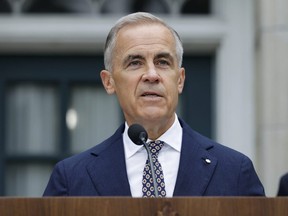
Prime Minister Mark Carney seems to recognize that the Trudeau government’s climate policies were a failure.
“The climate plan we inherited from the previous government was well-intentioned … but as times have changed, we must change our plan,” said Carney earlier this summer.
“We can’t afford to restrain the growth of an important part of our energy mix — oil and gas — to meet a short-term goal,” Carney added.
Advertisement 4
Article content
The Carney government has also recently signed agreements with other countries to export Canadian natural gas abroad, a massive departure from Trudeau’s “no business case” approach.
Of course, there always was a business case for exporting more Canadian oil and natural gas abroad.
India and China, for example, continue to build coal plants at a breakneck pace. If Canada’s political class genuinely wants to see global emissions decline, there is a clear case for producing and exporting more Canadian oil and natural gas, both of which have a lower environmental impact than coal.
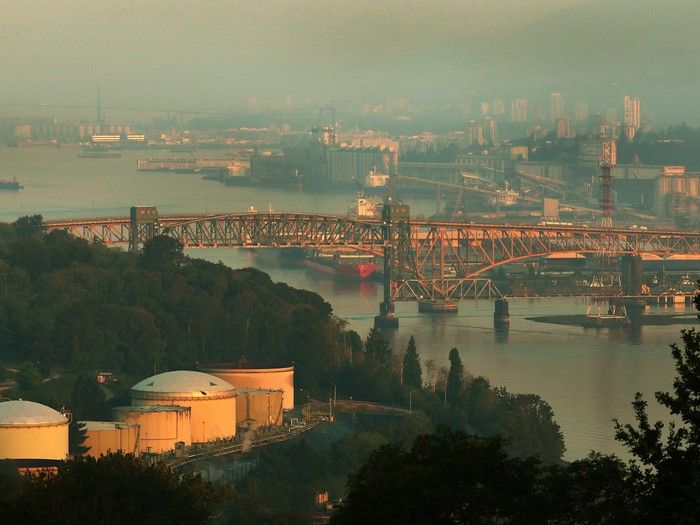
There is both an environmental and economic case for building more pipelines and increasing Canada’s capacity to produce energy, both to meet the needs of domestic consumers and to meet the needs of countries that would otherwise have to turn to dirtier forms of energy.
Although Carney remains an improvement from Trudeau, his approach to unleashing Canadian energy is far from perfect. He continues to insist on tying any future pipeline development to expensive initiatives like carbon capture and storage (CCS) and talks constantly about the need to “decarbonize” Canada’s energy sector.
Advertisement 5
Article content
As other countries such as the United States unleash their energy sectors, the Carney government seems to still want to have Canada’s energy sector operate with one hand tied behind its back. While superior to the Trudeau approach of trying to stymie the growth of the sector completely, the Carney approach to energy could still use some improvement.
For the sake of Canada’s economy, the diversification of our trade and even for getting global emissions down, it’s time for the federal government to embrace the full-throated development of Canada’s oil and gas sector.
Dr. Jay Goldberg is a political scientist and a fellow with the Frontier Centre for Public Policy
Read More
-

JAY GOLDBERG: The nanny state marches on with a war on caffeine
-

JAY GOLDBERG: Political culture of entitlement needs to stop


Article content


























/https%3A%2F%2Fsportsmole-media-prod.s3.gra.io.cloud.ovh.net%2Fuploads%2F2026%2F01%2Fdanny-welbeck-5-6956bfa3ea945973722124.jpg)
/https%3A%2F%2Fsportsmole-media-prod.s3.gra.io.cloud.ovh.net%2Fuploads%2F2026%2F07%2Fbradley-barcola-3-6a668f16048c5425723883.jpg)
 Bengali (BD) ·
  English (US) ·