.png)
 1 hour ago
13
1 hour ago
13
Article content
While America’s oil drillers have started to turn the taps on, executives have warned that inventories are likely to keep falling in the short-term.
Article content
Even if the waterway reopens, Gulf output and shipping is unlikely to return to normal levels any time soon, meaning fuel users could have to dig even deeper into storage tanks.
Article content
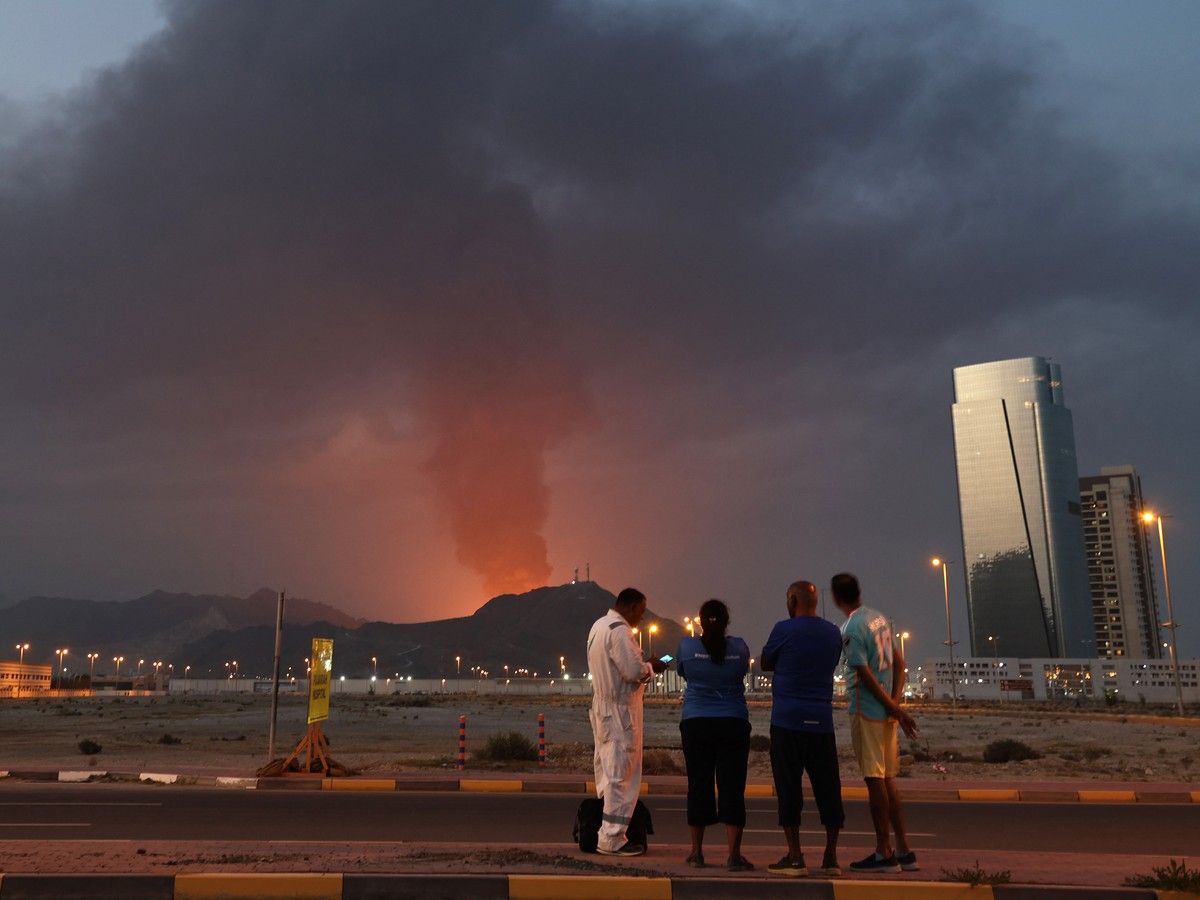
The conflict has already sent physical crude and key fuel prices surging, threatening higher inflation and intensifying the risk of a global recession. It has left India suffering liquefied petroleum gas shortages, prompted airlines to cancel flights and hit US drivers with soaring gasoline costs.
Article content
Global oil consumption has already dropped sharply, in part because of supply disruptions, and in part because of higher prices. But as inventories get closer to critical levels, analysts, traders and executives warn that prices will need to spike to a level that chokes off significantly more demand in order to balance the market.
Article content
“A lot of the inventory and spare capacity has been depleted already,” Chevron Corp. Chief Financial Officer Eimear Bonner told Bloomberg TV on May 1. “We are going to start to see some import-dependent countries potentially start to face critical shortages as we get into the June-July time-frame.”
Article content
Article content
“Top of my mind in terms of places facing imminent shortage is gasoline in Asia, with countries like Pakistan, Indonesia or the Philippines likely to be the first to face issues with tank bottoms,” said Frederic Lasserre, head of research at energy trader Gunvor Group.
Article content
If the Strait of Hormuz doesn’t reopen by early June, some Asian countries will face a macroeconomic shock because of the shortage of gasoil, he predicted, while Europe may have one more month before the situation becomes difficult to manage.
Article content
To be sure, some analysts and traders say that the stress points are lower than what JPMorgan estimates, meaning that the industry could have a bigger buffer, while further demand loss would also help reduce the pressure on the system. The JPMorgan estimates assume demand destruction of 5.6 million barrels a day for June through September.
Article content
Asia situation
Article content
While Asia has been the most exposed to the loss of Middle Eastern oil, stockpiles in key economies are largely holding up, with China’s and South Korea’s levels so comfortable that they’re considering resuming refined-product exports that were earlier curbed. Stocks in the fuel-storage hub of Singapore were recently above seasonal averages. China’s crude inventories remain robust, with geospatial analytics firm Kayrros estimating they’ve actually risen during the war.
Article content
Article content
The energy transition may also mean that some nations need to store less fuel going forward. Gasoline and diesel may not be as crucial in nations like China, which has massively electrified its fleet of cars and trucks.
Article content
Oil inventories in the Asia-Pacific region outside of China have been hit hardest, falling by about 70 million barrels since the conflict began, Kayrros co-founder Antoine Halff said.
Article content
Kayrros said stockpiles in Japan and India are at an at least 10-year seasonal low, down 50% and 10%, respectively, since the war began. The region’s supplies of naphtha and LPG, both used for petrochemicals, have been particularly hit, according to Goldman Sachs.
Article content
Some Asian officials say stockpiles are sufficient, at least for now. Pakistan’s petroleum minister in late April said it has roughly 20 days of commercial reserves of refined products. India’s oil ministry said on May 3 that refineries have adequate crude inventories, though state-run refiners privately acknowledged that they’ve burnt through a sizable amount, without elaborating.
Article content
Diesel — the lifeblood of the global economy — is also facing a crunch. Countries hit hardest are those with limited domestic crude production and refining capacity, said Xavier Tang, a senior market analyst at Vortexa Ltd.


























 Bengali (BD) ·
  English (US) ·