.png)
 49 minutes ago
7
Article content
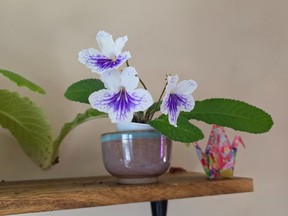
With colder weather, some gardeners redirect their energy to growing indoor plants. If you are one of them, an excellent choice is Cape Primrose, or Streptocarpus.

THIS CONTENT IS RESERVED FOR SUBSCRIBERS ONLY
Subscribe now to read the latest news in your city and across Canada.
- Unlimited digital access to the Ottawa Citizen.
- Analysis on all things Ottawa by Bruce Deachman,David Pugliese, and others, award-winning newsletters and virtual events.
- Opportunity to engage with our commenting community.
- Ottawa Citizen ePaper.
- Ottawa Citizen App.
SUBSCRIBE TO UNLOCK MORE ARTICLES
Subscribe now to read the latest news in your city and across Canada.
- Exclusive articles from David Pugliese, Andrew Duffy, Bruce Deachman and others. Plus, food reviews and event listings in the weekly newsletter, Ottawa, Out of Office.
- Unlimited online access to Ottawa Citizen and 15 news sites with one account.
- Ottawa Citizen ePaper, an electronic replica of the print edition to view on any device, share and comment on.
- Daily puzzles, including the New York Times Crossword.
- Support local journalism.
REGISTER / SIGN IN TO UNLOCK MORE ARTICLES
Create an account or sign in to continue with your reading experience.
- Access articles from across Canada with one account.
- Share your thoughts and join the conversation in the comments.
- Enjoy additional articles per month.
- Get email updates from your favourite authors.
Register to unlock this article — it’s free
Create an account or sign in to continue with your reading experience.
- Access articles from across Canada with one account
- Share your thoughts and join the conversation in the comments
- Enjoy additional articles per month
- Get email updates from your favourite authors
Sign In or Create an Account
or
Article content
Its blooms come in a range of colours from white to a deep dark purple. Flowers can be multi-coloured, striped, or speckled. Leaves are long and often bright green, with hybridizers now producing foliage that can be variegated, light or dark green. With such a wide range of options for both blooms and leaves, there is an option that can appeal to anyone. Streptocarpus can also be planted together and do not mind crowding, so several plants in a larger pot also work well. This easy-to-grow plant has the added benefit of being non-toxic for cats and dogs.
Article content
Article content
Advertisement 1
Article content
Its scientific, or botanical name, is Streptocarpus; it is a member of the Gesneriad family. It was first collected in 1818 in South Africa by a royal plant collector, James Bowie who sent seeds back to the Kew Royal Botanic Gardens in England. There, botanist Willian Aiton cultivated this plant. In 1828, the genus and species received their ancient Greek names from their twisted (strepto) capsules (carpus). Its popularity as a houseplant has continued to grow over the years.
Article content
Streptocarpus fall into two distinct groups. The first is with stems, the Streptocarpellas, for example Streptocarpus saxorum. These plants have smaller leaves and flowers, and can be grown as a small, bushy indoor plant. The second and more commonly grown type produces a rosette of leaves and blooms on long stems. This type is the source from which modern hybrids have been bred and come to be known as Cape Primrose.
Article content

Article content
Streptocarpus are disease resistant and have very few pests. They are, however, vulnerable to crown rot and overwatering. Streptocarpus prefer to be on the dry side, so it is important not to overwater them. To ensure proper watering, confirm that the potting mix is dry on the surface to a depth of one centimetre. To water, sit the plant pot (ensure it has drainage holes) in shallow water (one to two centimetres deep) for a maximum of five to ten minutes.
Article content
Advertisement 2
Article content
Streptocarpus enjoy bright, indirect light to perform their best. Situated Indoors on an east or west windowsill or anywhere that is bright but without strong sunshine usually works well because the early morning or evening sunlight, which is weaker, suits the plant. During the winter months, keep your plants in a position with as much bright light as possible to prolong growth and the flowering season. Streptocarpus needs a minimum temperature of 10C to survive.
Article content

Article content
To extend the blooming time, always cut off dead flowers. Excessive or incorrect feed and poor light will make the plants produce very large leaves and few flowers. It is quite natural as plants age for the old leaves to die back, and the ends should be trimmed off, especially in winter.
Article content
Every year or two, it is a good idea to re-pot a streptocarpus, providing it with fresh potting mix and a bit of space to grow. The best time to do this is in early spring or summer, when the plant is not blooming. This timing supports the best recovery time and minimizes stress on the plant. However, if you notice that your plant’s roots are emerging from drainage holes or are circling the pot, or if the soil is drying out very quickly or has slowed growth and appears very cramped, it is time to repot it. An ideal pot for a streptocarpus is one that is wide and shallow, versus tall and narrow. Potting mixes should be light and allow for air circulation.






























 Bengali (BD) ·
 English (US) ·