.png)
 1 hour ago
9
It is still a masterpiece, and its simplicity often makes its best ideas easier to appreciate.
Author of the article:

Washington Post
Gene Park, The Washington Post
Published Nov 04, 2026 • 4 minute read
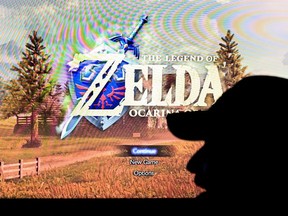
Inside a giant tree, a little boy in a green tunic learns to look up. There are switches above him, webs below him and creatures waiting on the walls. Before he saves the world, he needs to learn how to move through it.
Advertisement 2

THIS CONTENT IS RESERVED FOR SUBSCRIBERS ONLY
Subscribe now to read the latest news in your city and across Canada.
- Unlimited online access to articles from across Canada with one account.
- Get exclusive access to the Toronto Sun ePaper, an electronic replica of the print edition that you can share, download and comment on.
- Enjoy insights and behind-the-scenes analysis from our award-winning journalists.
- Support local journalists and the next generation of journalists.
- Daily puzzles including the New York Times Crossword.
SUBSCRIBE TO UNLOCK MORE ARTICLES
Subscribe now to read the latest news in your city and across Canada.
- Unlimited online access to articles from across Canada with one account.
- Get exclusive access to the Toronto Sun ePaper, an electronic replica of the print edition that you can share, download and comment on.
- Enjoy insights and behind-the-scenes analysis from our award-winning journalists.
- Support local journalists and the next generation of journalists.
- Daily puzzles including the New York Times Crossword.
REGISTER / SIGN IN TO UNLOCK MORE ARTICLES
Create an account or sign in to continue with your reading experience.
- Access articles from across Canada with one account.
- Share your thoughts and join the conversation in the comments.
- Enjoy additional articles per month.
- Get email updates from your favourite authors.
THIS ARTICLE IS FREE TO READ REGISTER TO UNLOCK.
Create an account or sign in to continue with your reading experience.
- Access articles from across Canada with one account
- Share your thoughts and join the conversation in the comments
- Enjoy additional articles per month
- Get email updates from your favourite authors
Article content
“The Legend of Zelda: Ocarina of Time” taught the same lessons to the video game medium. “Ocarina,” released in 1998 for the Nintendo 64, is the “Sgt. Pepper’s” of adventure games, a fountain of ideas and design templates for adventures and storytelling in three-dimensional worlds.
Article content
Article content
The Switch 2 remake, produced by the game’s original scenario director and dungeon designer, Eiji Aonuma, makes those lessons easier to absorb, with intuitive camera controls of modern games, smooth performance and detailed environments that make its land of Hyrule more immersive than ever. It also reveals how closely the original’s ideas have been studied, repeated and expanded upon. Sometimes I wanted this game to do a little more of that expanding itself.
“Anyone who makes 3D games who says they’ve not borrowed something from Mario or Zelda is lying,” Grand Theft Auto series writer Dan Houser told the New York Times in 2012.
Here, you can still recognize what he meant. “Ocarina” is the game that created controls to help players watch opponents in combat, maintain space and target attacks. Dungeons demand attention to vertical space. Hallways twist, and illusory walls conceal hidden passages, all tricks that would be borrowed and elaborated upon by such games as “Dark Souls” or “God of War” that would go on to inspire within their own subgenres.
By signing up you consent to receive the above newsletter from Postmedia Network Inc.
Article content
Advertisement 3
Article content
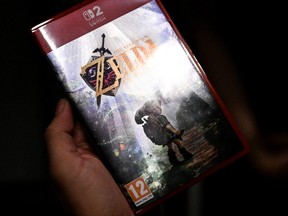
The story remains a fairy tale about a forest boy named Link, a princess named Zelda and a power-hungry man named Ganondorf. Link travels between childhood and adulthood, and that growth is just as stark as in the original. The higher-fidelity detail does heighten the original’s emotional journey of exploring familiar spaces with battle-worn, grown-up eyes. Link’s controls are now flawless: Moving him around feels like a classic coupé with modern steering, every turn effortless without losing the charm of the old machine.
Many of the puzzles are unchanged. I used decades-old online guides to solve a few puzzles to increase Link’s heart meter, and they still worked. Some puzzles are solved by simply looking around, a new concept for players in the ’90s, now made comically easy with a second joystick for camera controls. At least the world is now spaced realistically. A familiar village building might have new layers to navigate, but they fulfill the same functions.
Advertisement 4
Article content
Other puzzles remain obtuse. The infamous Water Temple can still confound, hiding passages revealed by raising and lowering water levels across a massive tower. “Ocarina” still expects you to pay attention to your surroundings and what people tell you. Solutions to Aonuma’s dungeon puzzles feel obvious afterward, but arriving at them tickles the brain. So do the new symphonic versions of classic tunes, reminding you how much online content relies on these songs as background music.
The visual detail is a mixed bag for me. Every main character in the game has a cherubic, doll-like sheen with elaborate threading in their clothes. Nintendo confirms the look is inspired by puppet theatre, a bold and admirable choice that honours Zelda creator Shigeru Miyamoto’s original hopes of becoming a puppeteer.
I can appreciate the choice and still prefer how the rest of the world looks. Outside of the main cast, ordinary townspeople retain the original’s exaggerated shapes and peculiar faces without being overdesigned. The principal cast, while looking great, seems to belong in a different production.
Advertisement 5
Article content
The new voice acting has a similar issue. There’s a lot of intonation similar to children’s anime, with rounded exclamations and carefully pronounced alarm. New lines in the script give welcome texture to the world’s history and cultures; I just wish they were delivered more naturally.
The villain Ganondorf is the exception. “Choke on your bitter failures forever,” says the best-looking, best-sounding cast member. There’s hatred behind the theatrical villainy.
Hyrule Castle Town, once navigated with fixed, elevated camera angles across still images, offers the most convincing argument for this remake as it is now fully explorable. The game’s free camera enhances its liveliness.
Remakes such as Capcom’s “Resident Evil 4” in 2023 have shown how revisiting a classic can create distinct, new experiences. “Ocarina” in 2026 feels closer to a replacement, yet the original’s flat polygons and silent-movie-like cinematics retain a charm that additional detail can’t reproduce. Its limitations helped define how we remember it. Other game developers would try to iron out those wrinkles, but this remake seems interested mostly in literal seams.
I’m grateful this version exists. It is still a masterpiece, and its simplicity often makes its best ideas easier to appreciate. While playing, I often thought about how much the medium grew from “Ocarina.” It remains a great tree of ideas. I only wish it allowed itself a little more room to grow.
Article content




























 Bengali (BD) ·
 English (US) ·