.png)
 1 hour ago
6
1 hour ago
6
Doctor Strange is supposed to be one of the most powerful Avengers in the Marvel Cinematic Universe. He guarded an Infinity Stone, he saw 14,000,605 futures, and he was the only person who knew how the war ended. So why does he keep losing in ways that feel randomly decided?
Avengers: Infinity War barely gets started before Ebony Maw handles him in something that hardly qualifies as a fight. Strange, the Sorcerer, is pinned, poked, and shipped off-world in minutes. However, a few scenes later, he is seen putting up a tough fight against Thanos on planet Titan. Then, in Avengers: Endgame, he is suddenly a walking army, throwing portals across a battlefield, and holding back a flood with his bare hands.
Fans noticed the gap immediately, and one theory has stuck around ever since. Strange isn’t limited by his skill, but by whatever Marvel could afford to render that week. It’s a funny idea, and it might also be half-right, because Marvel’s own VFX crews have said plenty about what magic actually costs.
Does Doctor Strange’s Power Level Rise and Fall With Budget?
The budget theory in Doctor Strange’s case is circumstantial but hard to shake. Strange’s magic isn’t just a costume or a stunt team. It’s a bespoke effect built from scratch every time. Framestore’s Mark Wilson said the hardest part of the first film was that no reference existed for any of it, since you can’t Google “Mirror Dimension” and get something usable (via Art of VFX).
Each mandala, each portal, and each Crimson Band costs money. So the pattern fits with fans’ budget theory. When Strange has a scene to himself, his powers look cheap and finite. When Marvel is already paying for a full digital battlefield, his abilities begin to surface.
However, the Doctor Strange v Ebony Maw and Doctor Strange v Thanos comparisons (as made in this Reddit post) can also be attributed to factors other than just budget. Maw is the one villain in the MCU practically built to beat a sorcerer. He is a telekinetic whose first move is to trap Strange’s hands.
Sorcery needs gestures, and when Maw takes that away, Strange is just a man in a cape. Strange’s every spell needs unobstructed hands, a clear sightline, and a beat of concentration, and Maw strips all three from across the street without stepping into range.
Strange also isn’t defending himself in that scene, but he is defending the Time Stone. Moreover, this particular scene is adapted from Jonathan Hickman’s Infinity (2013), where Thanos dispatches Maw specifically to deal with the Sorcerer Supreme. Maw wins there too, hijacking Strange’s mind and turning him into a double agent.
Meanwhile, on Titan, Strange isn’t just keeping up with Thanos, but he’s coordinating the entire ambush, splitting himself into dozens of duplicates, binding the Mad Titan in Crimson Bands and mirror-dimension rock. He saw the possibilities and ran a rehearsed sequence he has already watched play out millions of times.
Hulk’s Vanishing Rampages in Avengers Movies Can Be Attributed to CGI Budget
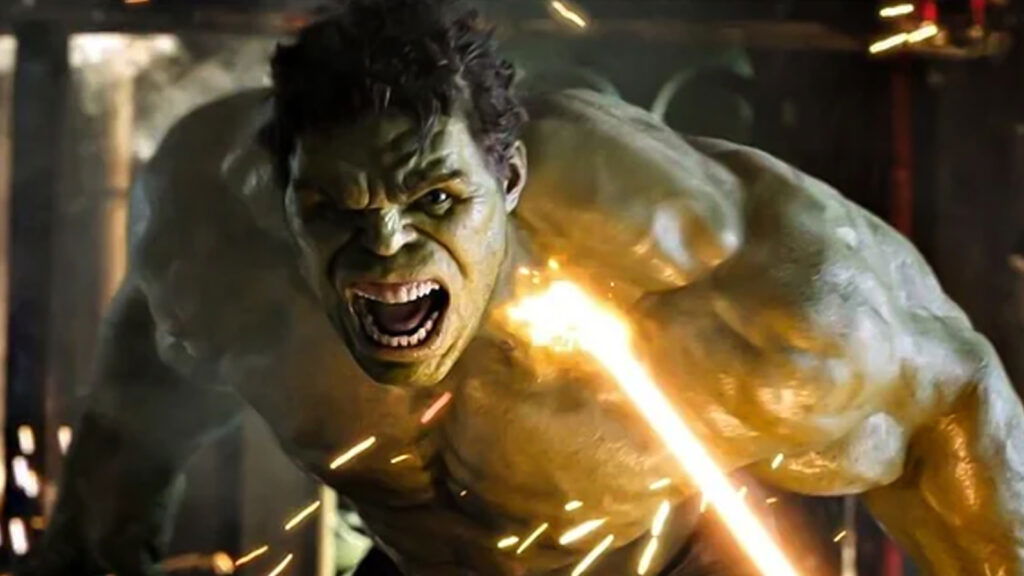 Mark Ruffalo’s Hulk in the MCU | Credits: Marvel Studios
Mark Ruffalo’s Hulk is a definite case of budget determining the hero’s powers. For instance, Ruffalo has long expressed his interest in a World War Hulk movie. He shared with Variety that it was a premise that was “really interesting to me”, even adding, “I do feel like there is some interest in exploring that down the line.”
Despite his interest in the storyline, Ruffalo wasn’t too sure that the solo film would happen. He blamed it on the CGI budget for the hero. He shared in a 2024 interview with GQ, “It’s very expensive if you did a whole movie, which is why they use the Hulk so sparingly. I priced myself out!”
The numbers back him up. She-Hulk reportedly ran around $25 million per episode (via Variety), largely due to the motion-capture VFX its title character demanded. Every second of Hulk is a rendered performance. That’s why the rampages keep shrinking.
Avengers: Age of Ultron gave him one enormous city-wrecking brawl, then parked him. Thor: Ragnarok made him a gladiator who mostly talks. Avengers: Endgame turned him into Smart Hulk, a character who was not big on action. Marvel didn’t lose interest in the Hulk, but found cheaper things for him to do.
Do you think CGI budgets determine the power display of heroes in Marvel movies? Let us know in the comments below!






















 Bengali (BD) ·
  English (US) ·