.png)
 1 day ago
12
1 day ago
12
Frank Herbert did not just build a desert planet. He built an entire culture, complete with its own faith, politics, and language in Dune. Long before Denis Villeneuve‘s films turned “Lisan al-Gaib” into a meme, Herbert was quietly packing his books with words borrowed from Arabic and Hebrew.
Many of these terms carry hidden meanings that add extra layers to the story, from Paul’s messianic rise to the Fremen’s deep connection with the sand. For fans who want to understand what the characters are actually saying, here is a breakdown of every major Semitic term in Dune.
Arrakeen
Arrakeen is the first city the Atreides call home on Arrakis. After leaving the lush oceans of Caladan, Duke Leto moves his family from the Harkonnen seat of Carthag into the Residency here. It is where the betrayal unfolds. The name is built from Arrakis.
Arrakis
Arrakis is the planet that started it all. Also called Dune, it is the only source of the spice and the most valuable rock in the universe. Whoever controls it controls the Imperium, which is exactly why everyone wants it. The word is linked to the Arabic al-raqis, meaning ‘the dancer,’ and is also the name of a real star.
Bene Gesserit
Bene Gesserit is the secretive sisterhood pulling strings across the Imperium. Through centuries of breeding programs, mind control, and planted myths, the Bene Gesserit aimed to create their own superbeing. Their name’s origin is debated, but ‘Bene’ is often linked to the Hebrew bnei and Arabic bani, both meaning ‘sons of’ or ‘children of.’
Bene Tleilax
Bene Tleilax are the creepy genetic engineers of the Dune universe. The Tleilaxu are behind Face Dancers, twisted Mentats, and the gholas that bring Duncan Idaho back again and again. Few factions are trusted less.
Eyes of Ibad
 Timothée Chalamet and Rebecca Ferguson in Dune | Credits: Warner Bros. Pictures
It is the famous blue-in-blue eyes of the Fremen, caused by years of spice exposure. They are the ultimate sign that someone belongs to Arrakis, and they become a defining look in Denis Villeneuve’s films. The word ‘Ibad’ comes from the Arabic ‘ibad, meaning ‘servants’ or ‘worshippers.’
Fedaykin
The Fedaykin are Paul’s elite death commandos, sworn to fight for him to their last breath. In the films, they are the warriors who flank Muad’Dib as his holy war takes shape. The name comes from the Arabic fida’iyyin, which means “those who sacrifice themselves,” a fitting title for Paul’s most loyal fighters.
Ghanima
Fans know her as Timothée Chalamet‘s Paul and Zendaya‘s Chani’s daughter and Leto II’s twin in Children of Dune. But for the Fremen, the word means a prize taken in battle, often kept as a memento. It is a bittersweet name for a child born amid war. It comes from the Arabic ghanima, meaning “spoils of war.”
Gom Jabbar
It is the deadly poison needle from the opening of Dune. Reverend Mother Mohiam holds it to Paul’s neck during his test of humanity with the box of pain. The word ‘Jabbar’ comes from Arabic, meaning ‘mighty’ or ‘tyrant,’ which perfectly suits this terrifying weapon.
Hajra
 Timothée Chalamet as Paul Atreides in Dune 3 | Credits: Warner Bros. Pictures
Hajra is a journey of seeking. For the Fremen, it describes a meaningful trip taken with a deeper purpose, not just travel for the sake of it. The word fits the nomadic spirit of the Fremen perfectly. It comes from the Arabic hijra, meaning ‘migration.’
Jihad
It is one of the most important words in Dune. It describes both the Butlerian Jihad, the ancient war against thinking machines, and Paul’s own holy war that spreads across the universe and kills billions. The word is Arabic, meaning ‘struggle.’
Kitab al-Ibar
Kitab al-Ibar is the Fremen survival handbook, combining practical desert advice with religious teachings. Think of it as a guidebook for staying alive and staying faithful on Arrakis. Its name comes from Arabic, meaning ‘Book of Lessons,’ and it shares its title with a famous historical work by scholar Ibn Khaldun.
Kull Wahad
It is a Fremen exclamation used to express great surprise or emotion, almost like saying “I am truly moved!” It shows that even the hardened Fremen have their moments of awe. The phrase comes from the Arabic kull wahid, which roughly translates to ‘every one.’
Kwisatz Haderach
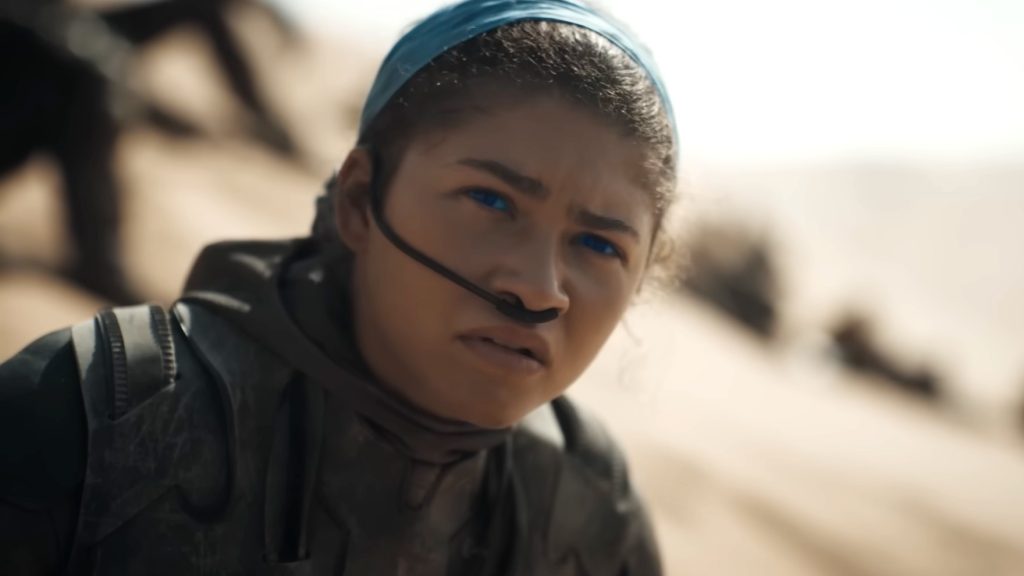 Zendaya as Chani in Dune: Part Two | Credits: Warner Bros. Pictures
Kwisatz Haderach is the superbeing the Bene Gesserit spent centuries trying to breed. He can see the past and future and be in many places at once. Paul becomes exactly that, just a generation early. The term comes from the Hebrew kefitzat haderech, meaning “shortening of the way,” a mystical concept of miraculous travel.
Lisan al-Gaib
It is Stilgar’s favorite phrase, and the internet’s too. It refers to the prophesied off-world messiah who will lead the Fremen to paradise. Villeneuve’s films turned Stilgar’s devotion into a fan-favorite running gag. The term comes from Arabic, meaning ‘Tongue of the Unseen,’ a title once given to the Persian poet Hafez.
Mahdi
It is used to refer to the Fremen’s long-awaited messiah, the one who will guide them to paradise. Paul’s rise is built on the Fremen believing he is this figure, a belief carefully planted by the Bene Gesserit. The word comes from Arabic, meaning the “guided one.”
Muad’Dib
Muad’Dib is the name Paul chooses in the desert. It refers to the kangaroo mouse that survives on Arrakis, admired by the Fremen for its wisdom. The Fremen also call it the “instructor of boys.” That fits its origin, as the Arabic mu’addib means ‘teacher.’
 Timothée Chalamet as Paul Atreides in Dune | Credits: Warner Bros. Pictures
Padishah
It is the grand title of the Imperial throne, best known through Padishah Emperor Shaddam IV, the ruler who helps plot the fall of House Atreides. It signals absolute power over the known universe. The word is Persian, meaning ‘master king,’ and was famously used by the Ottoman and Mughal rulers.
Sayyadina
Sayyadina is a female acolyte in the Fremen religious order, ranking below the Reverend Mother. Sayyadinas play a key role in the Fremen’s sacred rituals, including the Water of Life ceremony. The word comes from the Arabic sayyida, meaning ‘lady,’ giving it a respectful, honored ring.
Shai-Hulud
It is the Fremen name for the giant sandworms, also known as the “Old Man of the Desert.” To the Fremen, the worms are not monsters but divine beings worthy of worship and respect. The name comes from the Arabic shay’ khulud, meaning ‘thing of eternity.’
Shari-a
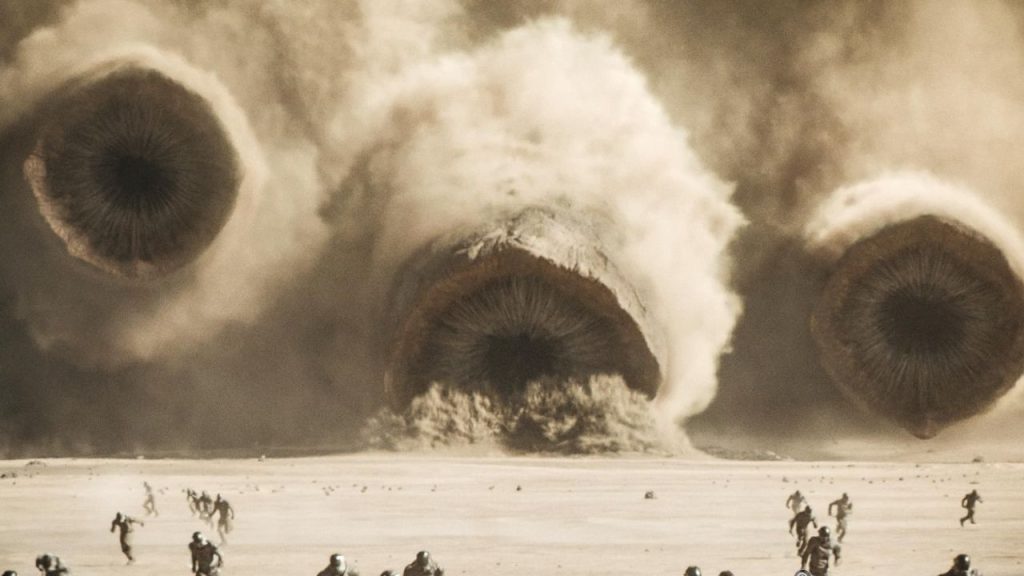 A still from Dune: Part Two | Credits: Warner Bros. Pictures
In Dune, Shari-a refers to the part of religious teaching that sets down rituals and superstitions. It is one of many ways Herbert shows how faith can be shaped and used for control. The word comes from the Arabic sharia, meaning religious law.
Taqwa
The Fremen call it “the price of freedom,” something of such great value that it is worth sacrificing almost anything for. It sums up the Fremen’s hard-won way of life in a single word. It comes from Arabic, where taqwa means deep awareness of God.
Usul
It is Paul’s secret Sietch name, used only among the Fremen. It means “the base of the pillar,” showing that the Fremen see him as a source of strength. Chani often calls Paul by this name in private. It comes from the Arabic usul, meaning ‘foundations.’
Do you have any more Dune terms to add to this list? Let us know in the comments below!


























 Bengali (BD) ·
  English (US) ·