.png)
 5 hours ago
7
5 hours ago
7
I wanted to like Mike Flanagan’s Carrie. I really did. I’m fond of Flanagan’s work in general. And in particular, I adore his takes on Stephen King’s stories. If somebody was going to convince me that Carrie needed eight episodes, he seemed a good bet.
Having watched them, however, I’m still wondering why this needed to be a series. It is packed with good performances across the board. The series departs from the novel in ways that are at lest worth discussing. And overall, it is a competent retelling. But the longer it goes on, the more its achievements feel like reasons to admire individual scenes rather than recommend the whole thing.
What Is Carrie About?
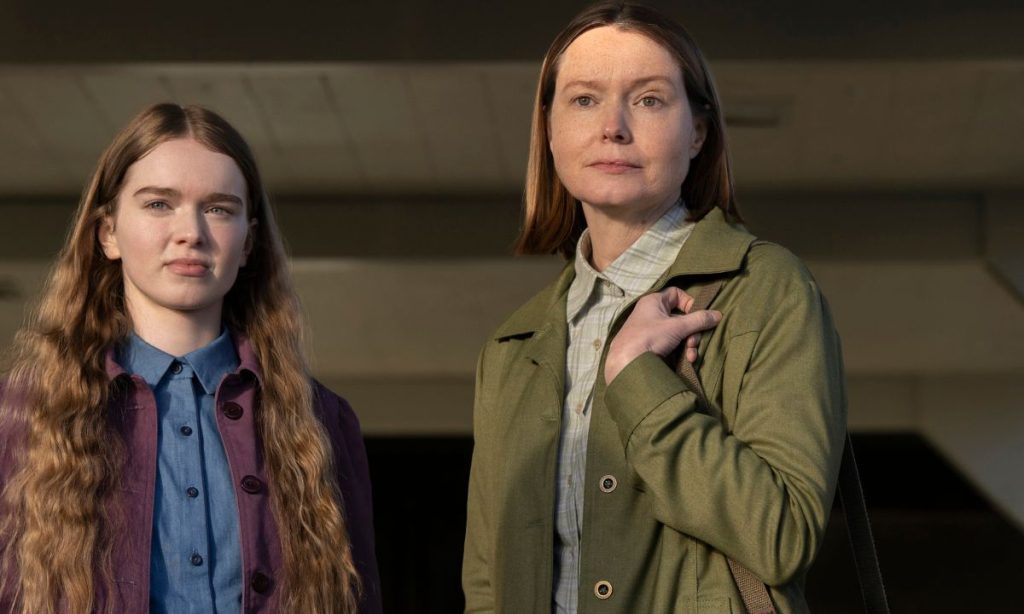 Summer H. Howell and Samantha Sloyan in Carrie | Credits: Robert Falconer/Prime
Carrie White (Summer H. Howell) begins attending public school after her father’s death. She was raised in extreme isolation under the influence of her religious fanatic mother, Margaret (Samantha Sloyan). She has little preparation for dealing with other teenagers and does not realize the cruelty she is in for. She is eager to learn, though, and hopeful about making friends.
Her classmates have other ideas. When Carrie gets her first period in the changing room, she is terrified as her mother forgot to introduce her to the concept of menstruation. Her terror becomes their entertainment. The humiliation is promptly recorded, and the bullying spreads online. Meanwhile, Carrie discovers that she can move objects with her mind. Under severe stress, it appears to happen without intending to. It is a frightening development for somebody already taught to be ashamed of her body.
Carrie Review
The best thing about this version is how much Howell makes you want Carrie to have a good day. She is interested in books and lessons. Access to a library is cause for excitement. There’s something lovely about watching a teenager take such pleasure in an opportunity her classmates barely notice. Howell gives these scenes an openness that makes the subsequent cruelty hard to sit through.
I appreciated having more time for that side of her. Carrie has tastes, curiosity, and things she is good at. Watching her make a dress tells us something about her resourcefulness, too. The series occasionally lets us spend time with her without immediately finding another way to make her miserable, and those stretches are among its best.
Updating the bullying for social media also makes sense. Chris Hargensen (Alison Thornton) creates an account impersonating Carrie called Carrie Red. It extends the abuse well beyond school. Carrie cannot simply go home and wait for people to forget an embarrassing incident. There is a record of it, and somebody determined to keep it circulating.
But knowing how bullying works now is only a starting point. The show spends so much time on the posts, arguments, and fallout that I began to feel I was watching variations of the same conflict. The adults get involved. Parents argue. Another piece of information makes everything worse. Carrie remains miserable. Chris remains awful.
Chris is a particular problem. Her viciousness becomes predictable well before the series has finished demonstrating it. There is only so much dramatic value in wondering what horrible thing she will do next when the answer rarely changes our understanding of her. I wanted the writing to find more in these encounters than another reason to dread the next one.
Margaret is considerably more interesting. Sloyan, a Mike Flanagan mainstay, allows you to see why Carrie would still turn to her mother for comfort. In many ways, her Margaret is a variation of her character in Midnight Mass: Bev Keene. There is the same fanaticism and certainty that God endorses her every judgment. Only the genuine affection for her daughter complicates the performance. She can be protective of Carrie and appalled by how others treat her. But at the same time, she remains incapable of recognizing the harm she causes herself.
That is a difficult character to play without making the shifts feel convenient. Sloyan holds her together. Margaret believes she is doing right by her daughter, and the sincerity of that belief makes her harder to deal with. How can Carrie argue with someone who treats disagreement as further evidence that she needs protecting?
Their scenes gave me a reason to keep watching even when the surrounding drama dragged. Unfortunately, the later episodes become increasingly busy with developments that draw attention elsewhere. I won’t spell those out, but I found them less compelling than the relationship the show had already established. The additional plotting takes time without always earning the emotional investment it asks for.
A shorter version might have given the strongest scenes more force. Here, the repetition often left me impatient when I should have been anxious. That matters in a story so dependent on our fear of what might happen to this girl.
Is Carrie Worth Watching?
 Summer H. Howell as Carrie is perfect | Credits: Robert Falconer/Prime
There is enough good acting in Carrie to keep it from becoming a complete slog. Howell deserves particular credit for making a familiar character feel worth spending time with. Sloyan would have been the MVP of the series if she had more screentime. As it is, she is Howell’s formidable scene partner.
I do wish these adaptations were less reluctant to let Carrie look like the girl King described: heavyset and spotty, and thus far removed from conventional screen beauty. There is something frustrating about stories condemning the cruelty of teenage beauty standards while remaining so unwilling to stray from them in casting. I’m usually happy for adaptations to take liberties, mind you. But Carrie’s appearance matters to how her peers judge and exclude her. Softening that detail loses something of the novel’s ugliness.
For me, the performances could only carry it so far. Eight episodes is a substantial commitment to a retelling that too often repeats itself. I cared about Carrie. I just wish the series had given me fewer occasions to check how much of her story was left.
All eight episodes of Carrie were screened for this review. The series premieres on Prime Video on October 7, 2026.
Carrie Review: All That Telekinesis, So Little Momentum
Summer H. Howell and Samantha Sloyan give Carrie an emotional pull, but repetitive conflicts and sluggish pacing leave Mike Flanagan’s competent retelling struggling to justify its eight episodes.


























/https%3A%2F%2Fsportsmole-media-prod.s3.gra.io.cloud.ovh.net%2Fuploads%2F2026%2F09%2Fmikel-arteta-21-6ab9a6087b35f019707296.jpg)
 Bengali (BD) ·
  English (US) ·