.png)
 1 hour ago
9
1 hour ago
9
Death of a Yellow Bird premiered at Fantastic Fest as one of the most acclaimed films of the festival, earning a 100% rating on Rotten Tomatoes. And this should come as no surprise, considering that it’s from the same team behind A24’s low-budget breakout from earlier this year, undertone.
We at FandomWire got to speak with Death of a Yellow Bird director Cody Calahan, star Ari Millen, producer Chad Archibald, and cinematographer Jeff Maher about the genre-defying film, the role of emotion in the horror genre, their unique use of sound design, and more.
Death of a Yellow Bird Interview
I think there’s something to be said about film as a medium of catharsis, both in terms of what the character is going through and your personal stories making this film. So I’m curious: why do you think that film has that power?
Cody Calahan: Short answer, I think it’s just because it’s honest. We really didn’t hide behind anything, and with what Ari was going through and his willingness to be so brave to explore that stuff kind of made it for everybody else on set — which was just me and Jeff — we had to do the same. We all had to be completely honest and show everything. And I feel like when you do that, it translates. It resonates in a different way, and you can feel it.
Ari Millen: Basically, it was essentially working through what we were going through at the time. It wasn’t imagination; it was a real-life, living experience — just a step over from real life. That just lended itself to that. Not a lot of imagination was needed for many of those scenes.
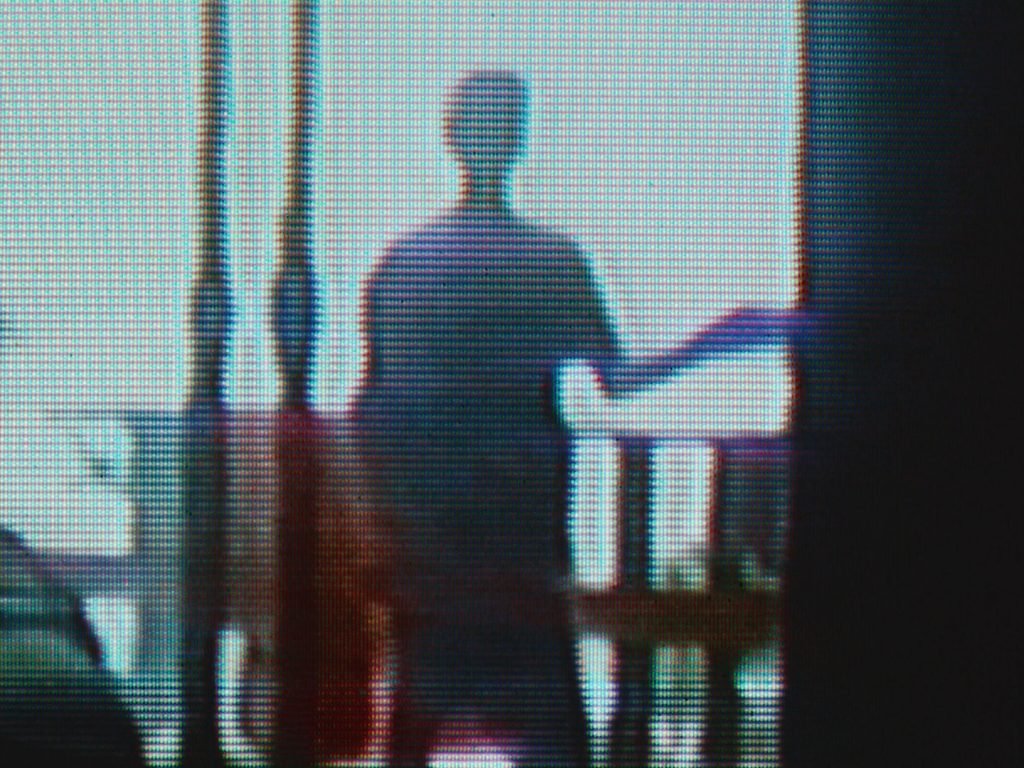
What genre would you classify this film as first? Because it’s not a stereotypical horror movie, but it has some horror elements, so I’m curious — how do you guys look at this film?
Chad Archibald: How would you? How do you look at it, Sean? We’re curious. We’ve actually barely spoken to anyone who’s ever watched this movie. It’s so fresh that it is exciting even talking to people who have seen it.
There are certainly horror elements. I think it’s one of those films that reveal layers across the film. It starts as one thing and kind of slowly morphs into something else and then morphs back into drama at the end. So I really like that about the film.
Millen: Certainly for me, to give an answer, I always saw it very much as a drama. I never saw this as a horror movie. And something that I keep coming back to and I like to say is that sometimes real life is scary. So in my mind, as we were making this movie, I was very much playing it as a drama.
Archibald: I think between all of us — we’ve talked about this a lot over the past 20 years of working together — some of our favorite horror movies are dramas that feel like horror movies. Like when you have something that has so much substance to it, but dabbles in the horror genre. Those are the stories that are so special to see.
And I think horror in general right now, so much of it is leaning towards more important stories that people want to tell and less people running around with a chainsaw cutting people’s heads off.
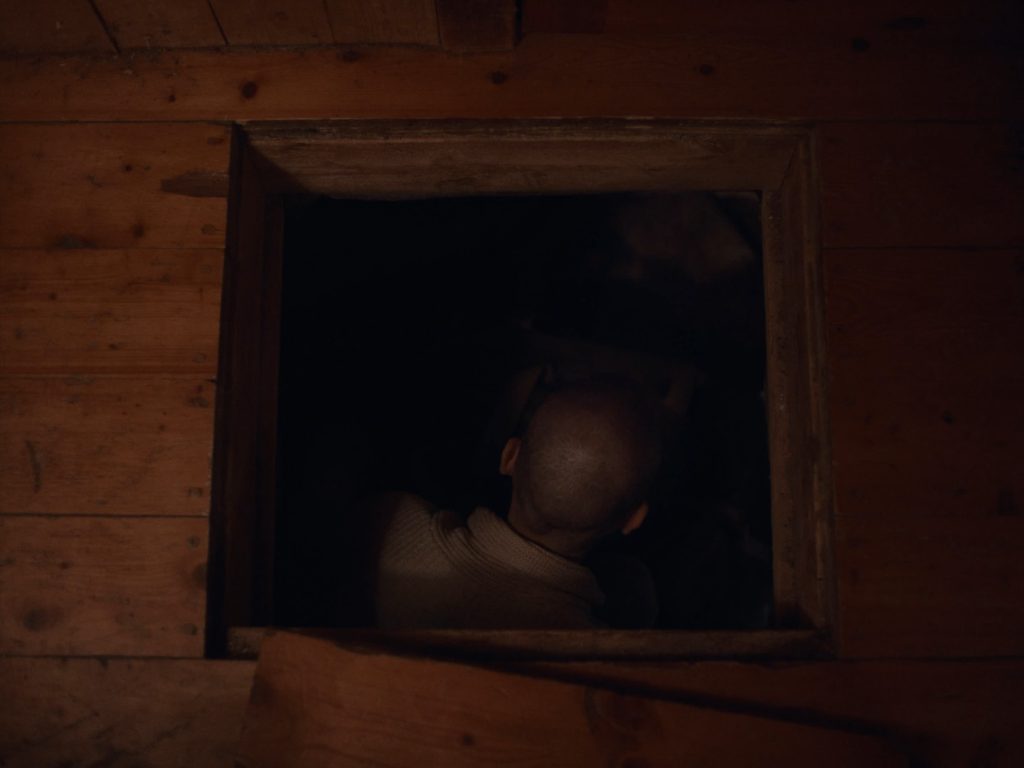
Yeah, and I think if we’re going to talk about the horror genre and the other film that you guys have worked on, undertone, one of the things that I really love is the attention that has been put on sound design. So why do you think sound design is such an important element in this genre and style of filmmaking?
Calahan: I mean, for me, working with Ian [Tuason], the director of undertone — and I’m not going to say it as poetically as he does, if you’ll meet him, you’ll understand what I mean — he said something like, “Everybody’s concentrated on the visuals and stuff like that, but nobody considers sound as a 360 thing.” He’s always saying, “If a door is behind the character, I don’t care where the camera’s looking, the door should be behind the character.”
And just seeing the process of how he did that really sort of opened my mind to all the possibilities. And I started talking to Steph Copeland at some point, maybe it was even during filming, and I got really into frequencies and was doing all this research on frequencies. I soon discovered that there is a fear frequency that if you play it low enough at a certain dB, it causes something.
And I realized testing it myself it really worked, and then I realized that if that’s the case, then there has to be the other side of the spectrum — there has to be a healing frequency. So we played a lot with both of those in the sound mix. But yeah, I’ve got to be honest: I give most of the credit to Ian. He really opened up my perspective on what you can do with sound and thinking about it as another tool, like the camera, like lighting. It’s equal if not more powerful.
So earlier this year, you were in Ice Cream Man, and that was a performance with no words. And now you have Death of a Yellow Bird, which has a lot of monologues. Do you have a preference between these two approaches or styles of acting?
Millen: Short answer, no. Long answer: between these two films, they both came at a time in my life when things were in flux; where things were changing. I was shedding a lot of things and growing into new things. And they both came at the perfect time to help me work through the things that I was working through.
So yes, absolutely, they are not apples to apples. They are apples to Mack trucks. They are two completely different styles of acting, types of storytelling, types of character. But at their core, it is very much about the human experience, and me being able to process my own personal stuff through those characters.
And I am incredibly thankful to have had both of those roles, but I think it’s safe to say that Death of a Yellow Bird certainly saved my life. It really helped me get to a place that I needed to get to while dealing with some pretty heavy s**t.
That’s amazing to hear, and I think it really shows in the film through the sincerity and honesty that you were talking about earlier.
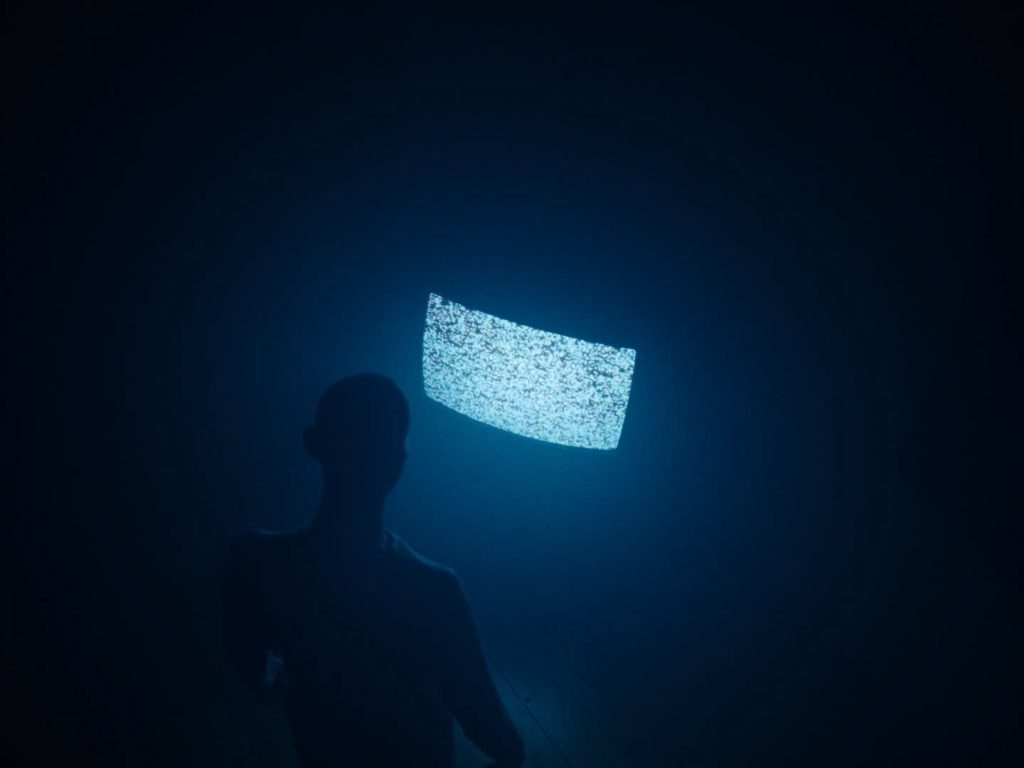
This might be a bit of a cliche, but I think it’s fair to say that the cabin in the film is almost a character in a way. What was it like to find and shoot this location?
Calahan: So my dad built that house, and that’s where me and Ari grew up. And I moved from that house, which was about 20 minutes away from any neighbor or friend, to go to Toronto to go to university. So I spent my entire life there, and all my formative years playing around with cameras and stuff was with Ari there, so it wasn’t necessarily something we could just get. It felt right for the character, but also what Ari was going through. And my mom had passed away there from cancer as well, so i think there was some stuff to be dealt with that we kind of used this film to push through.
Jeff Maher: Cody and I were just talking about this the other day. It was interesting because I’ve known Cody for 16-17 years, we’ve made many movies together, all of us here, and I’d heard plenty of stories about this house that he was raised in and Ari, and them running around the forest with this camera. So the experience for me getting there and seeing Cody’s childhood home was like, “Wow, I’m learning this totally other side of you,” so that was special.
But the one thing I noticed when we got out of the truck and I looked around was all the trees. There was no green in the forest. Like none. There were no pine trees. It was just these sticks everywhere you looked. So it already had quite a creepy vibe, which the movie called a lot for the three of us to be alone. Ari would be deep in the forest. I’d be on the other side of the forest. Cody would be inside trying to get a signal to send to a TV.
So the whole experience of shooting up there was kind of just creepy in general. I found myself filming and then I’d be like, “Are we good?” And someone would be like, “We’re good!” And I’d be running back to the house with the camera. So all that is to say, I was really inspired to shoot up there, and also terrified. So hopefully that comes through.
Archibald: Just to add to that as well, and I’d love for Cody to share a little bit of this story because I love it, but not only was it where Cody grew up and where Cody and Ari spent so much time together, but in the efforts to find the house, there’s new owners there, and in the process they actually discovered something that was Cody’s that was actually at the house and had been left over…
Calahan: So when I was writing the movie, it was a cassette tape that Ari’s character was using to communicate because we used to make radio shows and stuff like that. And I was writing the movie and at the part where I was about to write the first scene with that, the new owners of this house emailed me and said, “Oh we just found this VHS camera in this old shed under a bunch of stuff,” and I was like, “Is there a tape inside?”
There wasn’t a tape inside. But that changed as I was writing the whole story. So now it became a VHS camera. At that point, I called my dad and was like, “How many of the old VHS tapes do you have of me and Ari?” And he said he had like 30 of them of us growing up. And I remember we had made a movie years prior called “Birdman,” which had those yellow wings, and we had made this whole movie and it was like 30 minutes long and I remember all this footage.
So I wrote around this tape, and then my dad sent me the tapes, and there was this tape that said “Birdman” on it, but it was blank. So we had to stitch together footage from me and Ari’s past with these two fantastic kid actors playing us. I would say like 70% of the footage that you see is me and Ari when we’re 10-11.
Death of a Yellow Bird screened at the 2026 edition of Fantastic Fest, which ran September 17-24 in Austin, TX.


















/https%3A%2F%2Fsportsmole-media-prod.s3.gra.io.cloud.ovh.net%2Fuploads%2F2026%2F09%2Fmikel-arteta-21-6ab9a6087b35f019707296.jpg)
 Bengali (BD) ·
  English (US) ·