.png)
 11 hours ago
10
11 hours ago
10
Article content
According to the British Columbia government’s Seniors’ Fall Prevention information, one in three residents in the province over the age of 65 will fall once every year, and falls are the main reason why older adults lose their independence.
Article content
The risk of home stair falls is a major concern. Having no stairs is the best solution but if a home does have stairs ensure good lighting especially in hallways, stairways and entrances where level changes may be difficult to see, particularly at night. Even short sets of two or three steps should have sturdy handrails to provide extra support, says Cheng.
Article content
Stair dimensions also matter, she says, adding that steps should have a consistent height because uneven risers can disrupt a person’s natural walking rhythm.
Article content
“Our body has a sense of memory. So when you’re going up or down the stairs and all of a sudden one tread is a little bit shorter or higher it catches you off guard and you can easily lose your balance,” she says, adding if flooring is being replaced it’s important to account for any changes that could alter stair height.
Article content
Article content
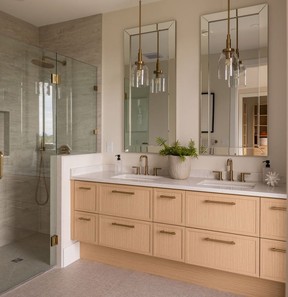
Bathrooms, with their hard, sometimes slippery, surfaces are one of the most important places in the home to focus on to reduce the risk of falls.
Article content
Article content
Grab bars are often one the first things on the list but safely adding them can be a challenge. However, planning ahead can make this a relatively easy task. In a new build, or during a bathroom reno, installing wood blocking to fit between the studs before the walls are closed with drywall or tile will provide anchor points for future grab bars.
Article content
“Even if you don’t feel like you need [grab bars] right now, I would still put in the wood blocking so that in the future you don’t have to take down your wall tiles, you can just add the grab bar,” says Cheng.
Article content
She points out that adding comfort-height toilets is also a feature worth considering. “Comfort-height toilets are typically around 17.5-inches from finished floor to seat,” says Cheng, who advises optimal heights should be tested in bathroom showrooms because needs may vary according to body stature.
Article content
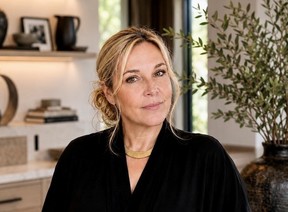
But aging-in-place design isn’t just about mobility, it’s also about vision, says Burns who notes the importance of making sure there’s a difference in lightness and darkness that is easily discernible even if a person has vision challenges.
Article content
Article content
Article content
“We always make sure that there is sufficient [visual] contrast between the floors, cabinets, countertops and backsplashes,” she says adding that carefully planned, balanced lighting with appropriate colour rendering to reduce glare, show trip hazards and limit visual confusion is also necessary.
Article content
Smart home technologies — such as motion-activated lighting, video doorbells, smart locks, programmable thermostats, motorized blinds and touchless faucets — can improve safety and convenience for older adults.
Article content
“My mom, for instance, is 85. We set up her home so that she has everything voice activated — smart locks and lighting — she doesn’t have to get up to turn off a light, it’s all voice activated,” says Burns.
Article content
Cheng says circadian lighting systems that mimic natural daylight to support peoples’ internal biological clock can also be helpful.
Article content
“It’s a type of lighting system that adjusts the colour temperature and also the intensity to sync with our natural sleep patterns and help with our sleep at night,” she says, explaining a system can be preprogrammed through a computer, or there are light bulbs, such as Philips Hue, which can be managed through a smartphone.





























/https%3A%2F%2Fsportsmole-media-prod.s3.gra.io.cloud.ovh.net%2Fuploads%2F2026%2F07%2Fwc26-stencil-generic-1-player-email-6a5efced3be22784676779.jpg)
 Bengali (BD) ·
  English (US) ·