.png)
 1 hour ago
9
1 hour ago
9
Article content
When ChatGPT exploded in popularity two years ago, it didn’t just seep its way into the very fabric of our society. The technology also became privy to some of the most intimate corners of many people’s inner worlds.

THIS CONTENT IS RESERVED FOR SUBSCRIBERS ONLY
Subscribe now to read the latest news in your city and across Canada.
- Unlimited digital access to the Ottawa Citizen.
- Analysis on all things Ottawa by Bruce Deachman,David Pugliese, and others, award-winning newsletters and virtual events.
- Opportunity to engage with our commenting community.
- Ottawa Citizen ePaper.
- Ottawa Citizen App.
SUBSCRIBE TO UNLOCK MORE ARTICLES
Subscribe now to read the latest news in your city and across Canada.
- Exclusive articles from David Pugliese, Andrew Duffy, Bruce Deachman and others. Plus, food reviews and event listings in the weekly newsletter, Ottawa, Out of Office.
- Unlimited online access to Ottawa Citizen and 15 news sites with one account.
- Ottawa Citizen ePaper, an electronic replica of the print edition to view on any device, share and comment on.
- Daily puzzles, including the New York Times Crossword.
- Support local journalism.
REGISTER / SIGN IN TO UNLOCK MORE ARTICLES
Create an account or sign in to continue with your reading experience.
- Access articles from across Canada with one account.
- Share your thoughts and join the conversation in the comments.
- Enjoy additional articles per month.
- Get email updates from your favourite authors.
Register to unlock this article — it’s free
Create an account or sign in to continue with your reading experience.
- Access articles from across Canada with one account
- Share your thoughts and join the conversation in the comments
- Enjoy additional articles per month
- Get email updates from your favourite authors
Sign In or Create an Account
or
Article content
As an “AI therapist,” the technology, however, came with its own set of consequences as more people started depending on it for daily use.
Article content
Article content
Now, clinicians and health care professionals are scrambling to close the mental health-care gap while simultaneously researching alternative solutions addressing cases of what’s been called “AI psychosis,” according to Peter Selby, a scientist at the Centre For Addiction and Mental (CAMH).
Article content
Article content
Researchers across the country, including some at the University of Ottawa, have started developing alternative therapeutic AI tools they say are safer than “taking your chances with ChatGPT,” according to Selby.
Article content
By signing up you consent to receive the above newsletter from Postmedia Network Inc.
Article content
“I believe health-care professionals should be shaping the technology rather than the other way around,” Selby said.
Article content
A chatbot alternative
Article content
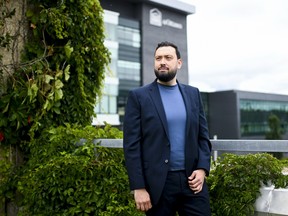
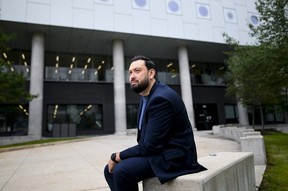
At uOttawa, Faculty of Engineering professor Karim Alghoul is one of the researchers leading a team dedicated to developing UbiMyTherapist, an AI digital therapy assistant.
Article content
UbiMyTherapist would continuously monitor a user’s emotional state and respond with suggestions that are clinically informed.
Article content
Alghoul says the tool runs on everyday devices like smart smartwatches, smartphones or earbuds. The technology is an AI model that helps detect and predict emotions like stress ahead of time and provide support.
Article content
I believe health-care professionals should be shaping the technology rather than the other way around
Scientist Peter Selby
Article content
But the idea is not to get people to stop using Large Language Models (LLMs) like ChatGPT as their therapist altogether.
Article content
“Everyone is using LLMs anyway,” said Alghoul, who also works as a clinical AI adviser at the university’s Faculty of Medicine. “So instead of just kind of forcing people to not use it, what if we put some layers of protection?”
Article content
Article content
Article content
Could you truly trust AI to be your therapist?
Article content
Alghoul says it’s safer because the tool works based on the physiological data of the user.
Article content
This means the AI model can use bio signals like heart rate and sleep data, all collected through smartwatches, to predict emotion.
Article content
“The reason why we focused a lot on the physiological measurement is that this kind of data is continuous. You can wear your smartwatch all the time, even when you’re asleep,” Alghoul said.
Article content
The “Ubi” in UbiMyTherapist, stands for “ubiquitous,” Alghoul explained, which is meant to hint at the continuous nature of the data collection process.
Article content
Article content
What makes the human-AI interaction safer, though, is the additional protection that the “Retrieval-Augmented Generation”, or RAG, provides. The data collected will be used against a RAG technology that is layered on top of the LLM, the professor said.
Article content
“This will ground the LLM. This means that the LLM will only answer from a specific data set that it’s given,” he said.
Article content
“The answers are not allowed to be from its general knowledge. The tool will only be allowed to go and grab answers from the database.”


























/https%3A%2F%2Fsportsmole-media-prod.s3.gra.io.cloud.ovh.net%2Fuploads%2F2026%2F07%2Fwc26-stencil-generic-1-player-email-6a5efced3be22784676779.jpg)
 Bengali (BD) ·
  English (US) ·