.png)
 1 week ago
5
1 week ago
5
War in anime can be a battlefield, a political machine, a generational curse, or a system designed to decide whose life matters. Attack on Titan mastered that spectrum, evolving from humanity’s fight against Titans into a story of militarism, political conflict, genocide, sacrifice, and survival. But being one of anime’s greatest war stories does not mean it has the final word on the genre.
These 5 series approach warfare from radically different angles, sometimes surpassing Attack on Titan in their treatment of soldiers, ideology, conquest, trauma, and the machinery that keeps wars alive.
1 Fullmetal Alchemist Brotherhood Makes War Feel Tragically Human
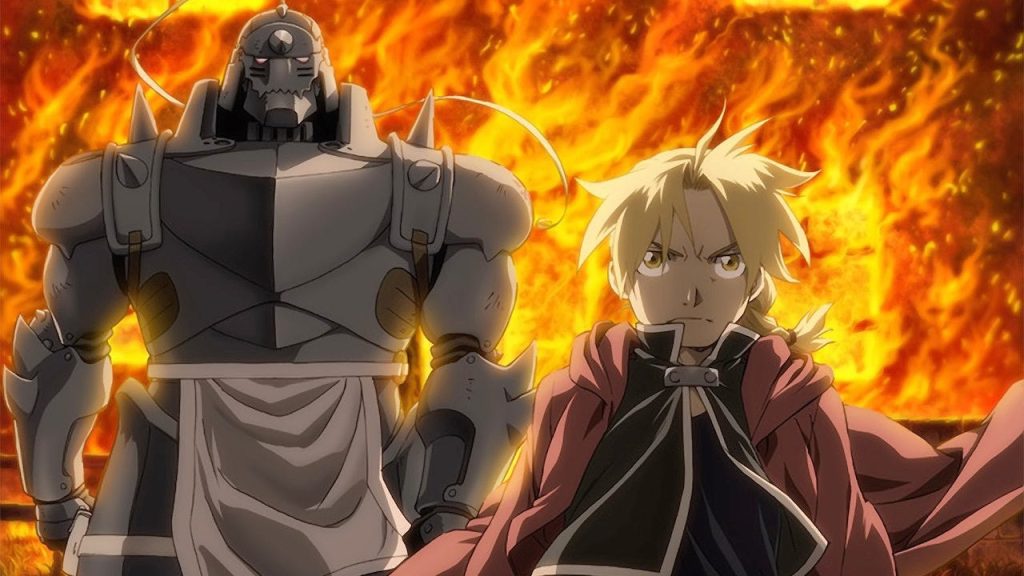 Alphonse and Edward Elric in Fullmetal Alchemist: Brotherhood. [Credit: Studio Bones]
War in Fullmetal Alchemist: Brotherhood is not distant history; it is a wound carried by soldiers. The Ishval Civil War turns Amestris’s military into an instrument of extermination, while State Alchemists such as Roy Mustang, Alex Armstrong, and Solf J. Kimblee confront what their orders made them. Scar’s revenge then shows how violence survives the battlefield. Unlike Attack on Titan, which expands war into geopolitics and existential survival, Brotherhood digs deeper into how one state’s militarism scars perpetrators, victims, and society alike.
Its war story feels stronger because consequences remain personal long after the guns fall silent. The State Alchemist program itself is a particularly chilling detail: combat-capable alchemists were effectively treated as government-sanctioned “human weapons.”
2 Vinland Saga Turns a Warrior’s Revenge Into a Brutal Reckoning
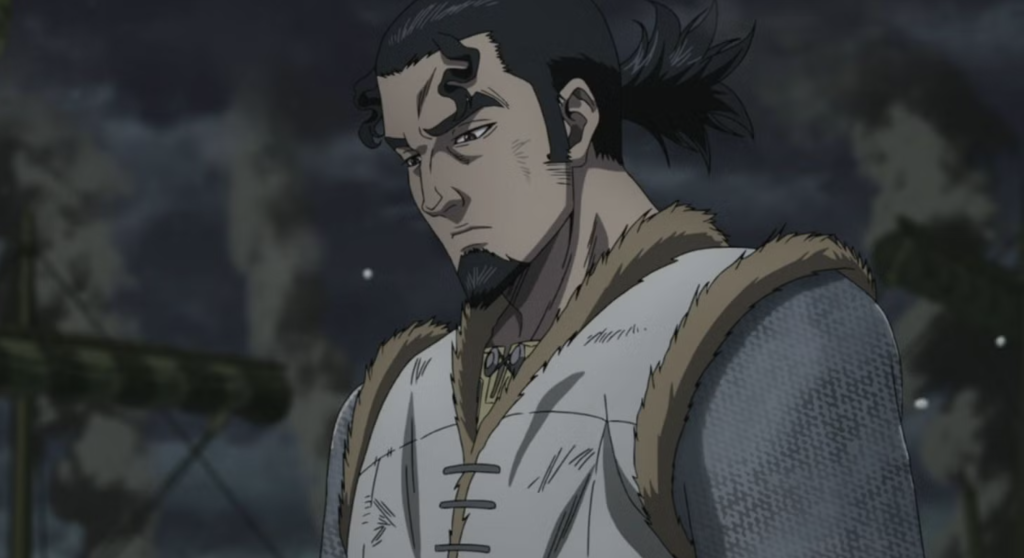 Thors from Vinland Saga. [Credit: WIT Studio]
Vinland Saga makes warfare feel like a disease that can consume an entire identity. Thorfinn enters the Viking invasion of England believing revenge can give his violence meaning, only to discover that becoming a warrior has emptied him. Meanwhile, Canute learns to use conquest, political maneuvering, and royal power rather than merely the sword. Attack on Titan excels at showing nations trapped in cycles of violence. Vinland Saga goes further psychologically by questioning why warriors want war at all.
Its central conflict eventually becomes not how to win a war, but how to escape the culture that creates warriors. That philosophical turn is deliberate: creator Makoto Yukimura has said violence and its consequences were central concerns when developing the series.
3 Kingdom Proves the Battlefield Can Forge Legends From Nothing
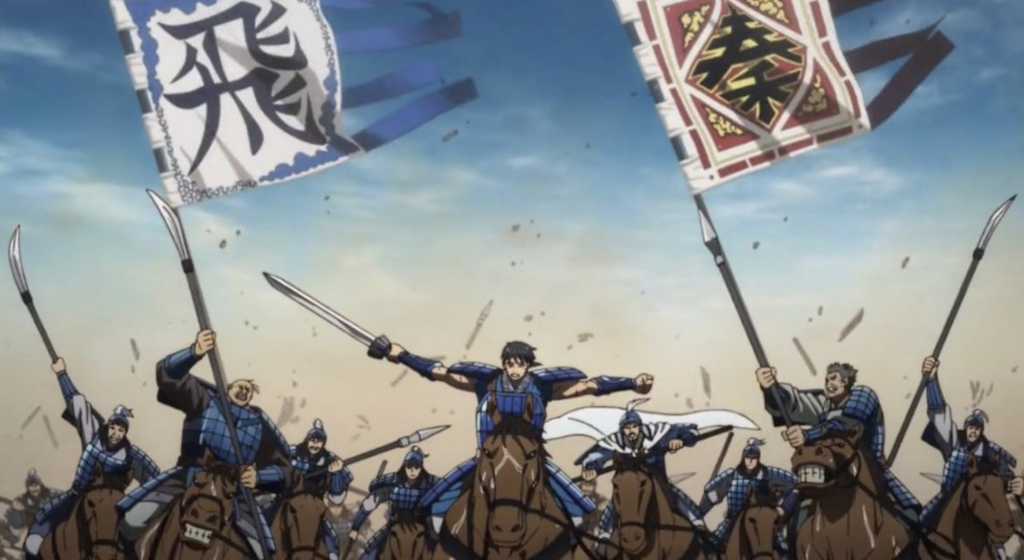 Shin leading the Hi Shin Unit in Kingdom. [Credit: Pierrot]
Kingdom is built for readers who want war as an intricate contest of command, formation, terrain, morale, logistics, and ambition. Set during China’s Warring States period, it follows Shin and Ying Zheng as Qin pursues unification, while commanders such as Wang Jian and Li Mu wage campaigns whose outcomes depend on battlefield decisions. The Sanyou Campaign and Coalition Army invasion demonstrate how multiple fronts can shift through deception and leadership.
Attack on Titan has memorable military strategy, but Kingdom devotes far more narrative space to conventional warfare itself, making its commanders and armies the engine of the story. Its historical foundation, drawn from China’s ancient records, also gives its campaigns an unusually expansive sense of scale.
4 86’s Dystopian Military Sci-Fi Plot Shows the Horrors of War
86 (one of the best anime adapted from light novels) turns warfare into a system designed to make some lives disposable. The Republic of San Magnolia publicly claims its Juggernauts are unmanned weapons, while the persecuted Eighty-Six secretly pilot them and absorb the casualties. Shin’s Spearhead Squadron therefore fights two enemies: the Legion and a society that has erased their humanity. Attack on Titan also examines discrimination and state violence, but 86 makes dehumanization the operating principle of its military machine.
Lena’s growing awareness of the Eighty-Six exposes how propaganda can let civilians enjoy a “safe” war while others die beyond the walls. The series’ central premise is especially potent because the supposedly autonomous weapons are explicitly human-operated.
5 Saga of Tanya the Evil Turns War Into a Chilling Power Game
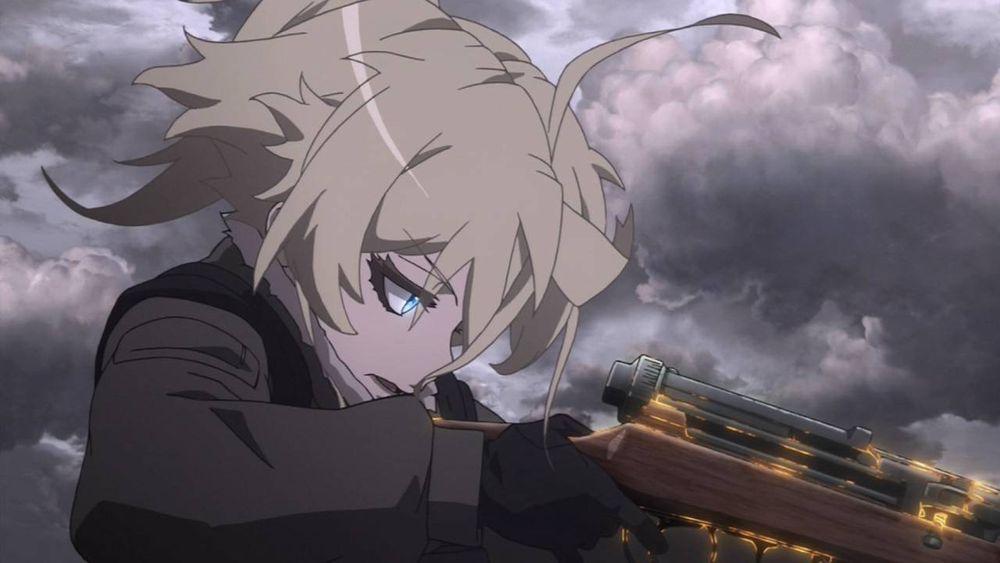 Tanya from The Saga of Tanya the Evil. [Credit: NUT]
The Saga of Tanya the Evil treats war like a ruthless equation of objectives, resources, intelligence, and political survival. Tanya Degurechaff is not a heroic soldier seeking glory; she is a calculating officer trying to exploit military institutions while minimizing her own risk. The 203rd Aerial Mage Battalion’s campaigns show how air superiority, communications, reconnaissance, and concentrated firepower can decide operations.
Attack on Titan excels at the moral horror of total war, but Tanya offers a colder perspective: how commanders turn violence into arithmetic. Its alternate-history geopolitics also makes the battlefield inseparable from diplomacy and state interests. The anime’s military world deliberately echoes early-20th-century warfare while adding magic to its strategic equation.
Which anime do you think tells war better than Attack on Titan? Tell us your pick in the comments!



















 Bengali (BD) ·
  English (US) ·