.png)
 2 hours ago
6
A great skill tree in a game gives you more to think about than which number to increase next. It can change how you fight, explore, solve problems, and even interact with the world around you. Some games offer incredible freedom through their progression systems, while others make every upgrade feel like a meaningful decision.
We’re leaving Final Fantasy X and its excellent Sphere Grid out because its interconnected board deserves a list of its own. This time, we’re focusing on games with distinctive ability trees and augmentation systems. Here are five that approach character progression in their own memorable ways.
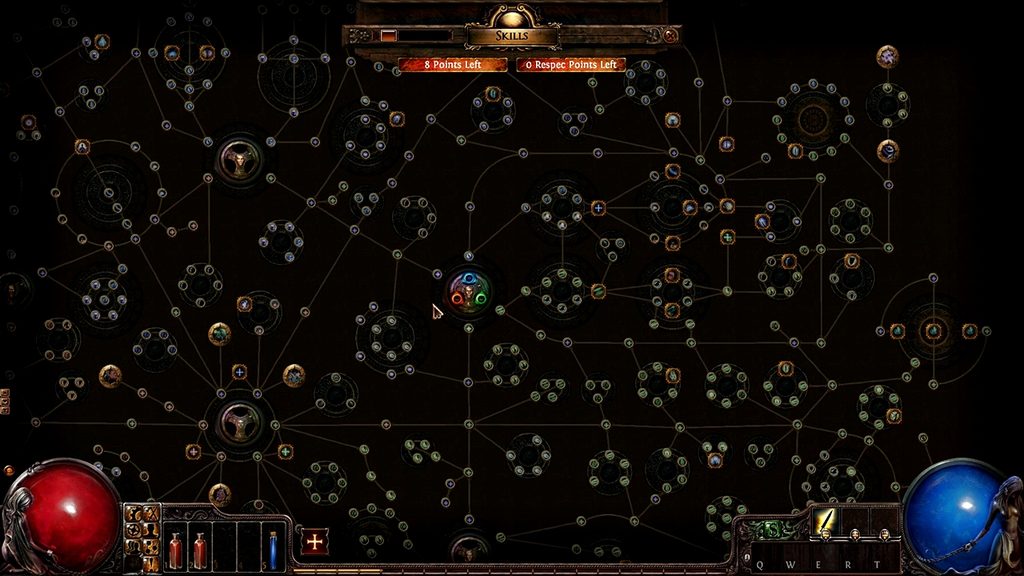
5 Path of Exile (Series)
 Credit: Grinding Gear Games
There’s a reason people joke that Path of Exile doesn’t have a skill tree, but an entire skill “forest”. Grinding Gear Games’ ARPG series gives you an enormous shared passive tree, with seven starting classes occupying different positions. The sheer scale is incredible, and keystones can introduce major changes to your build. Still, plenty of nodes only offer modest statistical improvements, with the more interesting combinations emerging from your passive choices, skill gems, and equipment.
4 Deus Ex: Mankind Divided
 Credits: Eidos-Montréal/Square Enix
Adam Jensen’s augmentations give Deus Ex: Mankind Divided a clever approach to character progression. Praxis points unlock abilities for hacking, stealth, combat, and exploration. Remote Hacking can help you access restricted areas, while Glass-Shield Cloaking lets you slip past security. Some experimental augmentations also come with a catch: activating them increases system instability, forcing you to disable other abilities to keep Jensen’s body under control.
3 The Elder Scrolls V: Skyrim
 Credits: Bethesda Game Studios/Bethesda Softworks
Skyrim makes character progression feel natural by letting you improve skills through regular use. Its 18 skill trees cover everything from Archery and Sneak to Smithing, Enchanting, and Conjuration. You earn perk points as you level up, then spend them on abilities that suit your preferred playstyle. There’s no rigid class system holding you back here, and the constellation-inspired trees are still among the most incredibly pleasing to the eye.
2 Cyberpunk 2077
 Credit: CD Projekt Red
Update 2.0 gave Cyberpunk 2077 a much-needed progression overhaul, with five attribute trees built around Body, Reflexes, Technical Ability, Intelligence, and Cool. Each supports a different combat style, whether you prefer hacking enemies, wielding blades, relying on cyberware, or a mix of all that there is. Phantom Liberty also added a separate Relic tree, further expanding certain cyberware abilities (via YouTube). The perks all have tangible effects on your build, which basically means that you have every excuse to experiment with different versions of V.
1 Prey (2017)
 Credits: Arkane Studios/Bethesda Softworks
Arkane Studios’ Prey takes the top spot thanks to how cleverly its Neuromod system ties character progression to the game’s central conflict. Morgan Yu can develop human abilities across Scientist, Engineer, and Security, or scan Typhon creatures to unlock alien powers.
Mimic Matter, for example, lets you transform into everyday objects, while Mindjack can turn certain enemies into allies. However, acquiring more than two Typhon abilities makes security turrets identify Morgan as a threat. Every upgrade can change how you explore Talos I and how its security systems respond to you.
Which of these games has your favorite progression system? Do you prefer enormous build possibilities or abilities that change how you interact with the world? And is there another game whose skill tree deserves a spot on this list? Let us know in the comments below!






























 Bengali (BD) ·
 English (US) ·