.png)
 15 hours ago
14
Tom Cruise has spent nearly three decades defying gravity, dodging bullets, and turning impossible stunts into box-office spectacles. Yet Steven Spielberg’s Minority Report (2002), a 145-minute science-fiction thriller, arguably remains his most intellectually daring action movie. Twenty-four years later, its breathless chases, moral ambiguity, and eerily prescient technology give even the Mission: Impossible franchise a run for its money.
Adapted from Philip K. Dick’s 1956 short story, the film follows John Anderton (Cruise), the chief of Washington, D.C.’s PreCrime unit, which arrests people before they commit murder. When the system predicts that Anderton himself will kill someone, the hunter becomes the hunted. Unlike Ethan Hunt’s missions, Minority Report asks whether preventing a crime before it happens constitutes justice or tyranny. That philosophical trap makes Spielberg’s futuristic thriller a formidable contender for Cruise’s finest action film.
Steven Spielberg Made the Future Feel Frighteningly Familiar
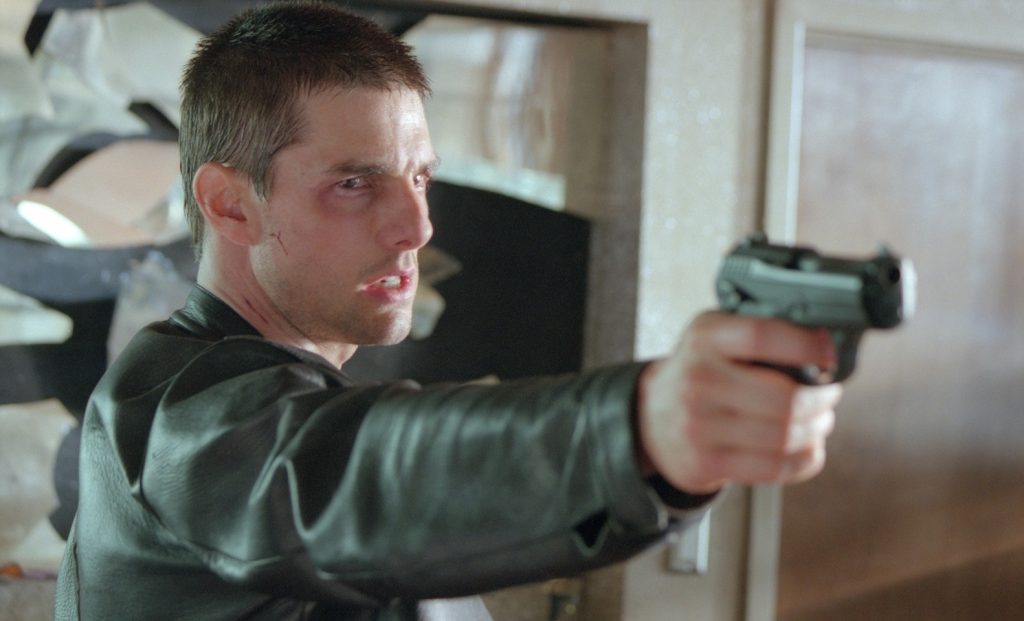 Credits: 20th Century Fox
Set in 2054, Minority Report imagines a society where retinal scans identify citizens, advertisements recognize customers, and surveillance makes anonymity almost impossible. Its technological wonders conceal a chilling erosion of privacy. Steven Spielberg assembled scientists, architects, and technology specialists to envision this future. In a 2002 interview with WIRED, he explained his fascination with science fiction’s cautionary possibilities:
The best science fiction stories have the most dire warnings about civilization and the future.
The film’s gesture-controlled interfaces and personalized advertisements anticipated developments in human-computer interaction and targeted marketing, even if psychic crime prediction remains fictional. Spielberg also makes his dystopia painfully tangible. Anderton’s escape through an automated automobile factory, spider-like surveillance robots, and the infamous eye-transplant sequence turn technological anxieties into nerve-shredding suspense.
Cruise embraced those physical demands. Discussing the eye surgery sequence in a Hollywood.com interview, he recalled:
That was my eye that was being hooked up!
His commitment anticipated the punishing stunt work of his later Mission: Impossible appearances. However, Anderton’s desperation, injuries, and drug dependency expose a deeply damaged protagonist. Cruise also performed demanding jumps during the production, reinforcing the film’s practical-action credentials. Colin Farrell’s Danny Witwer, Samantha Morton’s Agatha, and Max von Sydow’s Lamar Burgess further complicate the moral uncertainty surrounding PreCrime.
Why Minority Report Outclasses Mission: Impossible in Storytelling
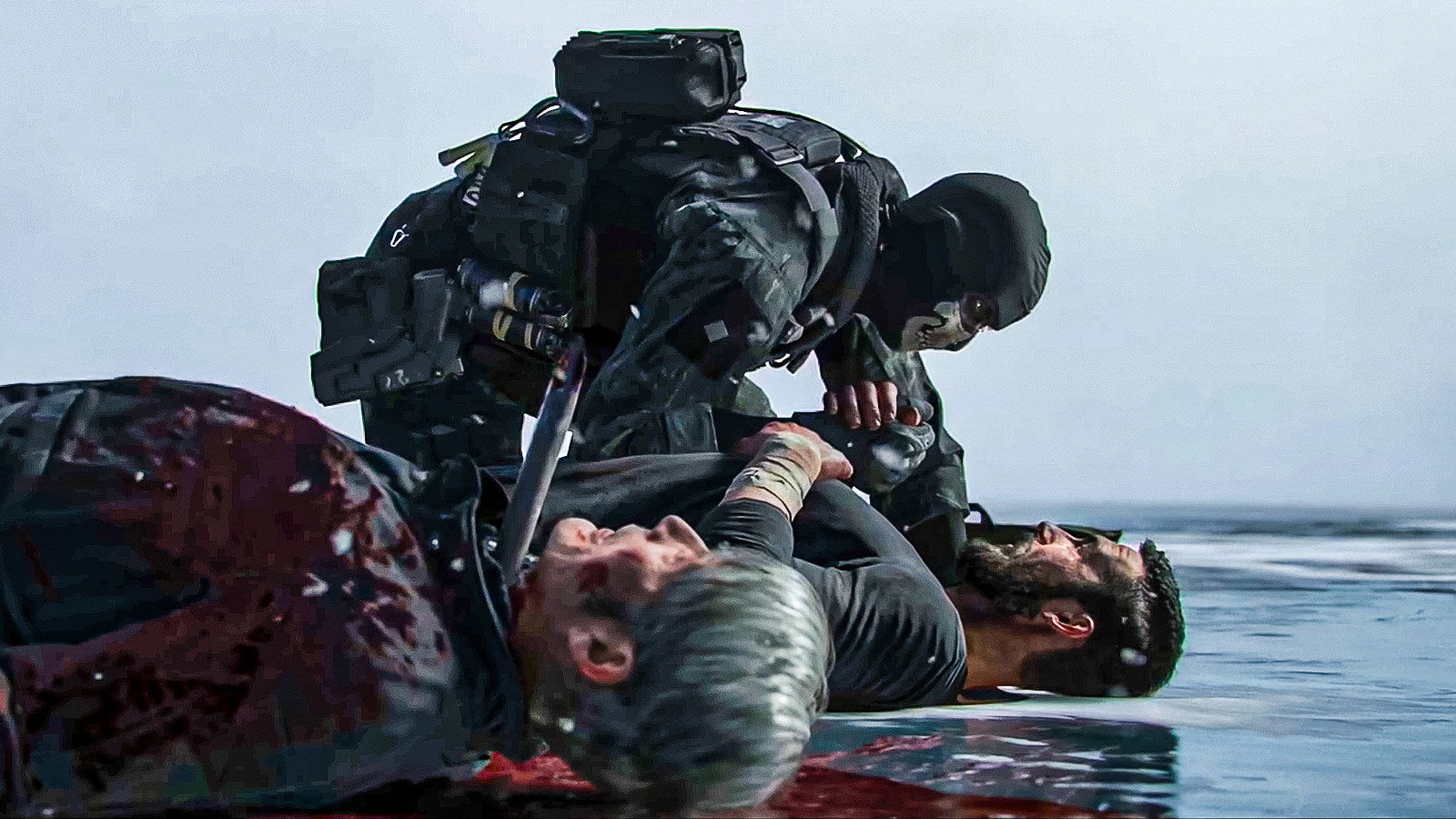
 Credit: Paramount Pictures
The comparison is provocative, considering the Mission: Impossible franchise’s extraordinary action pedigree. Christopher McQuarrie’s Mission: Impossible – Fallout (2018), for instance, holds a remarkable 98% critics’ score on Rotten Tomatoes. Meanwhile, Minority Report holds 89% from critics and 80% from audiences, based on 263 critical reviews. It also earned approximately $358.4 million worldwide against a reported $102 million production budget.
Steven Spielberg’s film therefore cannot claim superiority through critical consensus or commercial scale. Its advantage lies in narrative ambition. Where Mission: Impossible typically builds suspense around whether Hunt can avert catastrophe, Minority Report questions whether its protagonist deserves to succeed. Anderton has dedicated his career to imprisoning people for crimes they have yet to commit. Becoming PreCrime’s next target exposes the terrifying fragility of his convictions.
Cruise himself addressed the philosophical dilemma in a 2002 Voice of America interview:
I don’t believe in fate.
That conviction strikes at PreCrime’s foundation. If the future is predetermined, personal responsibility becomes a paradox. If people can change their destinies, the system’s justification collapses. Ethan Hunt generally fights to restore order. Anderton discovers that the established order may be the greatest threat.
Spielberg’s comparatively tidy ending arguably softens the film’s darker implications. Nevertheless, its ethical complexity gives Cruise an unusually compelling character arc. For readers interested in its revelations, FandomWire’s Minority Report ending explanation revisits the film’s central conspiracy and final confrontation. Twenty-four years after its June 21, 2002, theatrical release, Minority Report proves that Cruise’s greatest cinematic feats need not involve hanging from aircraft. Sometimes, the most dangerous stunt is making audiences question their own certainty.
Does Minority Report surpass Tom Cruise’s Mission: Impossible adventures? Share your thoughts in the comments, and follow FandomWire for more movie news, streaming updates, and entertainment coverage.
Minority Report is listed as available through Prime Video and Paramount+, with digital rental and purchase options. Subscription requirements may vary.





























 Bengali (BD) ·
 English (US) ·