.png)
 1 hour ago
7
Article content
Last year, National Post revealed that Rogers sent a memo to staff in June 2025 acknowledging the “disappointing and unacceptable” PSES results. Culture change would become his and management’s “overriding priority,” he wrote, because the current environment was hampering CSIS’s ability to deliver on its critical national security role.
Article content
The director and his colleagues are well aware that changing a culture — particularly one that has been allowed to fester slowly for so long — is not an overnight experience.
Article content
“Habits are hard to change,” said Schwartz in the recent interview in which she, Rogers and Lloyd listed a number of changes they were implementing following his memo.
Article content
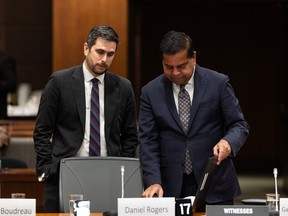
Article content
One is improving communication by having senior executives speak more directly to their staff and vice-versa. Executives need to speak more directly to their reports, and employees are encouraged to write directly to a senior leader, and even the director himself.
Article content
“You can make all the right decisions as a senior manager, but if people never know who you are, they don’t know your values, and they don’t hear the context about why you made the decision that you made, and they don’t feel like you’re being earnest with them, and you’re just this nameless, faceless thing that exists and communicates them through an email or a very corporate speak message, they might assume the worst,” Rogers said.
Article content
Advertisement 3
Article content
A second is making it clear to executives that their priority over the next year was to focus on “key elements of our workforce”, such as creating a better team environment. It’s now part of their performance reviews and directly impacts their bonus.
Article content
Another is hiring more, faster and addressing critical staffing gaps.
Article content
For Schwartz, the head of HR, much time has been spent speeding up recruitment and the infamously slow enhanced top secret security clearance process. There is no lack of applicants to the spy agency, she said, but getting them through the door has not always been easy.
Article content
She said she’s worked to cut down on hiring “bottlenecks”, speed up the clearance process such as by hiring more polygraph operators, and avoiding redundancies in the process.
Article content
“So this year we have (hiring) targets. Next year, we have more ambitious targets because we know that this year we’re going to take a bit of time to build the capacity because we hadn’t been doing it for a while. I expect that that trajectory gets better,” Rogers explained.
Article content
He also said the service has “really fundamentally adjusted the way that we do training, the way that we classify people in positions” in the name of efficiency.
Article content
Advertisement 4
Article content
There’s also recognition. Because of CSIS’s secret mandate, much of the work done to protect Canada’s national security like foiling a terrorist plot or preventing sabotage on Canadian infrastructure goes unrecognized. It’s a longstanding frustration by employees at the service.
Article content
So if a team has a “great operational success,” instead of sending them an email, why not bring them a box of donuts, say thank you and ask them how they did it, Rogers said. Simple stuff that simply wasn’t being done consistently.
Article content
We have an organization that is extremely overtaxed in an extraordinarily complex environment, and people do hard work in stressful environments every day
Article content
But in an organization where so many employees are spies who are trained to lie, deceive and conceal their true identity professionally, how does Rogers ensure executives are actually making the changes he demands?
Article content
On the same day National Post sat down with Rogers, former intelligence officer Diana Bayko published an account of her time at CSIS in which she explained how her then-boss had advised her to handle conflict with her colleagues.
Article content
“Handle my co-workers like sources. Meaning: assess their reliability, spot vulnerabilities and exploit them if need be, and trust sparingly,” wrote Bayko.






























 Bengali (BD) ·
 English (US) ·