.png)
 4 days ago
5
4 days ago
5
The Voices of Our Mother belongs to a now-overpopulated subgenre, the haunted house as inherited trauma made literal, the lineage running back through Hereditary and Relic (a massively underrated and underseen Australian movie) and a half-dozen lesser imitators. Mark O’Brien wrote it, directed it, and cast himself as William, the eldest son who wants his comatose mother’s money more urgently than he wants her recovery, which is either a strange act of self-flagellation or just an actor unwilling to hand the film’s least flattering role to somebody else.
It’s a haunted house movie that understands, mostly, that the people in the house are scarier than whatever’s in the walls. That’s rarer than it should be.
What Is The Voices of Our Mother About?
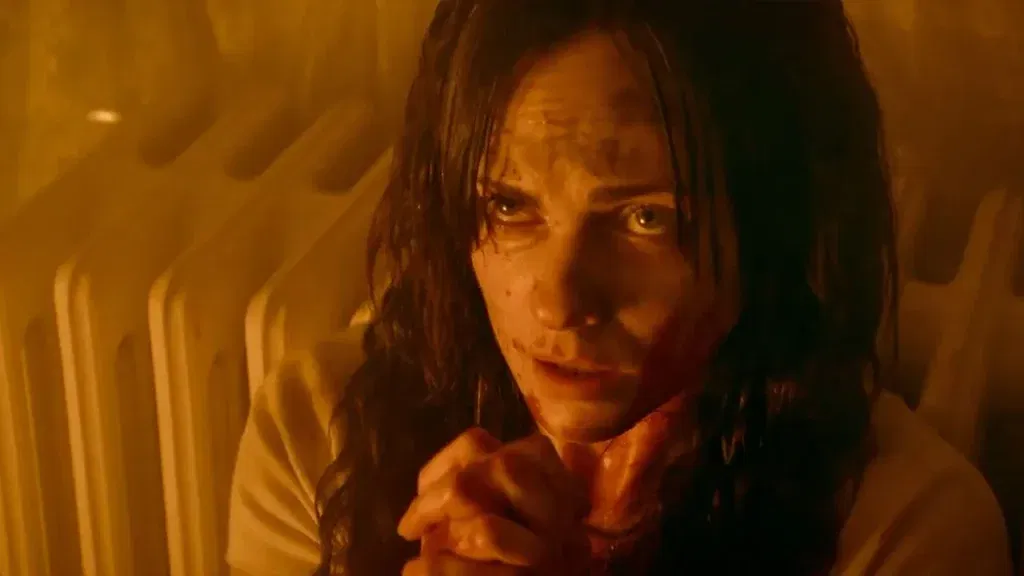 Georgina Reilly as Annika in The Voices of Our Mother | Credits: Vortex Productions
Just following the death of her mother, Harriet Scaflen’s (Sheila McCarthy) body does things for which there is no proper medical vocabulary, as it becomes too healthy and too quickened to the point that it seems young. Not younger. Young. Like a 10-year-old. Her children get called home, the four of them, and home is the house where their father did what fathers like that do, and their mother watched it happen.
William (O’Brien) wants the inheritance (the house, mainly) to clear a gambling debt. Therese (Carolina Bartczak), his twin, has spent years deciding William killed her wife by inches. Blame is seemingly the only inheritance some siblings know how to share evenly. Martin, the youngest, is the addict, the runt. He is the Roman Roy of the family, if you get my meaning. The film uses him as horror movies use addicts, like an open wound. Annika (Georgina Reilly) is the heroine of this piece. She took the furthest exit available to her, a convent.
The Voices of Our Mother Review
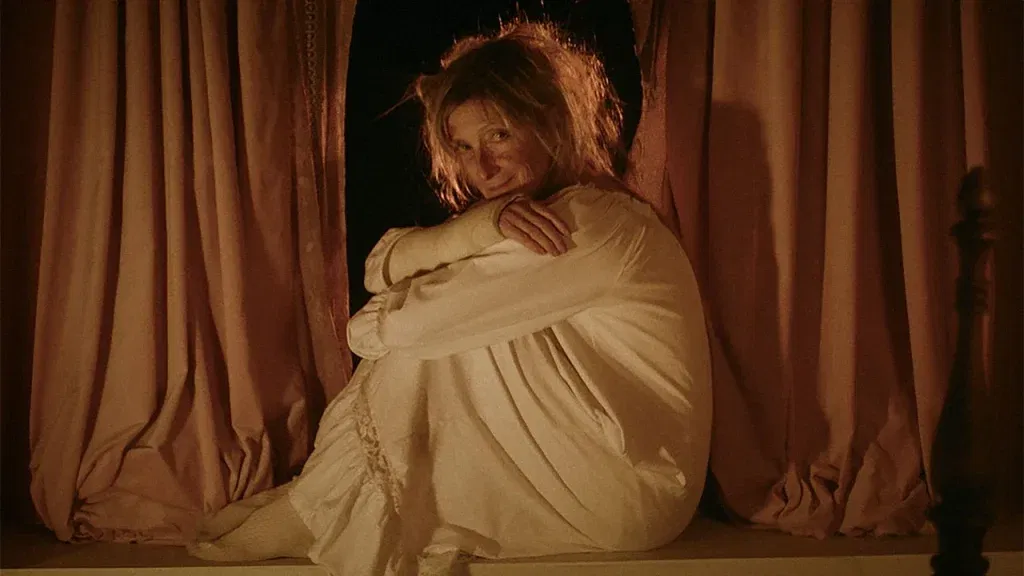 Sheila McCarthy is the MVP of The Voices of Our Mother | Credits: Vortex Productions
The demon doesn’t show itself until well into this horror movie, and it doesn’t need to. It’s already in the room for most of the runtime. It is working the family from underneath like a hand inside a puppet. The genius of it, such as it is, lies in how indistinguishable its influence is from the way these four already knew how to hurt each other. Right from the first moment we meet them, they are your typical Hollywood dysfunctional family.
Sometimes you don’t need possession to explain cruelty. Sometimes the cruelty is inherent and very human. And sibling cruelty can be even more devastating, since we know each other too much and know which wounds to probe to hurt the most.
The first hour has siblings finding, with surgical accuracy, those old bruises still tender after thirty years. You can’t always tell whether you’re watching old wounds reopen on their own or something unseen (like the demon) pressing a thumb into them. That is precisely the unease the film should be selling. For some time, it actually does.
McCarthy is doing the heaviest lifting and doing it without a net. Her Harriet stops being a daughter and becomes the other thing nearly immediately. McCarthy refuses every cheap signifier available to her in that turn. There is no contorted spine or rolled eyes. There’s none of the genre’s usual vocabulary for Something Else Wearing Mother. Her face does become something out of your worst nightmare at one point, though. But by then, I already knew whatever she was, she was not Harriet. The face looks as though she is a demon from another world playing at being human, and not doing a very good job (okay, that’s probably exactly it).
All that, I’m afraid, is not enough to make the film better than merely passable. Where the film loses its nerve is exactly where most of these films lose theirs. Somewhere past the midpoint, they are suddenly desperate to explain the curse. We suddenly learn who passed what down to whom and why this house and why now, as though dread were a debt that needed itemizing before the audience would accept the bill. I didn’t need the mythology.
There’s a seam, too, between the two movies O’Brien is clearly making at once. The first is the family drama, which is unsparing and quite well-acted. The second is the ’70s-lit possession picture. It is all damp wallpaper and candle flicker and gestures at the greatest example of them all (The Exorcist, which remains one of the scariest films ever made) without ever quite earning the comparison. Both halves are competent. Neither one has been welded all the way to the other. You can feel the strain where they meet, like a house with two different foundations poured twenty years apart.
The Voices of Our Mother, to its credit, is relentlessly grim, like the best examples of the sub-genre (demonic possession movies), but it mistakes explaining its grimness for earning it.
Is The Voices of Our Mother Worth Watching?
-

Credits: Vortex Productions
⛶ -

Credits: Vortex Productions
⛶ -

Credits: Vortex Productions
⛶


For the long middle stretch, the film’s four wrecked adults do to each other in conversation what the demons in horror movies do in special effects – except the conversation is worse because it’s the part that’s true, and less intelligible. What it doesn’t do is have the courage to keep its own wounds open for all to see, to let the audience sit with not knowing exactly how the decay got passed down or why. It gives away its secrets in the end, suddenly, like a family does when it has no choice left. Decency is not nothing, but it’s less than what is deserved. It’s just less than this cast, and this idea, deserved.
The Voices of Our Mother releases on Shudder on June 19.
The Voices of Our Mother Review: A Decent Possession Horror Movie That Flinches at the End
A decent, well-acted entry in the inherited-trauma horror cycle. Sheila McCarthy is excellent, the sibling drama cuts deep, but the film loses its nerve late, over-explaining its curse instead of trusting the dread it built. Watchable, nothing more.





















/https%3A%2F%2Fsportsmole-media-prod.s3.gra.io.cloud.ovh.net%2Fuploads%2F2026%2F06%2Frio-ngumoha-email-sportmole-6a27b73e9a471352625861.png)
 Bengali (BD) ·
  English (US) ·