.png)
 3 hours ago
10
3 hours ago
10
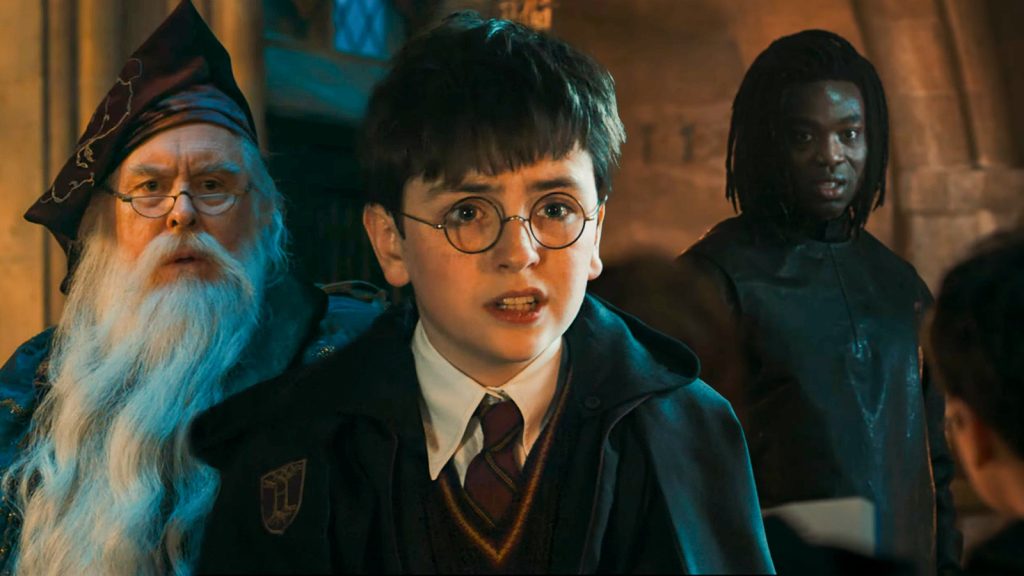
HBO’s latest Harry Potter and the Philosopher’s Stone trailer has found itself at the center of an unexpected argument about something far bigger than Hogwarts: has vertical social media started dictating how expensive television is framed? Viewers noticed that a striking amount of the trailer’s visual information sits inside the narrow central portion of its widescreen image, making many shots unusually easy to crop into TikTok’s 9:16 format. The observation spread across X, where critics accused HBO of sacrificing widescreen composition so footage could survive on TikTok, Reels, and Shorts.
It is a provocative accusation, especially for a production trying to rebuild Hogwarts as a physical, richly detailed world. The trailer itself contains the Sorting Ceremony, Quidditch, the Mirror of Erised, the troll, and several new book scenes ahead of the show’s Christmas 2026 premiere. Still, there is an important catch: a social-friendly trailer does not prove HBO shot the entire series around TikTok.
X Viewers Think TikTok is Rewriting the Frame
 Credit:- HBO Max
The viral complaint began with a simple visual experiment rather than a technical analysis. One fan placed a 9:16 rectangle over the center of the widescreen trailer and argued that almost every consequential character, movement, or object was concentrated inside it. Their reaction was blunt:
Terrible el daño q le hizo tik tok al cine, ahora todo esta pensado para q sea verticalizado
— Zef Viera (@ZAlmasy) September 4, 2026They added that if the central 9:16 area were covered, “95% of the info disappears.” The post travelled rapidly, gathering millions of views and inspiring other users to repeat the experiment. Below are a few comments:
«что кучка идиотов, не способных выдержать фильм без сабвей серфа»
Для такого это скорее как в Странных Делах когда персы по 10 раз поговаривают что делают
А центрование кадров для эдитов в ТТ
Y si cierras y ojo y luego el otro te pierdes todo el contenido en su totalidad. La gente da importancia a las estupideces que quiere.
— user029 (@gatomero29) September 5, 2026Tel vez pierde el sentido por que le sacaste la parte del medio
— 0xFABA (@0xFaba) September 5, 2026VGTimes reported similar viewer complaints, with commenters arguing that crucial movement remains trapped near the middle of the trailer instead of using the entire horizontal canvas. Critics also took aim at its colder color palette and Great Hall lighting, although those are separate aesthetic arguments. We understand why that central-frame test bothers people. Hogwarts should reward wandering eyes. A castle packed with moving portraits, ghosts, enchanted objects, staircases, students, and architectural detail loses something if every shot asks us to stare at the same narrow strip.
That is where ‘death of cinema’ argument comes from. It is hyperbole, of course, but the anxiety underneath it is legitimate: if widescreen images start being composed primarily to survive vertical cropping, filmmakers have less reason to exploit the width they were given.
TikTok May Explain Harry Potter Trailer, Not the Entire Show
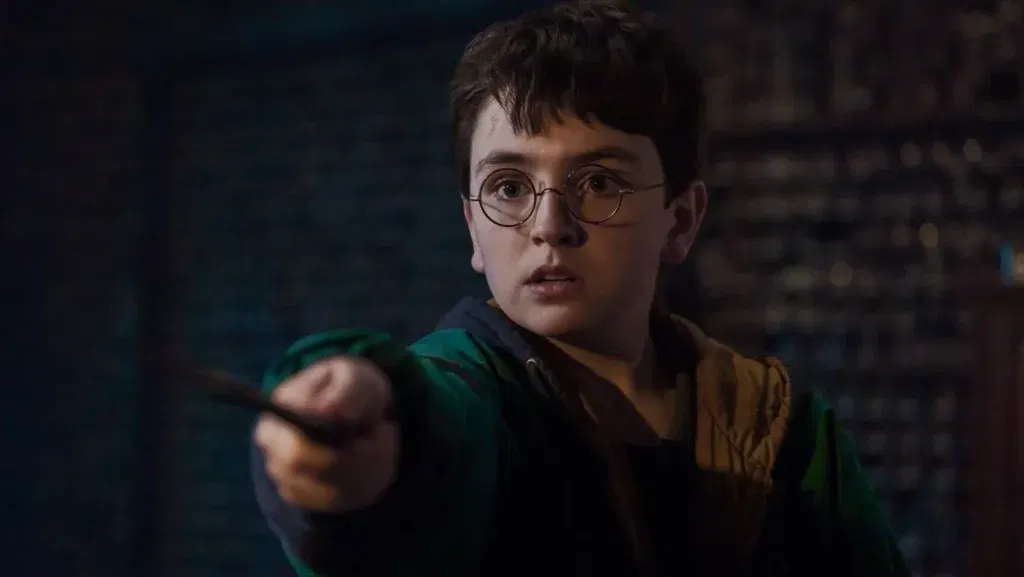 Dominic McLaughlin as Harry Potter | Credits: HBO
There is another side to this, and it is crucial. HBO Max’s own marketing guidelines explicitly account for 9:16 delivery on TikTok, Instagram, and Facebook. They recommend full-frame vertical footage where possible and tiled alternatives when cropping would destroy context. That proves HBO expects promotional material to work vertically; it does not prove the production itself was photographed around those crops. In other words, HBO unquestionably expects promotional footage to function vertically.
That still does not establish that cinematographer Adriano Goldman and director Mark Mylod shot eight hours of Harry Potter around a TikTok crop. A trailer can also exaggerate that impression simply through shot selection. Editors may choose footage whose subjects already sit near the center because those shots are easier to repurpose across YouTube, TikTok, Reels, Shorts, and paid social without changing how the underlying episodes were composed.
Xataka Mexico tested the same theory and reached a more cautious conclusion: some shots retain their meaning when cropped vertically, while others lose substantial spatial information. It also points out that centering subjects predates social media by decades; filmmakers have always used symmetry and central composition.
Mylod and showrunner Francesca Gardiner have actually described their ambition in much broader terms. They said Season 1 gives them roughly eight hours to explore Philosopher’s Stone, while Mylod explained that they approached Hogwarts as “a real place” whose architecture could evolve naturally over time. That makes the controversy worth revisiting once full episodes arrive. A trailer has to live everywhere from a television to TikTok, so center-safe editing makes commercial sense. If the actual episodes keep squeezing Hogwarts into the middle third of the screen, though, viewers will have a much stronger case.
For now, cinema is not dead. But the phone is absolutely sitting in the director’s eyeline. Do you think the trailer looks designed for TikTok, or are fans reading too much into ordinary centered composition? Drop your take below, and follow FandomWire for more from Hogwarts before the doors open.
Harry Potter and the Philosopher’s Stone premieres Christmas 2026 on HBO.


















 Bengali (BD) ·
  English (US) ·