.png)
 1 hour ago
11
1 hour ago
11
Article content
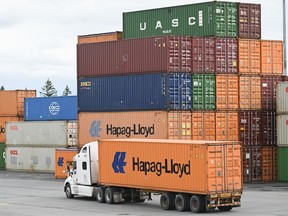
The RCMP, working with other law enforcement agencies and Canadian financial institutions, says it has prevented hundreds of vehicles from being exported through Canadian ports.

THIS CONTENT IS RESERVED FOR SUBSCRIBERS
Enjoy the latest local, national and international news.
- Exclusive articles by Conrad Black, Barbara Kay and others. Plus, special edition NP Platformed and First Reading newsletters and virtual events.
- Unlimited online access to National Post.
- National Post ePaper, an electronic replica of the print edition to view on any device, share and comment on.
- Daily puzzles including the New York Times Crossword.
- Support local journalism.
SUBSCRIBE FOR MORE ARTICLES
Enjoy the latest local, national and international news.
- Exclusive articles by Conrad Black, Barbara Kay and others. Plus, special edition NP Platformed and First Reading newsletters and virtual events.
- Unlimited online access to National Post.
- National Post ePaper, an electronic replica of the print edition to view on any device, share and comment on.
- Daily puzzles including the New York Times Crossword.
- Support local journalism.
REGISTER / SIGN IN TO UNLOCK MORE ARTICLES
Create an account or sign in to continue with your reading experience.
- Access articles from across Canada with one account.
- Share your thoughts and join the conversation in the comments.
- Enjoy additional articles per month.
- Get email updates from your favourite authors.
THIS ARTICLE IS FREE TO READ REGISTER TO UNLOCK.
Create an account or sign in to continue with your reading experience.
- Access articles from across Canada with one account
- Share your thoughts and join the conversation in the comments
- Enjoy additional articles per month
- Get email updates from your favourite authors
Sign In or Create an Account
or
Article content
“Over the past year, Project NoCargo has led to the interception and recovery of 392 vehicles, with an estimated total value of $28 million in Halifax, Montreal, Toronto, and Vancouver,” according to a statement released today.
Article content
Article content
Article content
Project NoCargo was launched in June 2025 by the RCMP’s Federal Policing Criminal Operations program, assisted by INTERPOL Ottawa, with the aim of tracking down suspicious vehicle exports. The project came about after INTERPOL Ottawa detected transnational organized crime networks engaging in vehicle finance fraud by stealing or manufacturing personal credentials and using them to apply for vehicle loans, as well as insurance policies with the intention of committing insurance fraud.
Article content
By signing up you consent to receive the above newsletter from Postmedia Network Inc.
Article content
These criminal operations contributed to an estimated $900 million in insurance losses last year, says the statement. Through Project NoCargo, the CBSA have been referring cases presenting potential fraud to the RCMP for investigation.
Article content
The 2026 Canadian Auto Theft Impact Survey from Équité Association, a national not-for-profit that collaborates with Canadian property and casualty insurers to fight fraud, found that more than one-third of Canadians have been affected by auto theft, but only 18 per cent of the respondents believe vehicles can be built to withstand modern technology-based theft tactics.
Article content
Article content
Équité says auto theft in Canada has decreased by 33 per cent since 2023, due to the federal government’s national action plan to combat auto theft. But 55 per cent of respondents also pointed to evolving tactics by organized crime. Two thirds believe meaningful progress requires a coordinated response among governments, manufacturers, law enforcement and vehicle owners. That’s up slightly from 61 per cent in 2023.
Article content
Article content
Canadian communities “are justifiably concerned about public safety and evolving criminal tactics,” says Bryan Gast, national vice president of Intelligence & Investigations at Équité Association. “Canadians are telling us clearly that they feel security protections should be built into their vehicles (72 per cent), not sold to them as an after-market add-on.”
Article content
Gast noted that organized crime has traded crowbars for technology-based theft, such as key fob relay attacks and reprogramming to bypass vehicle security systems.
Article content
National Post previously reported that Toronto had 12,170 car thefts in 2023, with some residents of Rosedale, one of the city’s wealthy neighbourhoods, hiring private security as a means of prevention. Amid the auto theft crisis, some residents also installed retractable bollards, or short, vertical posts, to form a theft-prevention barrier around their vehicles.






















/https%3A%2F%2Fsportsmole-media-prod.s3.gra.io.cloud.ovh.net%2Fuploads%2F2026%2F01%2Fdanny-welbeck-5-6956bfa3ea945973722124.jpg)
/https%3A%2F%2Fsportsmole-media-prod.s3.gra.io.cloud.ovh.net%2Fuploads%2F2026%2F07%2Fbradley-barcola-3-6a668f16048c5425723883.jpg)
 Bengali (BD) ·
  English (US) ·