.png)
 1 hour ago
8
1 hour ago
8
Article content
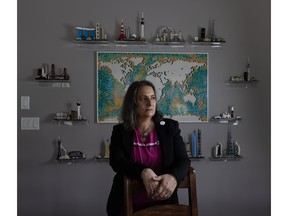
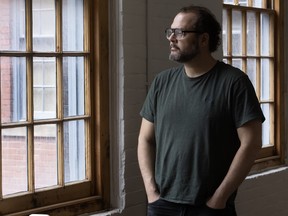
Talia Klein Leighton compares being a Canadian Jew since October 7 to a frog in a pot of boiling water.

THIS CONTENT IS RESERVED FOR SUBSCRIBERS
Enjoy the latest local, national and international news.
- Exclusive articles by Conrad Black, Barbara Kay and others. Plus, special edition NP Platformed and First Reading newsletters and virtual events.
- Unlimited online access to National Post.
- National Post ePaper, an electronic replica of the print edition to view on any device, share and comment on.
- Daily puzzles including the New York Times Crossword.
- Support local journalism.
SUBSCRIBE FOR MORE ARTICLES
Enjoy the latest local, national and international news.
- Exclusive articles by Conrad Black, Barbara Kay and others. Plus, special edition NP Platformed and First Reading newsletters and virtual events.
- Unlimited online access to National Post.
- National Post ePaper, an electronic replica of the print edition to view on any device, share and comment on.
- Daily puzzles including the New York Times Crossword.
- Support local journalism.
REGISTER / SIGN IN TO UNLOCK MORE ARTICLES
Create an account or sign in to continue with your reading experience.
- Access articles from across Canada with one account.
- Share your thoughts and join the conversation in the comments.
- Enjoy additional articles per month.
- Get email updates from your favourite authors.
THIS ARTICLE IS FREE TO READ REGISTER TO UNLOCK.
Create an account or sign in to continue with your reading experience.
- Access articles from across Canada with one account
- Share your thoughts and join the conversation in the comments
- Enjoy additional articles per month
- Get email updates from your favourite authors
Sign In or Create an Account
or
Article content
“Every time I wake up and I realize that the water’s getting hotter, somebody greases the bowl,” Leighton, president of Canadian Women Against Antisemitism, told National Post. “The level of tolerance that this country seems to have adopted in terms of antisemitism is breathtaking.”
Article content
Article content
Article content
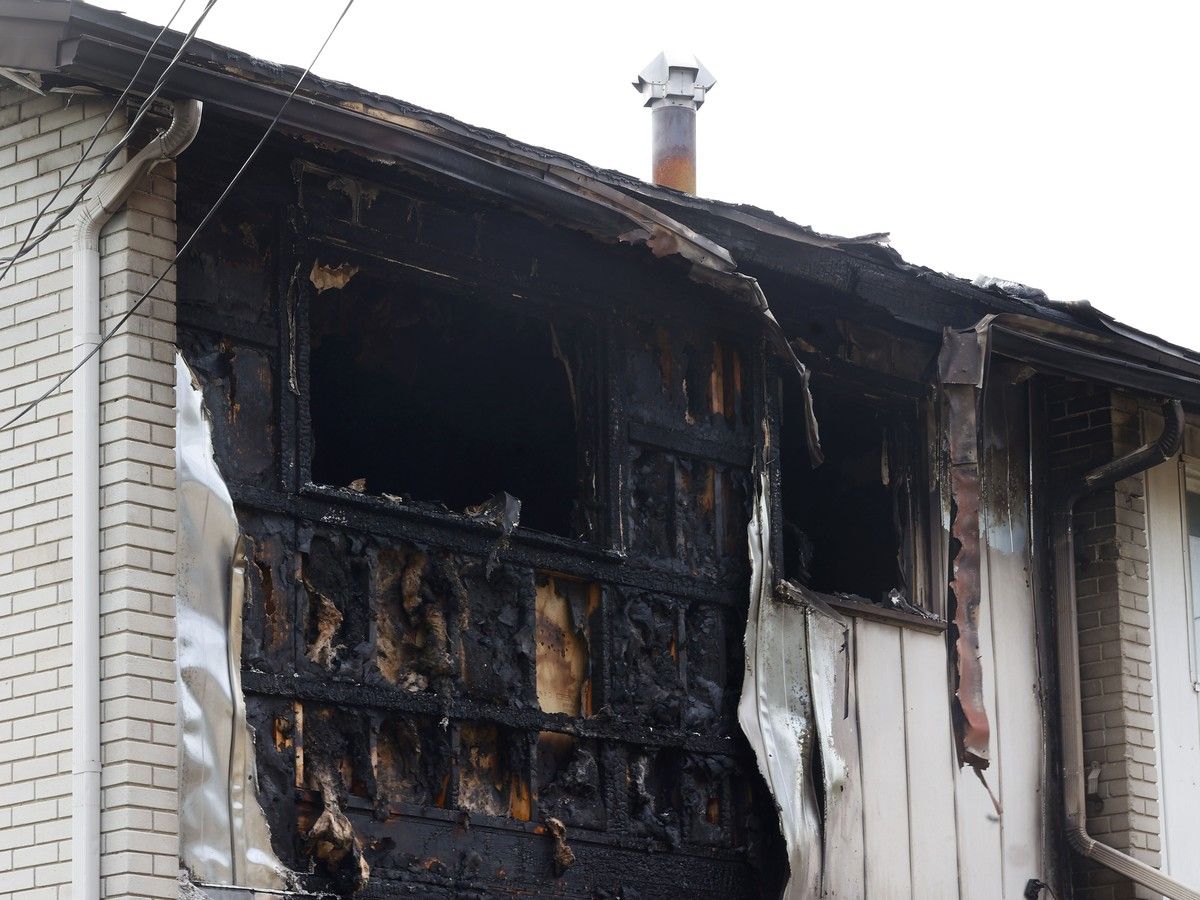
The facts are well-known: B’nai Brith Canada registered 6,800 antisemitic incidents in 2025, up from 2,769 in 2022. Synagogues have been shot and firebombed, Jews have been beaten and shot at with pellets because they were Jewish, and “F–k the Jews” graffiti is increasingly commonplace. Anti-Israel protesters marched angrily for many months through Jewish residential neighbourhoods in Toronto.
Article content
By signing up you consent to receive the above newsletter from Postmedia Network Inc.
Article content
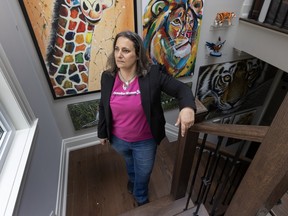
Leighton remembers her life growing up in Guelph — she moved there at the age of three in 1975 with her South African family — as one of a handful of Jews in a small city peppered with antisemitism. There were swastikas spraypainted on her locker and “horrible Holocaust jokes.”
Article content
She found community at York University in Toronto in 1991 as a student, where she was immersed in a community of conscientious and active Jews on campus. She remembers school effectively closed for high holidays and administrators receptive to the concerns of Jewish students.
Article content
Article content
“It was wonderful to be a Jew at York. There was a vibrant community,” Leighton said.
Article content
She juxtaposed her experience as a student with her return to campus in 2004 as director of Hillel, a Jewish cultural group on campus. “By then, it was a completely different place to be a Jew,” she said. “The anti-Zionist left-wing academic was already starting to infuse the university.”
Article content
Article content
She remembers monitoring an event during Israel Apartheid Week, when a speaker asked the crowd to identify if “there were any Jews in the room.” The participants quickly pointed Leighton out. “That was definitely bracing,” she remembers.
Article content
Article content
The timing lines up with the work of emeritus sociology professor Robert Brym at the University of Toronto, a leading researcher of Canadian Jews, who has published severallandmark studies on the community.
Article content
“The statistics on hate crimes in Canada are pretty clear on this. It’s really in the early 2000s that hate crimes against Jews in Canada started to go up in a significant way,” he said. The changing sentiment came against the backdrop of the Second Intifada and the emergence of the Boycott, Divestment and Sanctions (BDS) movement in the mid-aughts.
Article content
Brym referenced figures from B’nai Brith’s annual audit of antisemitic incidents to note that there was just a single antisemitic incident per 100,000 members of the Canadian population pre-2000 while today that figure is 16.5.
Article content
“By this measure, then, the rate of antisemitic incidents is more than 16.5 times higher today than it was before 2000,” he explained.
Advertisement 1
Advertisement 2
Article content
Brym had a similar experience to Leighton, a generation earlier, growing up in Saint John, N.B. He was the child of Jewish immigrants “in a poor, working-class neighbourhood.” His dad was a Holocaust survivor from Poland and he recalled his early years being one of just a few hundred Jews.
Article content
“I did experience quite a lot of antisemitism where I grew up,” he said. “My golden age didn’t start until I was 18 and got out of there.” But, he said, the promise Canada offered Jews in major cities was real. “I think it’s true for most Jews who grew up in Montreal, Toronto, Winnipeg from the ‘60s on.”
Article content
The era of optimism that buoyed Canadian Jews after the Second World War saw many in the community attain economic prosperity. That sense of security and promise, which has been shaken since the 2000s, is rapidly fading since Hamas’ October 7 attacks on Israel and the subsequent years of war, many Canadian Jews say. Brym recently co-wrote a paper with Rhonda Lenton, his wife and former president of York University, that will be published in Canadian Jewish Studies, entitled “The End of Canada’s Golden Age.”
Article content
Article content
Menachem Mendel Blum, a rabbi at the Ottawa Torah Centre Chabad, has seen the transition across his own lifetime.
Article content
Blum was born in France and remembers life as a visible Jew in Paris in the 1970s as a difficult time. He moved to Canada in 1996 and said the transition was wonderful.
Article content
“It wasn’t easy as a Jewish boy walking around with my kippah,” he remembered of his early years in France. “Moving to Canada was, for me, a breath of fresh air to be able to bring up my children in a safe and welcoming environment.”
Article content
Blum recalled an ideal life upon arriving in Ottawa. Running a synagogue in the nation’s capital, he left the doors to the shul open and never had security posted. Today, his congregation requires guards. Doors are locked and addresses for public events are not publicized.
Article content
“The reality is, we don’t feel safe,” he said.
Article content
Article content
The spiritual leader has faith in the Jewish community, which “through the ages has been resilient,” but called on political leaders to step up during a time of alarming rates of antisemitism. “I think there’s a lot of good words that are being said, but it all comes down to action. I think what we want to see as a community is real action.”
Article content
Article content
Canadian Jews like Blum have little confidence in law enforcement, school boards and political leaders to protect them. Since October 7, Jewish kids have been assaulted, encountered antisemitic graffiti and had classmates Seig Heil in hallways. The same problems plague higher education. Several Jewish university students have abandoned studies at Canadian institutions and sued schools, alleging poisoned learning environments.
Article content
Confidence in law enforcement and the legal system has also cratered. Recent reporting from The Grind, a Toronto digital media outlet, suggests a high rate of the criminal charges against anti-Israel protesters has been dismissed: Of the 150 people criminally charged in Toronto between October 2023 and January 2026, nearly two-thirds of the cases were dropped or stayed. Compounding these fears, retired Toronto police inspector Hank Idsinga’s recently published memoir accused the Toronto police of being plagued by antisemitism up to the highest rungs of the force.
Article content
His book recounts several antisemitic incidents before he left the force in late 2023, such as when one law enforcement agent – unaware Idsinga was Jewish – allegedly confided, “I can’t believe we have to pander to this f–king Jew.”
Article content
Blum struggled to reconcile how the Canada he arrived in five decades ago came to be what it is today. He called it “a wake-up call,” adding he “never imagined that we would be here in this situation today.”
Article content
“What has happened in the last two, three years, is quite unbelievable. What I saw happening in Paris in the ‘70s where you could be walking in the streets and people were screaming slurs at you or driving by and just a feeling of unwelcome and just looking behind your back. That, to me, is terrifying because I was able to see the contrast of being here in Canada.”
Article content
The comparison between Canada and Europe is front of mind for many Jews these days. Europe has now become a byword among Canadian Jews for antisemitic terror attacks and a community that has been forced to retreat behind the barricades of heavily militarized institutions to practice Judaism to survive. It represents the worst-case scenario for Canadian Jews who previously viewed life in North America largely absent foreign hatreds.
Article content
Article content
As European Jews now worry about politicians forsaking their smaller electoral communities for faster-growing Muslim ones, a similar sense of despair has descended in Canada. Belgian Jews, for instance, have told researchers they “fear that they might be abandoned by politicians who look for new voters in Belgian society, for example among the Muslim population.” Leighton said many politicians lacked the “political will” to address antisemitism and recognize a “jihadi ideology” has “now come to Canada.”
Article content
Article content
Brym has studied the attitudes of Canadians Muslims toward Jews and found that “of all the groups” he examined, which included racialized Canadians, left-leaning Canadians, Quebecers and university students, “Muslims have the highest level of negative attitudes towards Jews.” A 2024 study he conducted found Muslim Canadians approved of negative statements of the Jewish community at far higher levels than the general population.
Article content
Canada’s Muslim population has grown from less than 100,000 Muslims in 1981 to over 1.75 million in 2021. Meanwhile, Canada was home to about 393,000 Jews in 2020, the fourth-largest Jewish community in the world, according to the World Jewish Congress.
Article content
Twenty-eight per cent of Muslim Canadian adults polled agreed that “Jewish people are largely to blame for the negative consequences of globalization” and 34 per cent say Jews “talk too much about the Holocaust.” By comparison, 4 per cent of non-Jewish Canadian adults, overall, agreed with the former and 13 per cent with the latter.
Article content
“The percentage of Muslims among the most extreme antisemites is considerably higher than the corresponding percentage of non-Muslims,” Brym writes in the paper.
Article content
Article content
Surveys gauging European Christians and Muslims views on whether “Jews cannot be trusted” reveal massive differences: in Australia, 10.7 per cent of Christians agreed with the statement, while 64.1 per cent of Muslims did.
Article content
Similar research in France has shown that the Muslim community holds antisemitic views at levels mostly higher than either the far left or far right. Majorities of French Muslims believe that “Jews have too much” economic power (67 per cent), “Jews have too much power in the media” (61 per cent) and that “Jews today use their status as victims of the Nazi genocide during the Second World War for their own interest” (56 per cent).
Article content
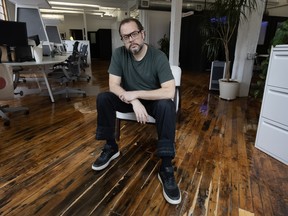
Yet, denunciations of antisemitism are frequentlyboltedtogether with Islamophobia, painting a picture of both communities equally under siege from some nefarious, shared actor, usually white nationalists or the far right. The taboo against acknowledging the role anti-Zionists and Muslim extremists play in driving antisemitism has deepened the crisis Canadian Jews face, Canadaland publisher Jesse Brown believes.
Article content
Brown said the issue stems less from antisemitism and more from “the anti-Zionist hate movement (that) has gone unchecked in Canada and has even been encouraged by our political leaders, teachers and police.” He called them “explicitly pro-violence and anti-Canada.”
Article content
Brown, the author of a much-discussed Atlantic article arguing that Canadian Jews are experiencing a “Polite Pogrom,” argued that the “harm to Canadian Jews won’t stop until we all have the courage to name the problem accurately and to identify the specific people perpetuating it: Islamist religious extremists in collaboration with progressive activists.”
Article content
Despite the widespread sense of abandonment and anxiety felt by much of the Canadian Jewish community, few have actually left. Jack Novack, a retired Dalhousie University professor, said that while Canada seems to be following Europe’s trajectory, he feels tied to Nova Scotia because of friends and family.
Article content
“I have often thought about making aliya, but for familial reasons, I was tethered to Canada,” Novack wrote the Post, referring to the Hebrew word for immigration to Israel. “Whenever I go to Israel, I experience a sense of calm. It is because I don’t have to explain, or justify or excuse. I can be who I am in a way that I cannot in Canada.”
Article content
Article content
Many Canadian Jews increasingly feel like Novack: torn between family, life and familiarity, and the fear that the Canada they grew up in no longer exists. According to Brym, just a couple of hundred Canadian Jews made aliyah in 2024, compared with a few thousand Israelis who have emigrated or applied for Canadian work visas.
Article content
Article content
But the public opinion polling he’s done since October 7 has found troubling thoughts becoming mainstream. Today, over a quarter (26 per cent) of Canadian Jews have considered emigrating to Israel and over two-thirds (69 per cent) worry about the safety of their children in schools.
Article content
“You can’t just rely on what people are thinking about,” he cautioned. “The actual movement of Jews out of Canada to Israel is very small. It’s less than half of what it is from England.”
Article content
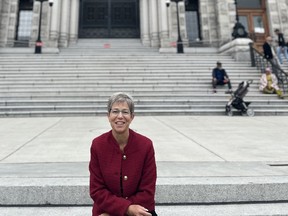
It might be too late for Canadian Jews to avoid the country following Europe’s path, Selina Robinson said.
Article content
Robinson, a former NDP cabinet minister in British Columbia, wanted to attend a recent Jewish Heritage Day celebration in Burnaby, a suburb of Vancouver. The event required pre-registration and the location wasn’t posted ahead of time. Robinson contacted the organizers, who told her which park it was held at, but she couldn’t find it until she spotted members of the Royal Canadian Mounted Police nearby.
Article content
Article content
“So, to find the Jewish event where the police cars are is where we’re at,” she said. “Not the blue and white balloons or an Israeli flag or Jewish music playing or the smell of falafel. It was the police cars. This has been our life.”
Article content
Robinson stepped down from the provincial NDP in 2024 after controversy over comments saying the pre-state area Israel was established on was “a crappy piece of land with nothing on it.” In the subsequent months and years, she has become a vocal critic of the NDP, saying the progressive party has made “a crude political calculation” to woo the much larger and faster-growing Canadian Muslim community over Jewish voters and, in the process, overlooked antisemitism in their midst.
Article content
Robinson, now an independent member of the legislative assembly, said that the normalization of antisemitism has been going on for decades. She recalled how bollards were played outside her Jewish community centre and that when a package was left on the doorstep of her community synagogue, police were called to investigate whether it was a bomb.
Article content
“It’s not even drip, drip, drip anymore. It’s like a freaking firehose,” she said.
Article content
Robinson also drew on the analogy of a frog in a boiling pot of water to describe how life in Canada for Jews has felt. She grew up in Montreal and her father told her stories growing up in the city in 1940 when people would call him maudit Juif, “damn Jew” in French.
Article content
“But I never experienced that in Montreal,” she said of her early years before leaving in the late ‘70s. “So trying to figure out, What did we miss? Were there signs? And I think that’s a very Jewish experience right now.”
Article content
“Along with that comes tremendous grief,” she continued. “The overwhelming emotion is grief. Grief at, I would suggest, a loss of innocence for Jews and for others. Because Canada is supposed to be, and was supposed to be, a place where we could all be all that we are with full identity.”
Article content
Our website is the place for the latest breaking news, exclusive scoops, longreads and provocative commentary. Please bookmark nationalpost.com and sign up for our daily newsletter, Posted, here.
Article content



























/https%3A%2F%2Fsportsmole-media-prod.s3.gra.io.cloud.ovh.net%2Fuploads%2F2026%2F05%2Fchamp-69fa166311171530187348.jpg)
 Bengali (BD) ·
  English (US) ·