.png)
 1 hour ago
9
1 hour ago
9
Article content
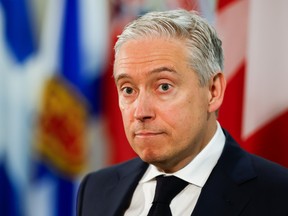
The federal government plans to pay for its recent big-ticket spending through a combination of economic growth and deficit increases, Finance Minister François-Philippe Champagne said Monday.

THIS CONTENT IS RESERVED FOR SUBSCRIBERS
Enjoy the latest local, national and international news.
- Exclusive articles by Conrad Black, Barbara Kay and others. Plus, special edition NP Platformed and First Reading newsletters and virtual events.
- Unlimited online access to National Post.
- National Post ePaper, an electronic replica of the print edition to view on any device, share and comment on.
- Daily puzzles including the New York Times Crossword.
- Support local journalism.
SUBSCRIBE FOR MORE ARTICLES
Enjoy the latest local, national and international news.
- Exclusive articles by Conrad Black, Barbara Kay and others. Plus, special edition NP Platformed and First Reading newsletters and virtual events.
- Unlimited online access to National Post.
- National Post ePaper, an electronic replica of the print edition to view on any device, share and comment on.
- Daily puzzles including the New York Times Crossword.
- Support local journalism.
REGISTER / SIGN IN TO UNLOCK MORE ARTICLES
Create an account or sign in to continue with your reading experience.
- Access articles from across Canada with one account.
- Share your thoughts and join the conversation in the comments.
- Enjoy additional articles per month.
- Get email updates from your favourite authors.
THIS ARTICLE IS FREE TO READ REGISTER TO UNLOCK.
Create an account or sign in to continue with your reading experience.
- Access articles from across Canada with one account
- Share your thoughts and join the conversation in the comments
- Enjoy additional articles per month
- Get email updates from your favourite authors
Sign In or Create an Account
or
Article content
Prior to officially kicking off the government’s pre-budget consultations this year, Champagne told reporters in Ottawa that the government is “investing” in the Canadian economy to ensure various new spending items can be paid for. He also repeated his argument from recent months that Canada has the strongest fiscal position in the G7, implying that increased deficit spending is affordable.
Article content
Article content
Article content
“I think Canadians can understand that we have a strong fiscal position, and we’re investing in the things that will generate growth to the country,” the finance minister said.
Article content
Article content
Champagne also cited the benefits of removing interprovincial free trade barriers and strategic defence procurement that improve innovation as ways to boost growth. “We’ll do that in a very smart way.”
Article content
Though the federal government has already removed the bulk of Ottawa’s barriers to interprovincial trade, the heavy lifting remains with the provinces and territories to remove their barriers, most of whom have been reluctant for decades to do so.
Article content
And while analysts agree that defence procurement can be done in a way to maximize benefit to the country that is making a major purchase, they say there is little chance of recouping close to the entire expenditure in the short term.
Article content
Economists also remain skeptical that long-term investments will produce short-term gains, and that high-cost projects will be paid for through any means other than increased borrowing.
Article content
Don Drummond, formerly TD Bank’s chief economist and before that a high-ranking official at the Department of Finance, has said that the government seems to be resting its projections on optimistic forecasts for economic growth and labour productivity.
Article content
Article content
With a range of threats on the horizon, such as rising American tariffs, Drummond said Canada could be making itself vulnerable, as was the case from the mid-1970s to the mid-1990s, when governments continued to assume that stronger growth was just around the corner.
Article content
Article content
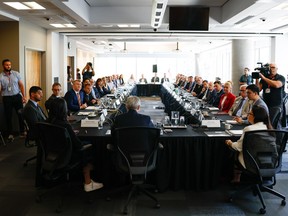
While Monday may have been the official part of the pre-budget ritual, the process started unofficially many weeks ago as economists, industry and business groups, think tanks and others started gathering their budget wish lists and policy recommendations. Some submitted them to the parliamentary finance committee more than a month ago.
Article content
Article content
Article content
Prime Minister Mark Carney’s government has been trying to improve the Canadian economy’s long-term competitiveness and its ability to export beyond the United States, with a particular focus on boosting corporate investment. But hitting those goals will not be cheap.
Article content
And after the Liberal government amassing massive deficits in recent years, Champagne’s comments made no mention of cuts, suggesting that the government plans to double down on its emphasis of paying for its spending mostly from added debt.

























 Bengali (BD) ·
  English (US) ·