.png)
 3 hours ago
11
3 hours ago
11
Article content
The discovery of underground anomalies at the site of the former Kamloops Indian Residential School in May 2021 offers a cautionary tale about how an assumed consensus, even one based on half-truths or misrepresentations, can lead to a climate of censorship.

THIS CONTENT IS RESERVED FOR SUBSCRIBERS
Enjoy the latest local, national and international news.
- Exclusive articles by Conrad Black, Barbara Kay and others. Plus, special edition NP Platformed and First Reading newsletters and virtual events.
- Unlimited online access to National Post.
- National Post ePaper, an electronic replica of the print edition to view on any device, share and comment on.
- Daily puzzles including the New York Times Crossword.
- Support local journalism.
SUBSCRIBE FOR MORE ARTICLES
Enjoy the latest local, national and international news.
- Exclusive articles by Conrad Black, Barbara Kay and others. Plus, special edition NP Platformed and First Reading newsletters and virtual events.
- Unlimited online access to National Post.
- National Post ePaper, an electronic replica of the print edition to view on any device, share and comment on.
- Daily puzzles including the New York Times Crossword.
- Support local journalism.
REGISTER / SIGN IN TO UNLOCK MORE ARTICLES
Create an account or sign in to continue with your reading experience.
- Access articles from across Canada with one account.
- Share your thoughts and join the conversation in the comments.
- Enjoy additional articles per month.
- Get email updates from your favourite authors.
THIS ARTICLE IS FREE TO READ REGISTER TO UNLOCK.
Create an account or sign in to continue with your reading experience.
- Access articles from across Canada with one account
- Share your thoughts and join the conversation in the comments
- Enjoy additional articles per month
- Get email updates from your favourite authors
Sign In or Create an Account
or
Article content
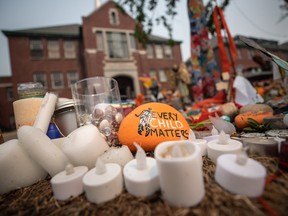
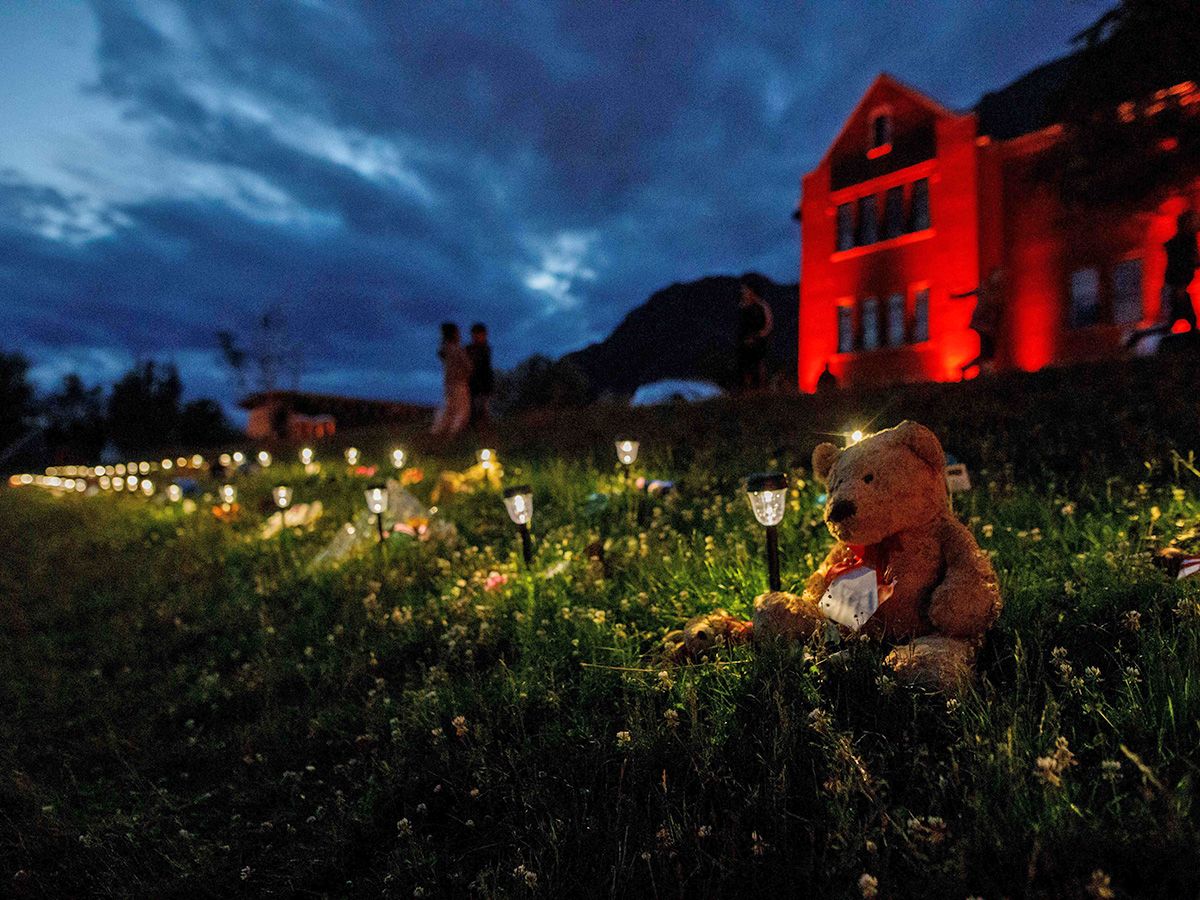
On May 27, 2021, the Tk’emlúps te Secwe̓pemc First Nation shocked the world when it issued a press release claiming that the use of ground-penetrating radar had led to the “confirmation of the remains of 215 children who were students of the Kamloops Indian Residential School.”
Article content
Article content
Article content
The following day, the New York Times reported that a “mass grave containing the remains of 215 children on the grounds of a former residential school” had been discovered.
Article content
By signing up you consent to receive the above newsletter from Postmedia Network Inc.
Article content
Two months later, Sarah Beaulieu, the researcher who performed the survey, clarified that, “With ground-penetrating radar we can never say definitively that they are human remains until you excavate … which is why we need to pull back a little bit and say that they are probable burials.”
Article content
But it was too late. In the weeks that followed the Kamloops announcement, a succession of other First Nations reported similar discoveries. Many of them were more careful to note that they had not found mass graves. Some were known gravesites where the wooden markings had degraded over time.
Article content
Nevertheless, the media and federal government continued to push the narrative that hundreds of bodies of dead Indigenous children had been found on the sites of former residential schools. The fallout was swift. Flags flew at half-mast. Canada Day celebrations were called off. And anyone who tried to have a reasoned conversation about residential schools was cancelled.
Article content
Article content
In December 2021, Frances Widdowson, a political science professor at Mount Royal University in Calgary, was fired, at least in part, for daring to suggest that residential schools had some educational benefits.
Article content
Read More


Article content
A high school teacher in Abbotsford, B.C., also landed in hot water that year for pointing out in class that most of the deaths at residential schools occurred due to disease, not abuse. It didn’t matter that his statement was true. He was let go two years later.
Article content
The facts about the graves story were brought to light, most thoroughly by National Post’s Terry Glavin a year after the story first broke, but the truth only seemed to add fuel to the censorship fire. In February 2024, NDP MP Leah Gazan called on Parliament to criminalize what was being termed “residential school denialism.”
Article content
A few months later, Kimberly Murray, the Trudeau government’s “special interlocutor for missing children and unmarked graves and burial sites associated with Indian residential schools,” released her interim report calling for legal remedies to combat denialism.
Article content
Gazan and Murray’s calls were both met with openness by Liberal cabinet ministers.


















 Bengali (BD) ·
  English (US) ·