.png)
 5 hours ago
10
5 hours ago
10
Article content
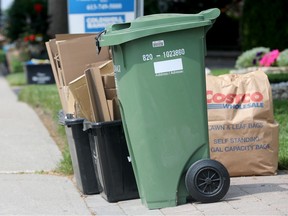
Ottawa, the headline said, is exploring composting options and I nearly choked from the biogas. Green bin waste — compost, you know — is composed of organic or fully biodegradable materials. Stuff that rots easily. Like apple cores, chicken bones, discarded vegetables and egg shells.

THIS CONTENT IS RESERVED FOR SUBSCRIBERS ONLY
Subscribe now to read the latest news in your city and across Canada.
- Unlimited digital access to the Ottawa Citizen.
- Analysis on all things Ottawa by Bruce Deachman, Elizabeth Payne, David Pugliese, and others, award-winning newsletters and virtual events.
- Opportunity to engage with our commenting community.
- Ottawa Citizen ePaper.
- Ottawa Citizen App.
SUBSCRIBE TO UNLOCK MORE ARTICLES
Subscribe now to read the latest news in your city and across Canada.
- Exclusive articles from Elizabeth Payne, David Pugliese, Andrew Duffy, Bruce Deachman and others. Plus, food reviews and event listings in the weekly newsletter, Ottawa, Out of Office.
- Unlimited online access to Ottawa Citizen and 15 news sites with one account.
- Ottawa Citizen ePaper, an electronic replica of the print edition to view on any device, share and comment on.
- Daily puzzles, including the New York Times Crossword.
- Support local journalism.
REGISTER / SIGN IN TO UNLOCK MORE ARTICLES
Create an account or sign in to continue with your reading experience.
- Access articles from across Canada with one account.
- Share your thoughts and join the conversation in the comments.
- Enjoy additional articles per month.
- Get email updates from your favourite authors.
Register to unlock this article — it’s free
Create an account or sign in to continue with your reading experience.
- Access articles from across Canada with one account
- Share your thoughts and join the conversation in the comments
- Enjoy additional articles per month
- Get email updates from your favourite authors
Sign In or Create an Account
or
Article content
What do you mean, we need to explore new ways to get rid of those? What are we worried about, zombie carrots?
Article content
Article content
Article content
OK, fine, maybe you’re right. We need to take this menace seriously.
Article content
We started collecting compost in 2010, to semi-generalized dismay. I was there. I remember people complaining about maggots in their bins, before being told they really ought to clean their bins or else use liners, and then they started complaining about that. But eventually Ottawans settled into the new habit and it feels like we’ve mostly survived the ordeal.
Article content
Not that we’re being model citizens. Our diversion rate (the stuff we’re not sending to landfill) is only 45 percent, which means more than half of what we throw out as garbage should instead go into the blue, black or green bins. Tsk.
Article content
Alas, the city these days is mostly concerned with what to do after it picks up our green bins, not before. We have the option of continuing what we’re doing by renewing the contract with Convertus, the private company that’s turning our slop into fertilizer for local farms by heating it up and using oxygen, a process known as aerobic composting. Which seems like an OK idea, if not especially original.
Article content
We could also look into anaerobic digestion (yum!), a process that turns green bin contents into biogas without oxygen, either in a facility we collectively own or thought a private contractor. According to the feasibility study done for us by engineering firm GHD Limited, both would be fine. So far, so Ottawa.
Article content
Article content
But why not think bigger? Or at least dream about being a forward-thinking, imaginative city?
Article content
Article content
In Stockholm, a truly lovely city built across 14 islands where Lake Mälaren meets the Baltic Sea, they use pneumatic tunnels (kind of like the tubes they use at Costco to move cash) to suck organic waste straight from buildings and bring it to collection points, where it is converted into biogas that powers city buses.
Article content
San Francisco has a diversion rate of 80 percent and sells its compost to local vineyards. In Seoul, food waste diversion is up to 95 percent because they charge you by weight to pick up your trash, and most of the compost collected is turned into animal feel, biogas or fertilizer. Taipei is the overall winner with a truck that comes by to collect green waste modelled after ice cream trucks but playing classical music. Somehow that’s fun enough for residents to compost like maniacs.
Article content
I’m not against the city being prepared for when the current contract with the company that composts our green bin sludge ends in 2030. It’s a good example of sensible public management. It’s also very dull. I think if we want to dramatically increase waste diversion we need to be way more forward-thinking and imaginative than what we’ve seen so far.
Article content
I’d love to hear your suggestions. Email them to me at [email protected] and we’ll dance to the best ones.
Article content






























 Bengali (BD) ·
  English (US) ·