.png)
 3 hours ago
11
3 hours ago
11
Studies suggest that most Americans consume less than the recommended amounts of vitamin D, and about 18% of children and adults are at risk of having inadequate levels.
Author of the article:

Washington Post
Anahad O’Connor
Published May 23, 2026 • Last updated 25 minutes ago • 3 minute read
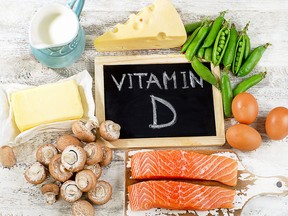
Have you had enough vitamin D today?
Advertisement 2

THIS CONTENT IS RESERVED FOR SUBSCRIBERS ONLY
Subscribe now to read the latest news in your city and across Canada.
- Unlimited online access to articles from across Canada with one account.
- Get exclusive access to the Toronto Sun ePaper, an electronic replica of the print edition that you can share, download and comment on.
- Enjoy insights and behind-the-scenes analysis from our award-winning journalists.
- Support local journalists and the next generation of journalists.
- Daily puzzles including the New York Times Crossword.
SUBSCRIBE TO UNLOCK MORE ARTICLES
Subscribe now to read the latest news in your city and across Canada.
- Unlimited online access to articles from across Canada with one account.
- Get exclusive access to the Toronto Sun ePaper, an electronic replica of the print edition that you can share, download and comment on.
- Enjoy insights and behind-the-scenes analysis from our award-winning journalists.
- Support local journalists and the next generation of journalists.
- Daily puzzles including the New York Times Crossword.
REGISTER / SIGN IN TO UNLOCK MORE ARTICLES
Create an account or sign in to continue with your reading experience.
- Access articles from across Canada with one account.
- Share your thoughts and join the conversation in the comments.
- Enjoy additional articles per month.
- Get email updates from your favourite authors.
THIS ARTICLE IS FREE TO READ REGISTER TO UNLOCK.
Create an account or sign in to continue with your reading experience.
- Access articles from across Canada with one account
- Share your thoughts and join the conversation in the comments
- Enjoy additional articles per month
- Get email updates from your favourite authors
Article content
Vitamin D is not just a nutrient found in food. It’s a hormone that plays a critical role in your health. Nearly every cell in your body has receptors for vitamin D, and studies suggest that it has a variety of effects in your body.
Article content
Article content
Vitamin D helps keep your bones and teeth strong. It strengthens your immune system and prevents muscle weakness. Low levels of vitamin D have been linked to a higher risk of hypertension, Type 2 diabetes, heart disease and strokes.
Yet studies suggest that most Americans consume less than the recommended amounts of vitamin D, and about 18% of children and adults are at risk of having inadequate levels.
Vitamin D is nicknamed the sunshine vitamin because our bodies produce it when our skin is exposed to sunlight. But for a lot of people, that can be a problem. Many people have limited exposure to sunlight, or they may have darker skin, which makes it harder to produce vitamin D in response to sunlight.
While many people turn to sometimes costly vitamin D supplements, there’s a simpler solution: You can get plenty of vitamin D by eating nutrient-rich foods that either naturally contain it or are fortified with it.
By signing up you consent to receive the above newsletter from Postmedia Network Inc.
Article content
Advertisement 3
Article content
Here’s what you need to know about vitamin D, the foods that contain it, and some easy and delicious ways to add those foods to your diet.
Health authorities recommend slightly different amounts of daily vitamin D depending on your age. Men, women and children between the ages of 1 and 70 should get about 600 IU of vitamin D daily. Infants need less (400 IU per day), and people older than 70 need more (800 IU daily).
Getting about 10 to 20 minutes of sunlight a day is generally considered the easiest way to get vitamin D. But that’s not feasible for many people – they may be living in a climate with very little sunlight in the winter, or have darker skin, or regularly use sunscreen to lower the risk of skin cancer.
People who are physically active but generally exercise indoors could also be at risk for low vitamin D levels, said Amy Stephens, a sports dietitian at New York University who writes a blog on nutrition.
Older adults have a higher risk of low vitamin D levels as well because the body’s ability to generate and metabolize vitamin D dwindles with age.
Advertisement 4
Article content
If you suspect you have low vitamin D levels, you should talk to your doctor or a health care provider about getting tested, Stephens said. “Test, don’t guess,” she added.
If your levels are very low, your doctor or health care provider might recommend that you take a vitamin D supplement, said Melissa Mroz Planells, a spokesperson for the Academy of Nutrition and Dietetics. After getting your levels rechecked weeks or months later, your health care provider might suggest going on a lower dose or focusing on diet and lifestyle changes.
While sunlight can be helpful, Stephens said, you should also look at your diet.
Fatty fish such as salmon, trout and sardines are rich sources of vitamin D, as are egg yolks and cod liver oil. Many foods are also fortified with vitamin D. These include dairy products, most plant-based milks and many breakfast cereals. Here are some top dietary sources of vitamin D, according to the National Institutes of Health and the Agriculture Department.
Advertisement 5
Article content
SOURCE AMOUNT Cod liver oil, 1 tablespoon 1,360 IU Trout, farmed, 3 ounces 645 IU Salmon (sockeye), 3 ounces 570 IU Mushrooms, white, (exposed to UV light), ½ cup 366 IU Milk, 2%, fortified, 1 cup 120 IU Soy, almond, oat milk, fortified, 1 cup 100-144 IU Breakfast cereal, fortified, 1 serving 80 IU Sardines, canned in oil, 2 sardines 46 IU Egg, 1 large, scrambled 44 IU Liver, beef, 3 ounces 42 IU Tuna (light), canned in water, 3 ounces 40 IU Cheddar cheese, 1.5 ounces 17 IU
For more health news and content around diseases, conditions, wellness, healthy living, drugs, treatments and more, head to Healthing.ca – a member of the Postmedia Network.
Article content






























 Bengali (BD) ·
  English (US) ·