.png)
 3 hours ago
11
3 hours ago
11
Article content
Article content
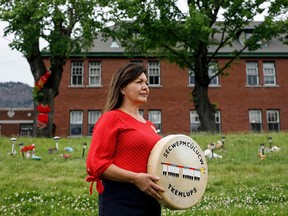
In the February statement, Tk’emlups te Secwepemc said that while it had pursued a “multi-pronged” approach since 2021 — involving combing through public records and those of the Roman Catholic Church — the process has been “more complex” than expected.
Article content
“Obtaining 88 years of government records and sacramental records from the Roman Catholic Church of Canada is critical to confirming the identities of the children who attended the school and those who never returned home, along with the community to which they belonged,” the statement said.
Article content
“Each Nation upholds its own cultural and spiritual protocols for how ancestral remains must be treated,” the statement continued. “Possible future outcomes could be to preserve the orchard as a Sacred Site — a place of memory and healing — or excavate. Any remains would need to be repatriated to their home communities, an extremely complex and sensitive process involving extensive consultation with the Nations, DNA analysis, forensic expertise, and adherence to appropriate laws and protocols.”
Article content
Were alleged graves discovered at other residential school sites?
Article content
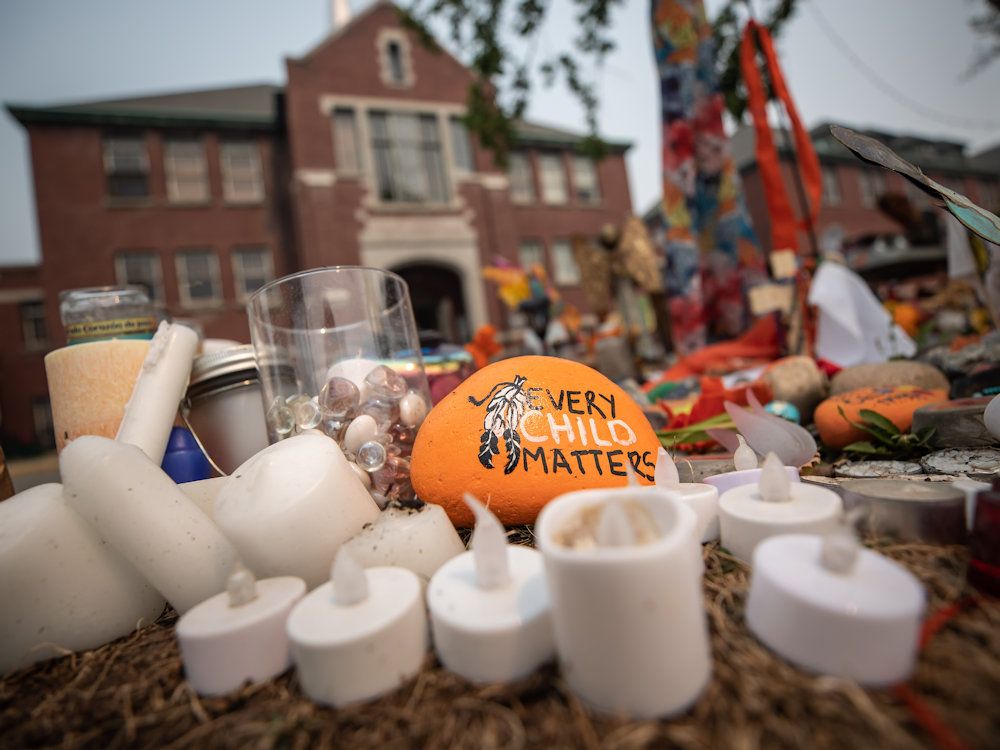
In late June, the Cowessess First Nation reported finding 751 unmarked graves near a former residential school in Marieval, Sask. Trudeau visited the site in July and laid a teddy bear at the site. However, Cowessess Chief Cadmus Delorme clarified during a news conference at the time: “This is not a mass grave site. These are unmarked graves.”
Article content
Article content
That same month, a band from the Ktunaxa Nation near Cranbrook, B.C., reported finding another 182 unmarked graves in a cemetery using ground-penetrating radar. The burials were said to be shallow, just feet below the ground.
Article content
“ʔaq̓am leadership would like to stress that although these findings are tragic, they are still undergoing analysis and the history of this area is a complex one,” the First Nation said in a statement.
Article content
There have been no recent updates on the Ktunaxa Nation’s investigation into unmarked graves.
Article content
In Marieval, the use of GPR led to the discovery of “anomalies” which might indicate “possible grave locations,” Cowessess First Nation said. Cowessess has since built an interactive digital cemetery map based on the GPR findings, including “the coordinates of known graves (those having headstones) and possible unmarked graves.”
Article content
Neither site appears to have been excavated to confirm whether there were unmarked graves.
Article content
Article content
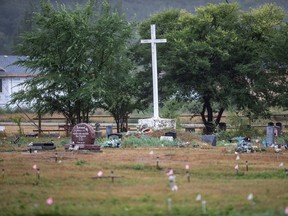
The Penelakut Tribe of the Southern Gulf Islands, B.C., announced in July 2021 the discovery of “160+ undocumented and unmarked graves in our grounds and foreshore.” However, as of August 2025, tribal elders had yet to decide whether to excavate the potential burial area.
Article content
Article content
In January 2022, Williams Lake First Nation reported finding “93 potential burials (which) correlate with the historic and modern extent of the cemetery” they were discovered in. The following year, the tribe announced the discovery of an additional 66 potential unmarked graves. Chief William Sellars said during a press conference in January 2023 that the Williams Lake First Nation was seeking government funding that might go to finance the excavation of the site. However, the site has not yet been excavated.
Article content
The Stó:lō Nation reported that 158 children were in unmarked burial sites in the Fraser Valley, B.C., in September 2023. Two years earlier, the community had assembled a team to examine archival material, oral history records and used ground-penetrating radar. An excavation does not appear to have been conducted to date.
Article content
This month, the Sturgeon Lake Cree Nation in northern Alberta announced they had found 62 potential unmarked graves, however all but nine of them were found on sites of known former graveyards.
Article content
What money was allocated to investigate, and how was it spent?
Article content
In August 2021, the federal government announced the creation of a $320-million Residential Schools Missing Children Community Support Fund. During the first three years of the program, $216.6 million was reportedly spent supporting nearly 150 Indigenous communities across Canada.



















 Bengali (BD) ·
  English (US) ·