.png)
 2 hours ago
10
2 hours ago
10
Nintendo‘s shares saw a drop following the announcement of price increases for the Switch 2 and several related products. Demand for the console is still strong in regions like Japan, but concerns about rising hardware costs, slowing software momentum, and a relatively small first-party game lineup have pushed the company’s stock downward since the announcement.
The gaming giant’s shares fell sharply following its latest financial forecast and pricing announcements, with investors reacting to lower-than-expected hardware projections and warnings about increasing component expenses. Analysts have also raised concerns about whether Nintendo can maintain the Switch 2’s momentum heading into its critical second year on the market.
Why Nintendo Shares Are Falling After the Switch 2 Price Increase
-

Image Credit: Nintendo
-

Image Credit: Nintendo
-

Image Credit: Nintendo
-

Image Credit: Nintendo
-

Image Credit: Nintendo


Per Bloomberg, Nintendo’s stock dropped after the company confirmed broad price hikes tied to rising manufacturing costs. The company cited surging memory prices, tariffs, exchange rate fluctuations, and broader market changes as major reasons behind the increase.
Nintendo is raising the price of the Switch 2 to $499.
The price hike takes effect on September 1st in the US, Canada, and Europe and May 25th in Japan. pic.twitter.com/Md5SkDV0mf
Switch 2 prices are increasing across multiple regions. In Japan, the Japanese-language model will rise by 10,000 yen to 59,980 yen, while the U.S. version of the console will reportedly cost $499.99 after a $50 increase. Nintendo also raised prices for the original Switch lineup, online subscription services, and even its traditional playing cards.
Nintendo president Shuntaro Furukawa acknowledged during an investor briefing that the higher pricing “will raise the barrier to purchase to some extent.” (via IGN) However, he emphasized that Nintendo’s long-term strategy still revolves around delivering experiences that justify the higher cost.
The market reaction was immediate. Nintendo shares plunged roughly 10% in Tokyo trading following the announcement, marking one of the company’s worst short-term declines in months. The company’s stock has now fallen more than 30% since the start of 2026.
A major concern is the exploding cost of memory chips. Industry analysts say memory prices doubled during the first quarter of 2026 due to growing AI data center demand, which has squeezed supply across the broader electronics market. Nintendo estimates that rising memory costs and tariffs alone could add around ¥100 billion (roughly $640 million) in expenses during the current fiscal year.
Sony is facing similar pressure with the PlayStation 5, but investors appear more optimistic about Sony’s response. Sony recently announced a large share buyback and stated that it had already secured enough memory supply for the current fiscal year, helping its stock rise while Nintendo’s declined.
Concerns About the Switch 2’s Game Lineup and Long-Term Momentum
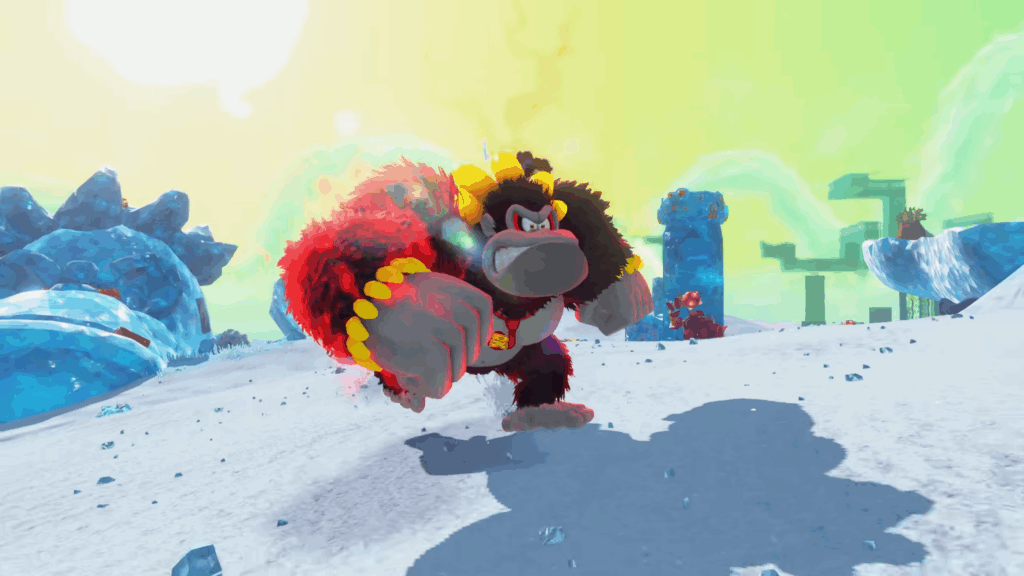 There are relatively few games for the new console. | Image Credit: Nintendo
Beyond the price hike itself, investors are questioning whether Nintendo has done enough to maintain excitement around the Switch 2 after its launch window.
Nintendo currently forecasts sales of 16.5 million Switch 2 consoles and 60 million software units this fiscal year, both lower than some analysts expected. While the console remains one of the fastest-selling systems ever, concerns have emerged about slower software momentum following launch.
Much of the discussion centers around Nintendo’s first-party lineup. Mario Kart World launched alongside the console and performed extremely well commercially, but critics and analysts have argued that the system needed additional major exclusives at launch.
Bloomberg also reported earlier this year that Nintendo reduced Switch 2 production targets after holiday sales underperformed internal expectations in some regions. Although the company remains publicly confident in the system’s long-term future, investors appear cautious about how the console will compete once Grand Theft Auto VI launches later this year.
But as we mentioned, demand for the Switch 2 itself remains strong. Following the latest price announcement, long lines reportedly formed at Japanese retailers, with inventory quickly selling out both online and in physical stores. And while that’s due to the incoming price hike, Nintendo’s hardware forecasts may be overly conservative.
We’ll have to wait and see how it goes for the company in the coming months. What do you think this will lead to? Let us know in the comments!



















 Bengali (BD) ·
  English (US) ·