.png)
 1 hour ago
5
1 hour ago
5
Oda’s One Piece is not simply an exciting pirate story. While the series’ comedy and action provide entertainment to the fans, at its core, One Piece deeply explores themes such as corruption, racism, propaganda, censorship, and oppression, which mirror many aspects of real-world events. Time and time again, Oda has used fictional islands and governments in his story to reflect the darkest aspects of society and politics.
The examples range from the slave trade on Sabaody Island to the censorship of history during the Void Century era. Here are 10 such examples:
| Series Title | One Piece |
| Manga Author | Eiichiro Oda |
| Anime Rating (MAL) – as of May 22, 2026 | 8.73 / 10 |
| Manga Rating (MAL) – as of May 22, 2026 | 9.21 / 10 |
10 Media Manipulation and False Narratives Through Morgans
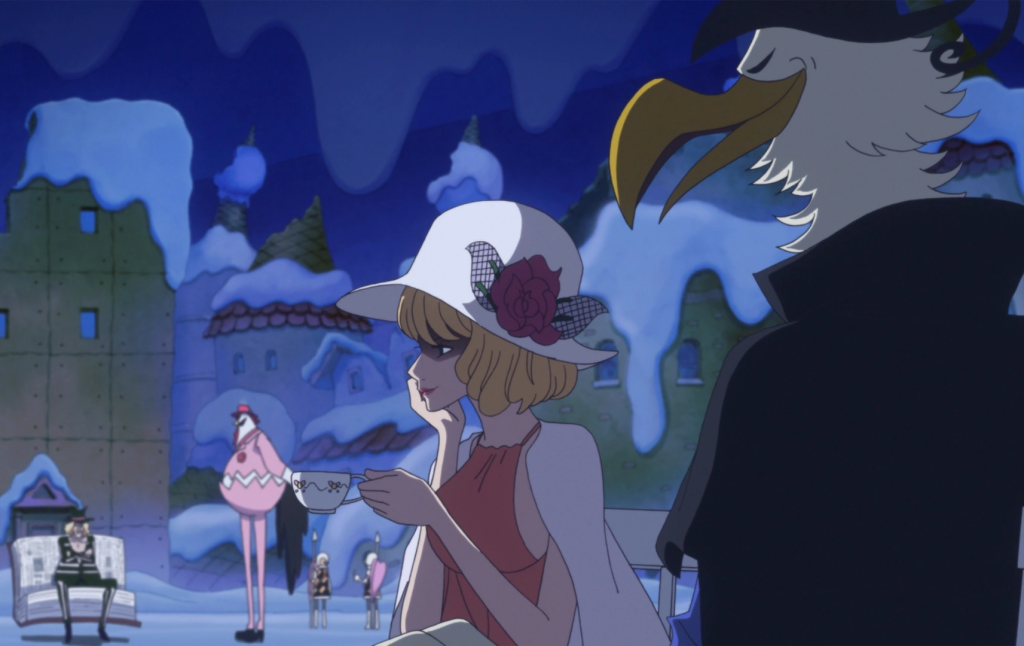 A still showing Morgans from the One Piece anime. | Credit: Toei Animation
World Government’s attitude towards the media bears similarities with the real-world propaganda system. Using Big News Morgans, Oda demonstrates the power of media and how they influence the perception of people. Even recently, in the Egghead arc anime adaptation of One Piece, we saw how the World Government used this propaganda system to spread false narratives.
What is interesting about this scenario is that at times, Morgans defies the orders of the government. Through this, Oda seems to suggest that the media can either expose truth or act as weapons in politics, all based on who controls them.
9 Class Inequality and Celestial Dragon Privilege in Mariejois
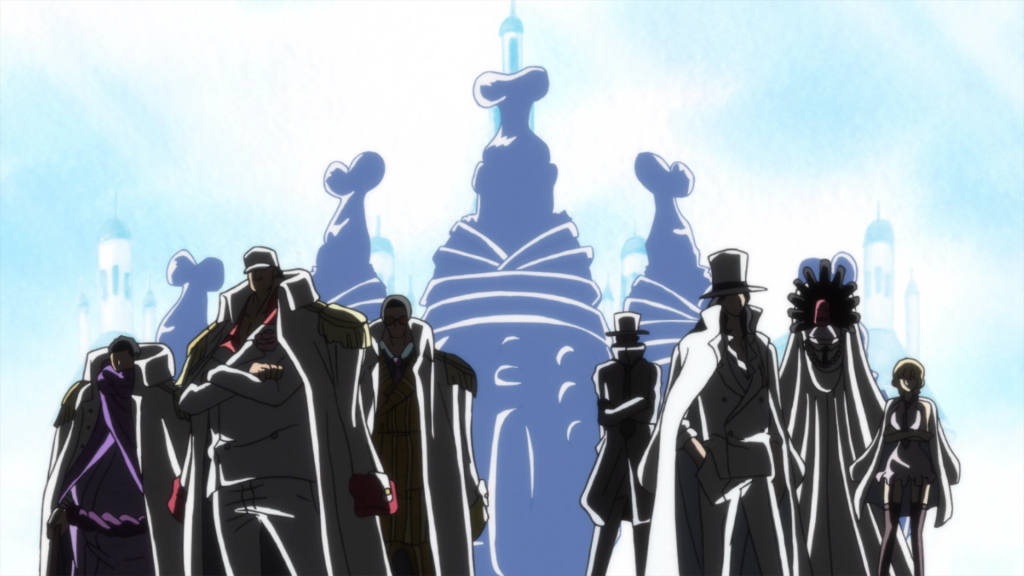 A still showing the highest authorities of the World Government in One Piece, specifically the World Nobles (Celestial Dragons) and their elite guard. | Credit: Toei Animation
 The Celestial Dragons represent class disparity most evidently in One Piece. They were introduced during the Sabaody Arc, which starts from Chapter 497, and position themselves above ordinary citizens, seeing the commoners as objects that can be casually bought and sold like other items.
These kinds of behaviors mirror the ruling elites throughout history. Charlos casually purchasing humans in auctions is among the most troubling moments in the series because it depicts how money and high social standing often allow powerful people to ignore morality and law.
8 Erased History and Historical Censorship Through the Void Century
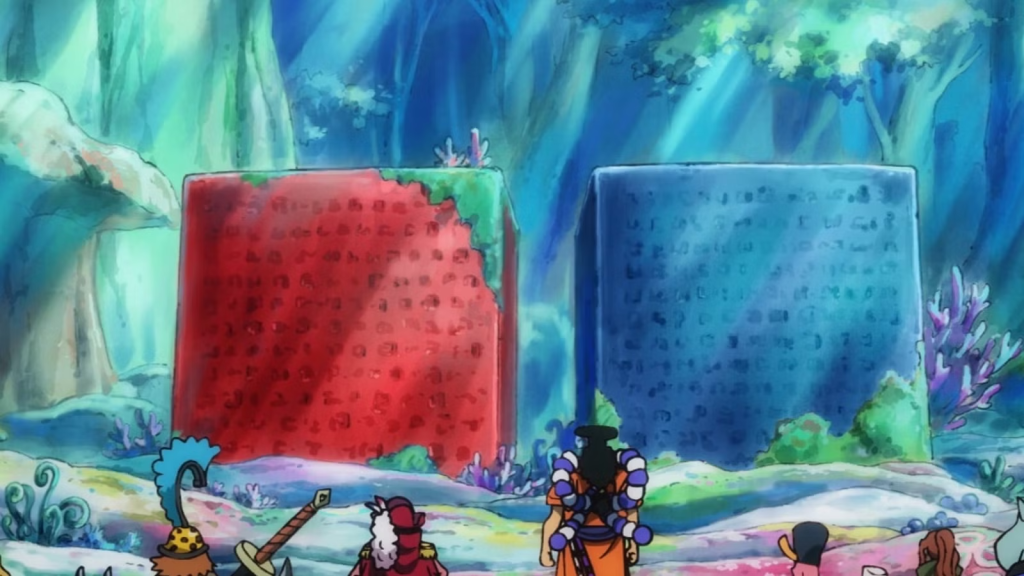 Road Poneglyph (red) and a historical Poneglyph (blue) are located on Fish-Man Island. | Credit: Toei Animation
The Void Century storyline is a perfect example of how governments often try to silence any information that poses a threat to their authority. In Chapter 395, the scholars of Ohara studied the restricted history by using Poneglyphs but were subsequently killed by the World Government.
This phenomenon bears a strong resemblance to the censorship practices in our society, where the elimination of books, culture, and history was used to control future generations. Robin becoming a criminal simply for seeking the truth shows how authoritarian systems often fear knowledge more than violence.
7 Environmental Pollution and Industrial Exploitation in Wano
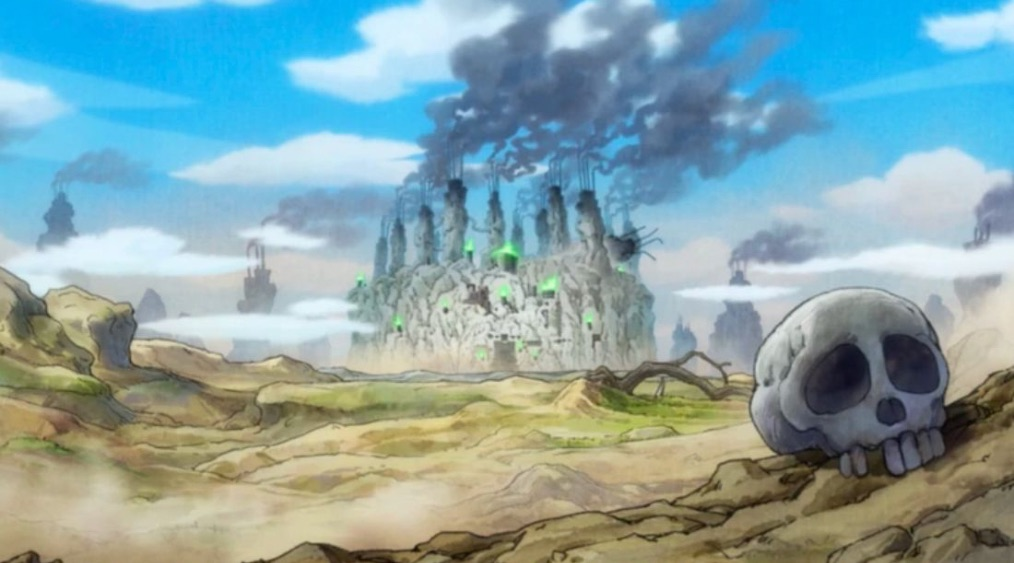 Prisoner Mine, located in the Udon region of Wano Country. | Credit: Toei Animation
The environmental destruction witnessed in Wano Country seems highly inspired by real-life industrial catastrophes. The factories set up by Kaido and Orochi had polluted many rivers and ruined the agricultural lands in the area.
Oda demonstrates how people who have nothing end up suffering, while those who are at the top are leading comfortable lives. The starving villages in Wano country and the polluted waters seem to mirror what actually happens in the real world when the greed of corporations and politicians ruins ecosystems without accountability.
6 Slavery and Human Trafficking at Sabaody Archipelago
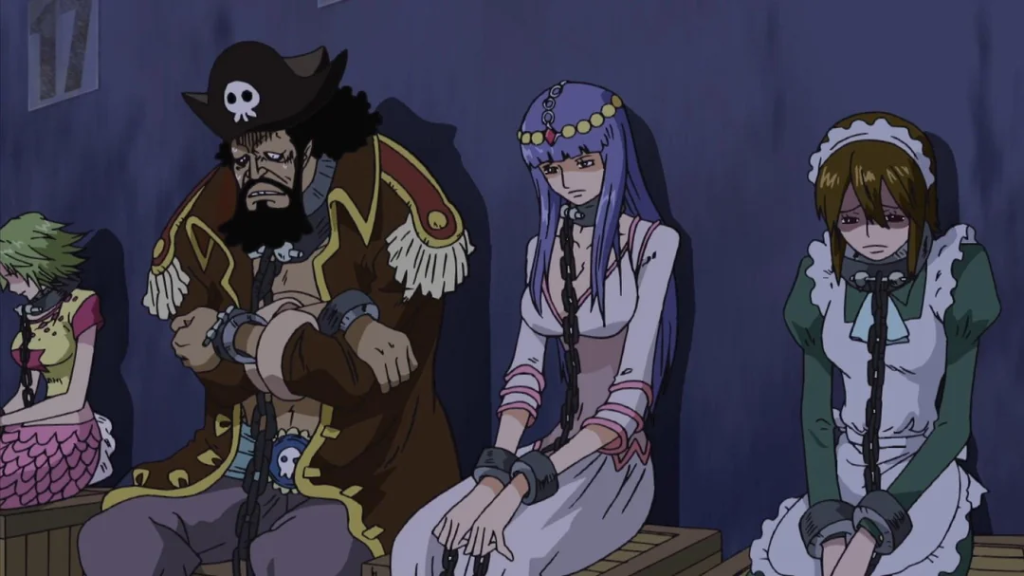 The slavery and racism themes are explored throughout the One Piece series. | Credit: Toei Animation
One of the darkest arcs in One Piece is the Sabaody Archipelago arc owing to its portrayal of slavery. Starting around Chapter 501, Fish-Men, mermaids, and civilians were sold through human auctions to rich nobles.
The scary thing about this arc was that the system seemed very much accepted by the elites. Oda portrayed slavery as entertainment for the elites, which reflects the harsh reality of the slave trade throughout human history.
5 Corrupt Governments and Authoritarian Rule by the World Government
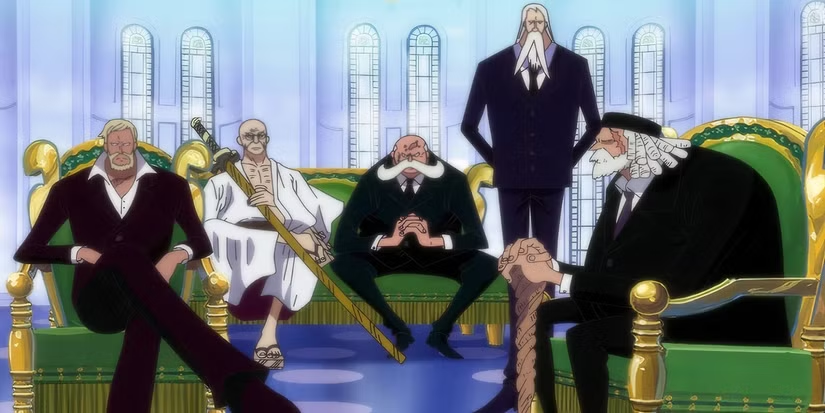 Five Elders (also known as the Gorosei) from a still. | Credit: Toei Animation
The World Government always tries to portray an image of justice while hiding huge levels of corruption in its ranks. The World Government used CP9 and force against anyone who posed a threat to their authority during the Enies Lobby arc.
This mirrors authoritarian governments that justify cruelty under the excuse of maintaining order. Oda’s writing feels realistic because corruption in One Piece is systemic rather than limited to a few evil individuals.
4 Racism and Discrimination in Fish-Man Island
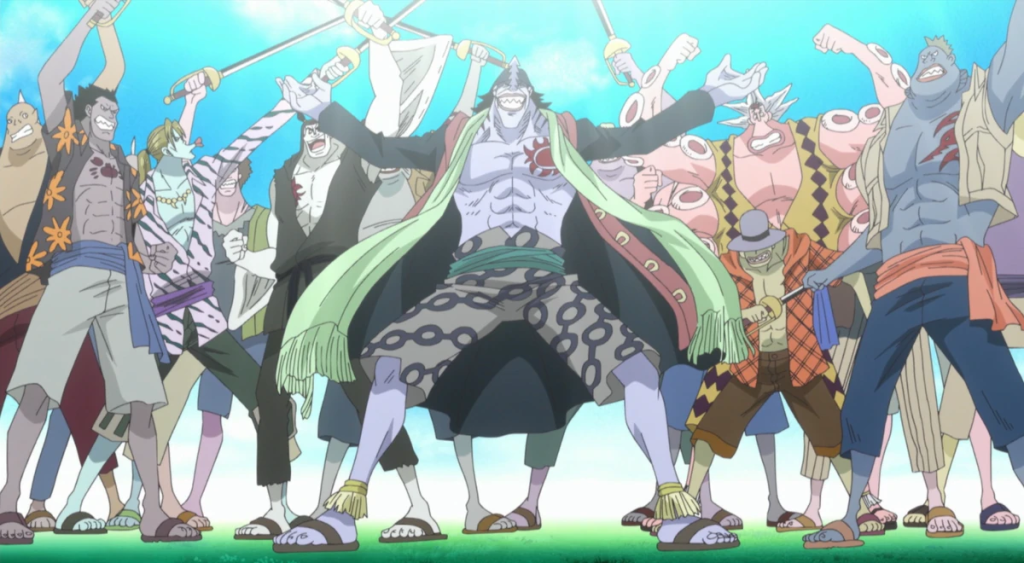 Arlong Pirates from the anime series One Piece. | Credit: Toei Animation
Fish-Man Island delved deeper into the issue of racism compared to practically any other shonen series. The conflict between humans and Fish-Men was based on years and years of prejudice, discrimination, and oppression, which became even clearer from Fisher Tiger’s storyline in Chapters 621 to 626.
That is what makes this storyline so interesting as well – Oda never tries to simplify racism into pure good versus evil. Characters like Hody Jones inherited hatred despite barely experiencing humans personally, showing how prejudice can spread across generations through fear and propaganda.
3 Genocide and Ethnic Cleansing in Ohara
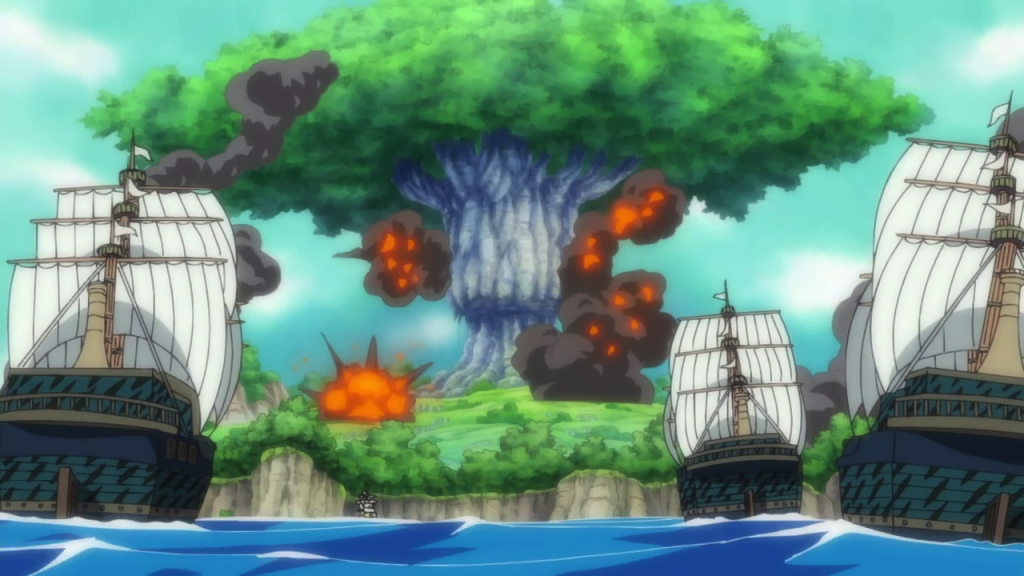 The destruction of Ohara during the Buster Call incident. | Credit: Toei Animation
The destruction of Ohara is probably one of the worst atrocities that happened in One Piece. In Chapter 395, the World Government had initiated a Buster Call attack, which wiped out the whole island along with the scholars present there.
This situation can be compared to the real-life instances of genocide and ethnic cleansing in which a large group of people was eradicated under some political justification. Robin surviving while carrying lifelong trauma reflects the experiences of real survivors forced to live after witnessing mass destruction.
2 Civil War and Propaganda During the Alabasta Rebellion
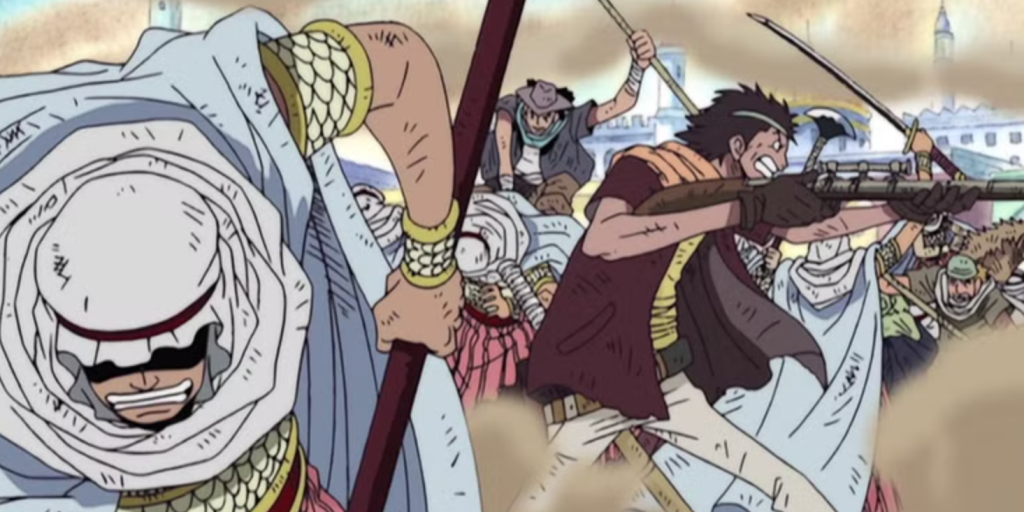 A still from the Alabasta Arc showing a battle between the royal army and rebel soldiers. | Credit: Toei Animation
In the Alabasta arc, the role of propaganda was depicted perfectly, and how it drove the country into an internal conflict. Crocodile secretly manipulated both the royal family and the rebels while spreading distrust across the kingdom. In Chapter 210, Alabasta was descending into chaos as a result of this fabricated rivalry.
Oda successfully depicted the way political figures use fear and misinformation as tools of manipulation in order to achieve their goals. Crocodile manipulated the drought crisis and chaos to make the citizens believe their leaders had betrayed them.
1 Corruption and Political Manipulation in Alabasta
-

Credit: Toei Animation
-

Credit: Toei Animation
-

Credit: Toei Animation


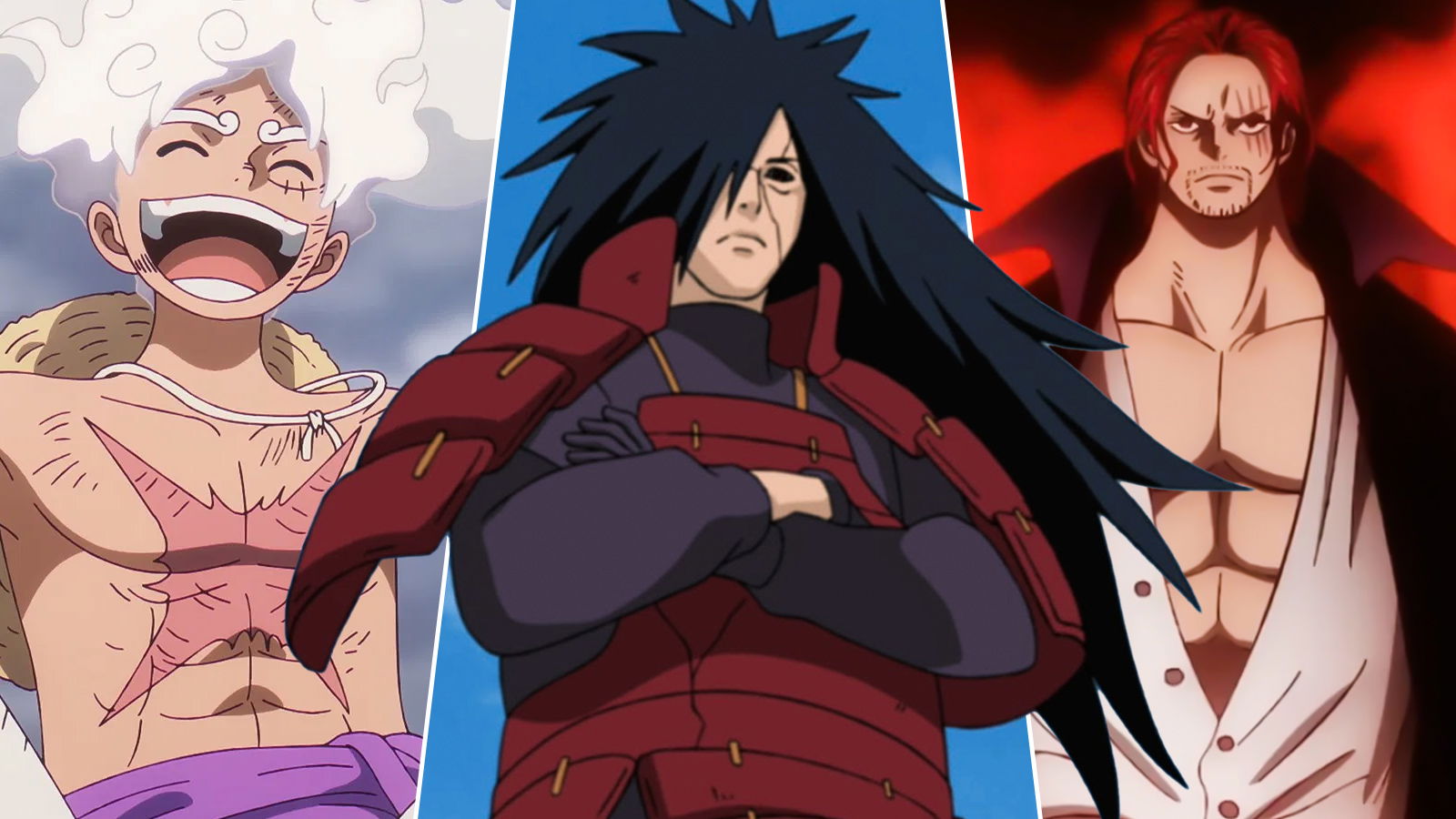
Alabasta ranks first since it is among Oda’s most realistic depictions of political corruption. Crocodile took advantage of being an esteemed Warlord to destabilize the entire country while still portraying himself as a hero in the country.
The plot is a reflection of reality, where it shows how the powerful individuals create crises to gain power. Vivi’s struggle to stop the violence showed how difficult it becomes to fight corruption once misinformation and fear spread throughout society.
Here are some of the questions fans may have –
Did Eiichiro Oda intentionally include political themes in One Piece?
Eiichiro Oda always incorporates political ideas such as discrimination, censorship, corruption, and inequality into the series.
Which One Piece arc can be classified as the darkest?
The Ohara arc, Sabaody Archipelago arc, and Wano arc can all be classified as dark, as they deal with issues such as genocide, slavery, and oppression.
Is Fish-Man Island inspired by real-world racism?
While not based on one specific event, the arc clearly draws inspiration from historical racism, segregation, and inherited prejudice.
Now the big question – Which real-world parallel in One Piece shocked you the most? Share your thoughts in the comments section below.
The One Piece anime is currently available to watch on Crunchyroll.






















 Bengali (BD) ·
  English (US) ·