.png)
 6 days ago
17
6 days ago
17
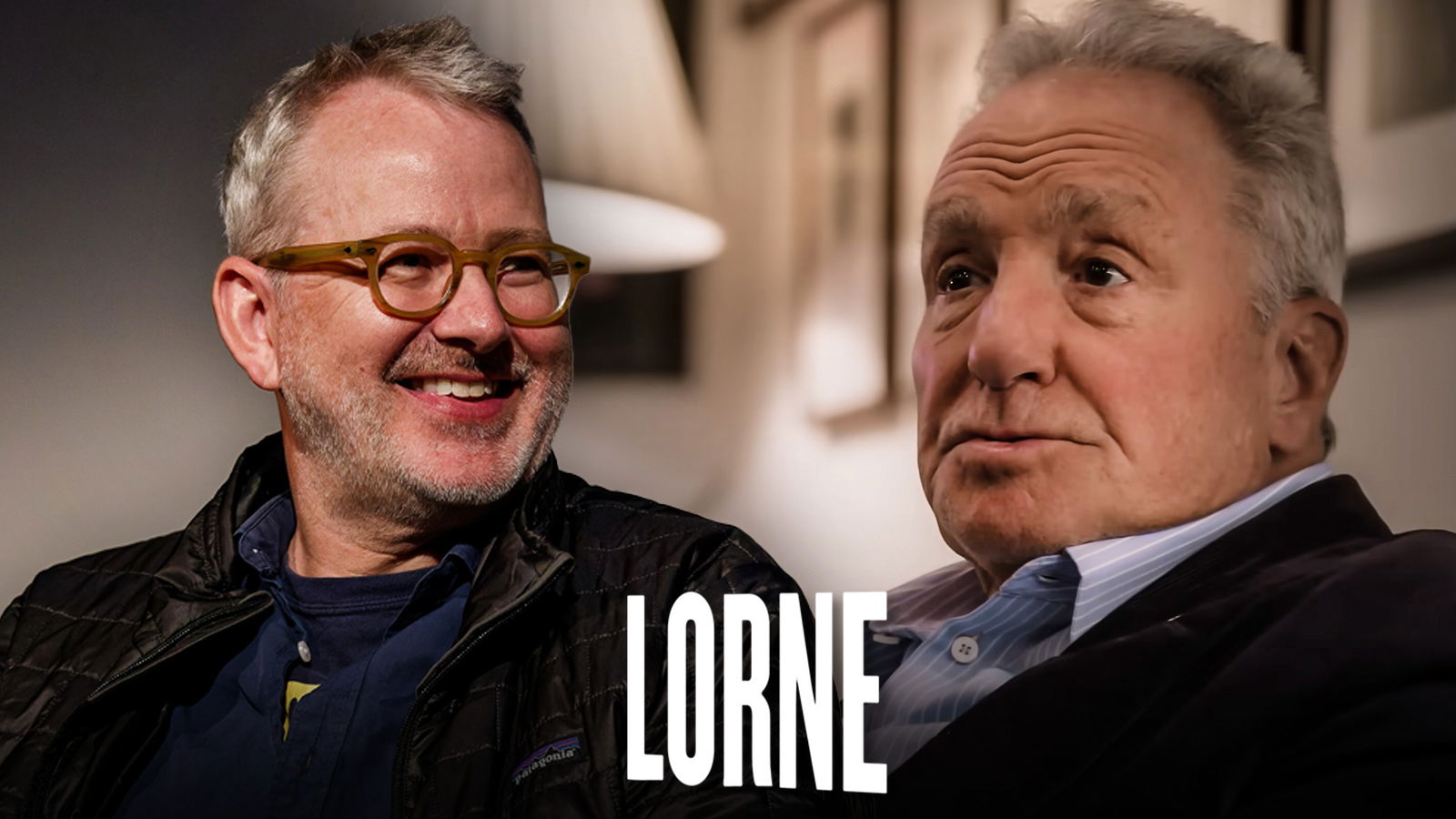 Credit: Left image by Kevin Payravi, licensed under CC BY-SA 4.0, via Wikimedia Commons
Academy Award-winning filmmaker Morgan Neville has become one of the most reliable biographers in documentary film. Having made films about iconic entertainers like Paul McCartney, Pharrell Williams, and, of course, Fred Rogers, Neville’s latest film, Lorne, sees him set his eye (and camera) on Saturday Night Live creator Lorne Michaels.
We at FandomWire got to speak with Morgan Neville about the unique challenges of capturing Lorne Michaels on film and how he continues to reinvent himself as a documentary filmmaker. Check out the full interview here:
Morgan Neville Lorne Interview
Obviously, last year was the 50th anniversary of SNL, and with that came a bunch of documentaries and content, much of which was very good. I certainly think your film earns its spot, but I want to know, in your own words, why do you think your film stands out?
Well, it’s funny because I produced four of those documentaries. And I can give you a long version or the short version — it’s complicated — but basically, this was supposed to be part of those documentaries. I met Lorne in early ‘23 just to talk about what could be done for the 50th, and I pitched the idea of doing five documentaries for 50 years, like five standalones.
And I pitched a whole bunch of ideas, including things like the Cowbell sketch and auditioning, and I said, “Of course, a documentary about you — that would be interesting.” But when he said, “Yeah, I’m game to do a documentary about me,” which never happened directly, it was always kind of a little vague, it had to break off from the others because Lorne couldn’t have anything to do with the making of it, nor Broadway Video.
So it became a separate entity, and it was going to come out kind of in the middle of the SNL 50 stuff, but not in the beginning, but there was so much SNL 50 stuff that it just felt like it was going to get lost. And I didn’t want it to get lost. I don’t think anybody did. So we just said, “Okay, well, rather than rushing to try to get this done, let’s take our time and let it come out when it wants to come out.” So here we are now, 14 months after SNL 50. That’s the brief-ish history of why.
But it also was the one that I, from the beginning, thought is kind of the white whale of SNL docs: the Lorne Michaels documentary. So it needed time to be as good as it could be.
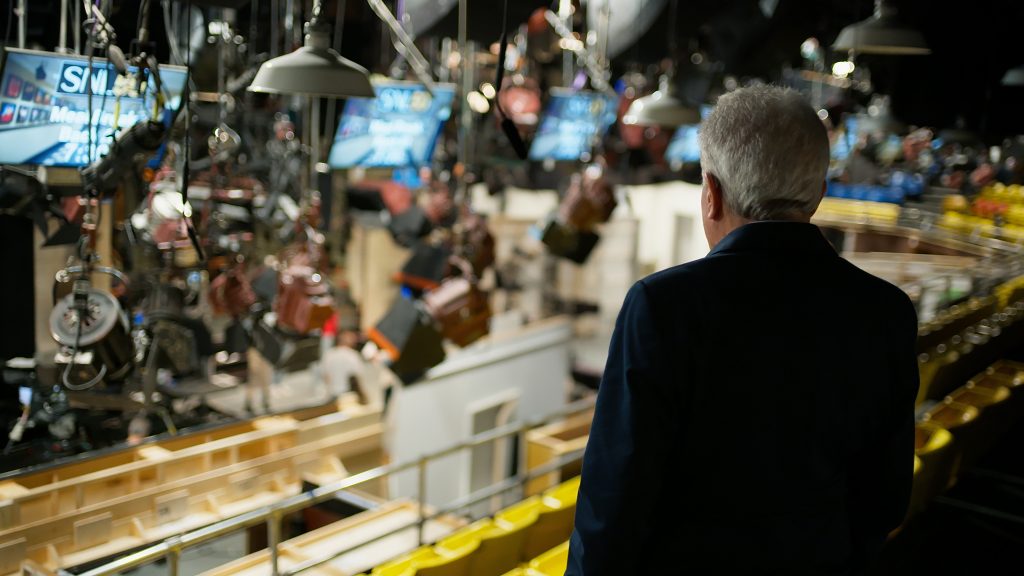 Lorne Michaels stars in director Morgan Neville’s documentary LORNE, a Focus Features release. Credit: Courtesy of Focus Features. © 2026 All Rights Reserved.
Over your career, you’ve made films about subjects who are both living and departed. Do you think it’s easier or more interesting to make a film about someone who is alive and involved, or a film looking back on the life of someone who is no longer with us?
I mean, it really depends. I’ve done some of everything, like you say. There’s an expression in my business where they say “the deader the better” because you don’t have to deal with anybody. You can just make it. But I also love filming with people, and I feel like part of what I’m good at is trying to talk to people, almost in a para-therapeutic way, and try to talk through issues.
And certainly with Steve Martin or Paul McCartney, we did that. Lorne was different, though. I realized from the first conversation that I had with him that he is not that kind of person. He can’t narrate his own story. It’s not that he’s unreliable; it’s just that he’s not a narrator. He doesn’t speak that way. He speaks in little insights and stories and parables and things. But he doesn’t speak directly.
Nothing about Lorne is direct, so he’s tricky in that way. Including my whole experience of making the film, nothing was direct. He’s the master of the mixed signal. And all the stories I’d heard from all the cast members and writers over the years was exactly my experience where you’re never quite sure if he’s even okay that you’re there. So it is a lot of that.
But I was talking to him after the screening, and he said, “Well, you showed perseverance,” and Lorne does respect perseverance because that’s him. So I just kept going, and he eventually acquiesced.
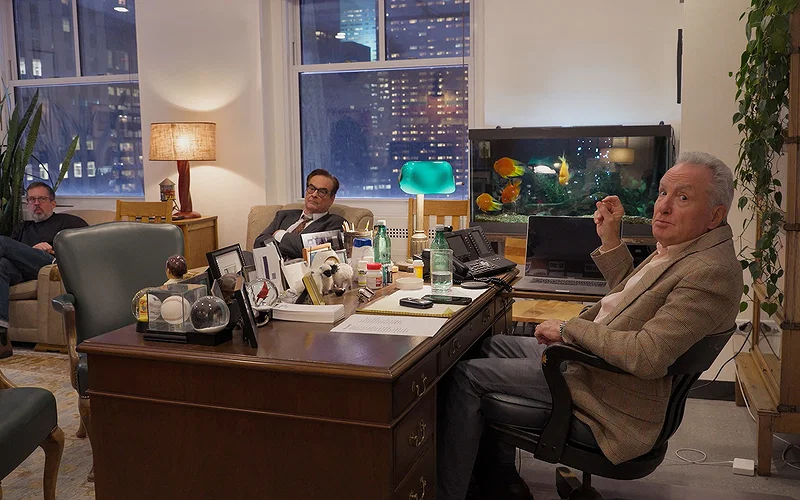
(L to R) Erik Kenward, Steve Higgins and Lorne Michaels in director Morgan Neville's documentary LORNE, a Focus Features release. Credit: Courtesy of Focus Features. © 2026 All rights reserved.
⛶
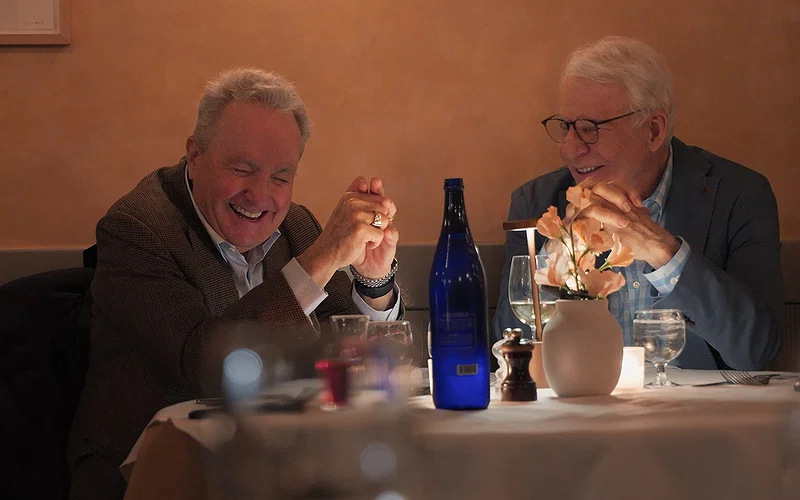
(L to R) Lorne Michaels and Steve Martin in director Morgan Neville's documentary LORNE, a Focus Features release. Credit: Courtesy of Focus Features. © 2026 All rights reserved.
⛶


×
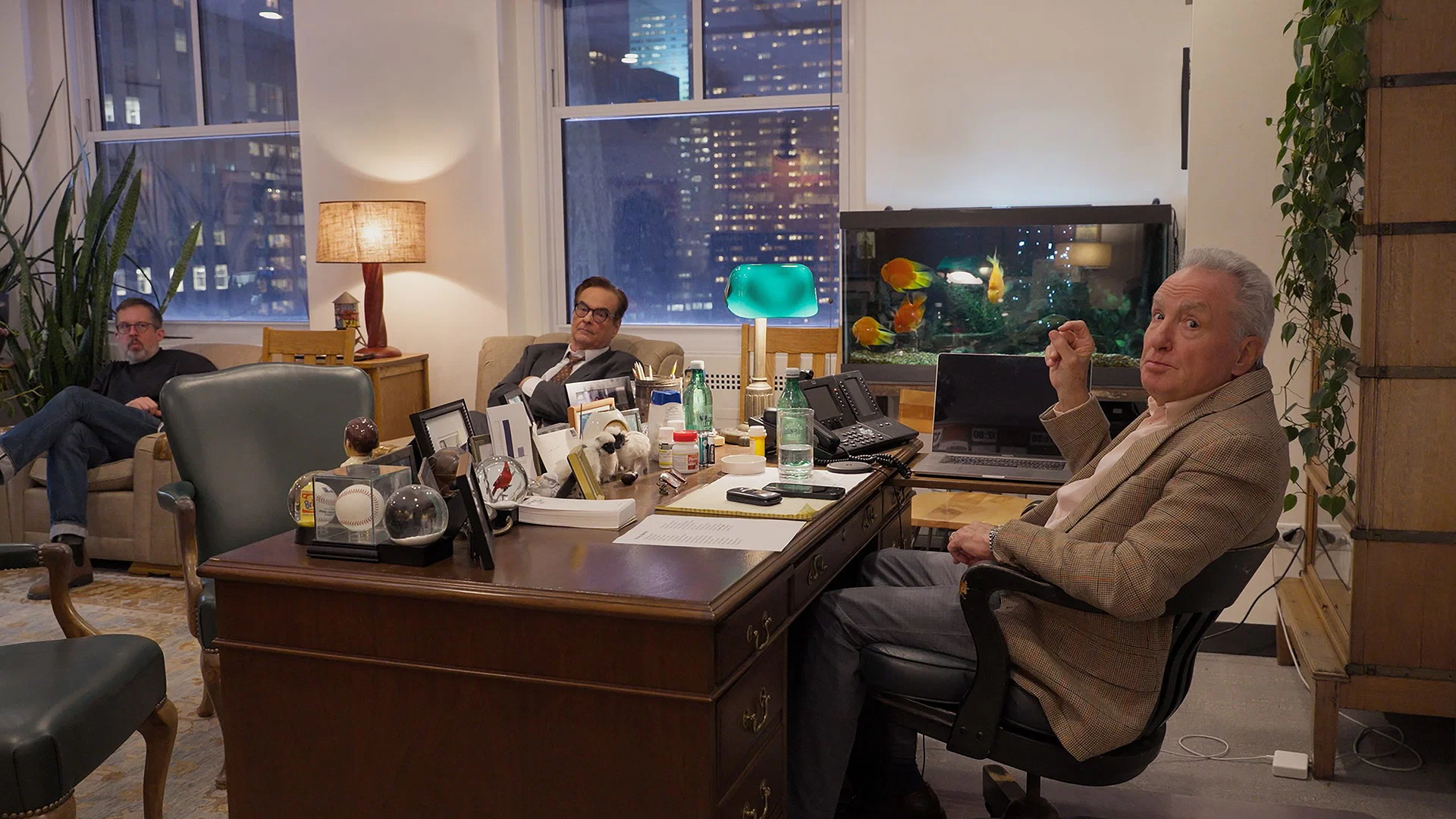
(L to R) Erik Kenward, Steve Higgins and Lorne Michaels in director Morgan Neville's documentary LORNE, a Focus Features release. Credit: Courtesy of Focus Features. © 2026 All rights reserved.
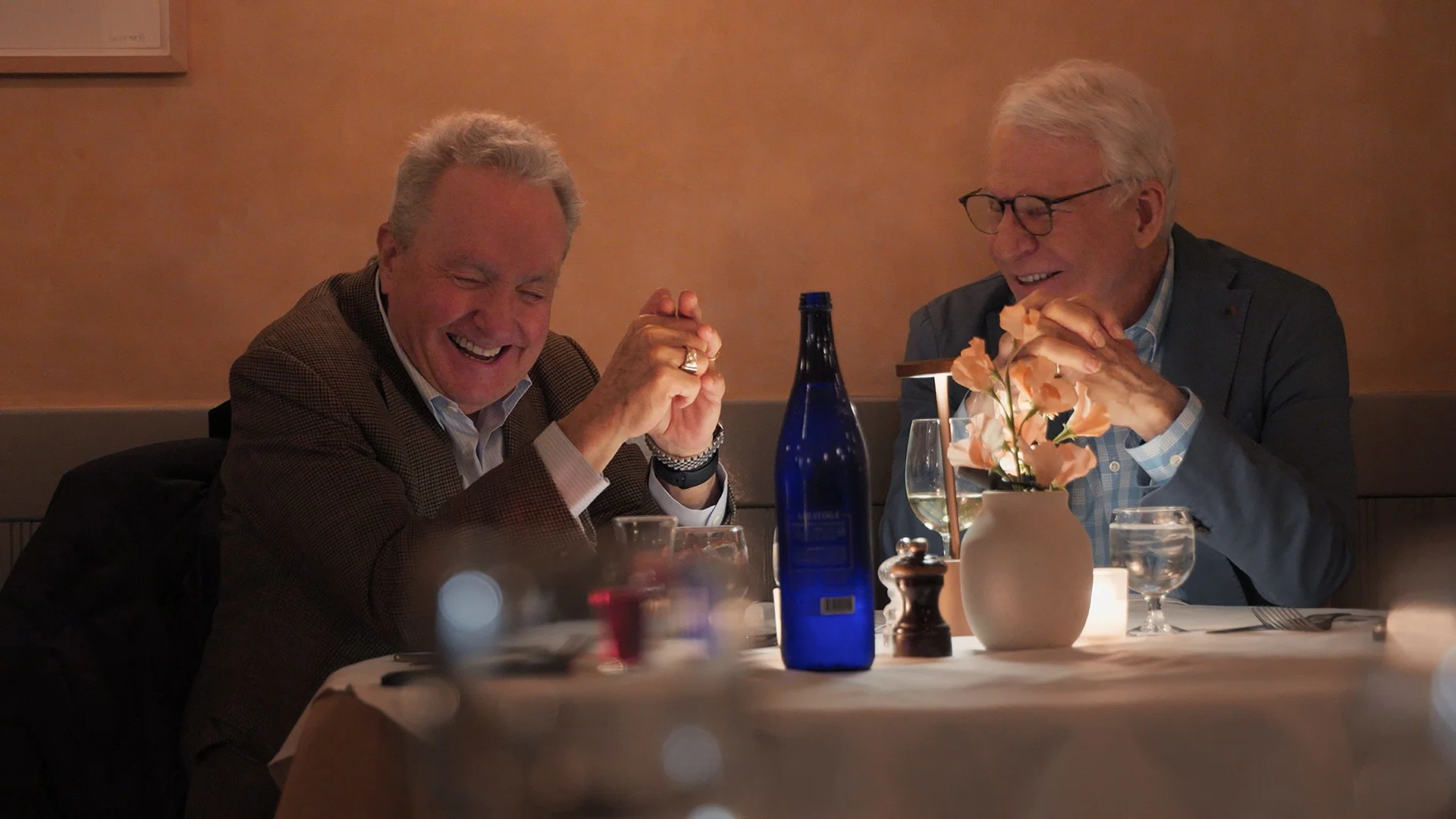
(L to R) Lorne Michaels and Steve Martin in director Morgan Neville's documentary LORNE, a Focus Features release. Credit: Courtesy of Focus Features. © 2026 All rights reserved.
I have to admit, when I’m teaching interview skills, I make people watch Won’t You Be My Neighbor? — both because I think Fred Rogers is maybe the greatest interviewer to ever live and because you are one of the greatest working today. What would be your number one tip for getting famously reserved subjects like Lorne Michaels to open up?
I think of it this way, and I’ve said this to people before: I’m not here to praise you, and I’m not here to bury you. I’m just here to understand you. And people like to be understood. They like to be seen.
And in a way, for Lorne, he has a job where, as he says in the film, “If I do it well, it leaves no fingerprints.” I feel like Lorne feels like nobody really understands what he does. And if ever there’s a time to be understood, this is it.
But I think a lot of what I’m trying to do is I almost try to get them to help me understand, “I can’t understand why you would have done this. Why did you cast this person? What were you thinking?” And I think if you’re listening hard and really trying to unpack what somebody’s done in their life, most people like to be listened to in that way, and it opens them up again.
I was talking to a friend of mine, Susan Orlean, the New Yorker writer, and she said people ask her, “How do you get people to trust you?” And she said, “Well, be trustworthy.” So I think about that a lot too.
And I know everybody likes to talk about things being hagiographic and all of that, and I go into my films, as much as I can, with no preconceptions. The less agenda I can have going into something, the better. I’m just there to kind of take it all in and make sense out of it. So that was kind of my game with Lorne. I was just there trying to figure out what it is that Lorne does, and like I said, I think he responded to it.
I think he definitely opens up in a way that at least I’ve never seen.
Yeah, I mean, he did more talking with me than pretty much the last 10 years of interviews.
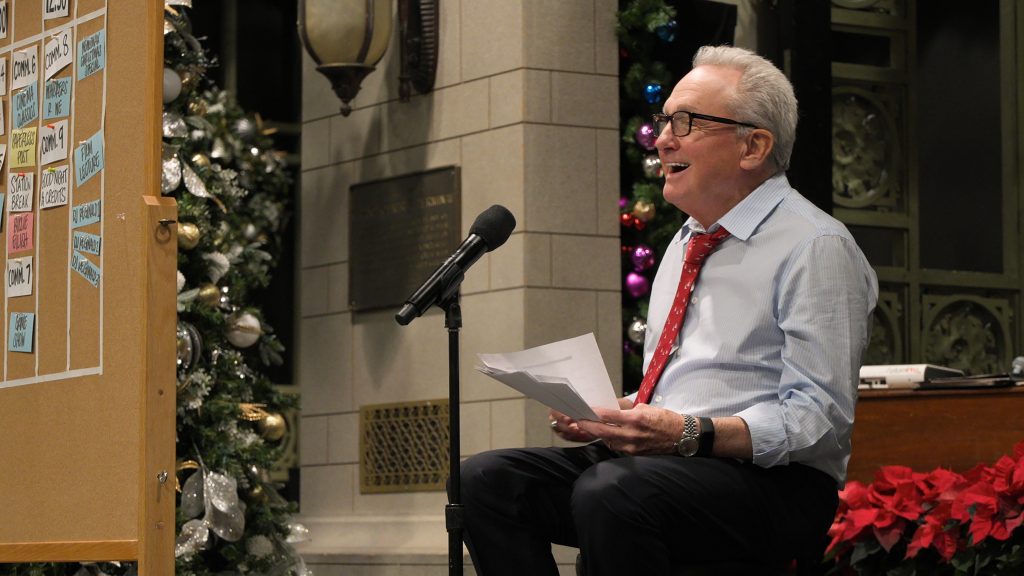 Lorne Michaels stars in director Morgan Neville’s documentary LORNE, a Focus Features release. Credit: Courtesy of Focus Features. © 2026 All Rights Reserved.
I think one of my favorite quotes in the film was, “All of life is reinvention.” So, as a filmmaker, how do you see yourself having experienced reinvention over the course of your career?
Well, Lorne said he was never going to watch the film, and he said that for a couple of years. And then last week, when we had a premiere in New York, he said, “Well, leave a seat and maybe I’ll watch. Maybe I won’t.” And after the movie, everybody came up to me and said Lorne watched. He sat through it, which is incredible because I never expected that.
And then I saw him, and he nodded and said, “Good.” That’s a big review for Lorne. But what he said to me also was that it’s really a story about leadership, which is interesting. It hadn’t really occurred to me, but of course, that’s part of what his story is about — coming to terms with that.
But to your question about change, part of it is Lorne, for somebody who’s so stuck in his ways and is so regimented about things, including the show and how it’s run, within that there’s total freedom to do whatever. You can have whatever sketch you want. You can do things last minute. Things come and go in an instant. And that kind of creative freedom and flexibility, I think, is kind of intoxicating.
Also, this idea that it’s not about you and your ego; it’s about channeling what you see. And there are some filmmakers who are polemicists, and there are some comedians who have a brand. I think part of what makes Lorne unique is what is Lorne’s brand? I mean, there’s kind of a persona, but do you really know what Lorne’s sense of humor is? He likes all kinds of things. He’s witty and erudite, but he also likes, as he says in the movie, big dumb comedy. So I like that kind of protean approach of it doesn’t have to be one thing.
And there are other documentary filmmakers, for instance, who you know within the first minute who made the film because they have such a signature style. I feel like I’m a “method director,” where the subject really informs everything about how I make the film, from how I shoot it to how I score it to how I edit it and the pace and the tone. And I like that. I like channeling the subjects, and that the film almost feels like it’s a collaboration with the subject, and that always keeps it fresh for me too because it’s always a new challenge.
Lorne is now playing in theaters.





















 Bengali (BD) ·
  English (US) ·