.png)
 2 hours ago
7
2 hours ago
7
Article content
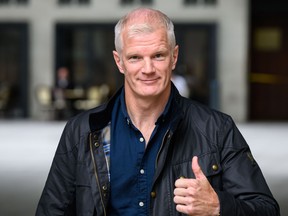
Al Carns, the 24-year Royal Marine veteran turned British politician, posted a Facebook video over the weekend, two days after he resigned as the U.K.’s armed forces minister.

THIS CONTENT IS RESERVED FOR SUBSCRIBERS
Enjoy the latest local, national and international news.
- Exclusive articles by Conrad Black, Barbara Kay and others. Plus, special edition NP Platformed and First Reading newsletters and virtual events.
- Unlimited online access to National Post.
- National Post ePaper, an electronic replica of the print edition to view on any device, share and comment on.
- Daily puzzles including the New York Times Crossword.
- Support local journalism.
SUBSCRIBE FOR MORE ARTICLES
Enjoy the latest local, national and international news.
- Exclusive articles by Conrad Black, Barbara Kay and others. Plus, special edition NP Platformed and First Reading newsletters and virtual events.
- Unlimited online access to National Post.
- National Post ePaper, an electronic replica of the print edition to view on any device, share and comment on.
- Daily puzzles including the New York Times Crossword.
- Support local journalism.
REGISTER / SIGN IN TO UNLOCK MORE ARTICLES
Create an account or sign in to continue with your reading experience.
- Access articles from across Canada with one account.
- Share your thoughts and join the conversation in the comments.
- Enjoy additional articles per month.
- Get email updates from your favourite authors.
THIS ARTICLE IS FREE TO READ REGISTER TO UNLOCK.
Create an account or sign in to continue with your reading experience.
- Access articles from across Canada with one account
- Share your thoughts and join the conversation in the comments
- Enjoy additional articles per month
- Get email updates from your favourite authors
Sign In or Create an Account
or
Article content
Carns followed his boss, defence minister John Healey, out of the door, with both claiming that the Labour government’s defence funding plan was inadequate.
Article content
Article content
Carns said it had become clear to him that the change he pushed for in defence spending was not going to come. “We are still purchasing capability suitable for the last war, while our adversaries arm for the next one,” he said.
Article content
Article content
The resignations (which also included two MPs resigning as defence parliamentary secretaries) are over the not-yet-released U.K. government’s Defence Investment Plan, which will fall short of the goal of three per cent of GDP defence spending by 2030. The plan is not transformative enough, or sufficiently funded, Carns and Healey said — particularly in light of Prime Minister Keir Starmer’s own comments that intelligence assessments point to an attack on NATO by Russia as soon as the end of the decade.
Article content
By signing up, you consent to receive the above newsletter from Postmedia Network Inc.
Article content
But it was the broader points that Carns made in his video that has lessons for Canadian policy makers: that the welfare-versus-warfare argument is an irrelevancy and that western societies need to become more resilient in an age of rising threats.
Article content
Carns referred to three, apparently unrelated news stories: the interception by the Royal Marines of a Russian tanker in the English Channel, “carrying the oil that pays for Russia’s war”; the announcement by Starmer of legislation intended to protect children on social media; and the U.S. government’s move to block its allies from accessing the world’s most powerful AI model (Anthropic’s Fable).
Article content
Article content
“You might think these stories are unrelated — defence, safety, tech — but it’s actually one string,” Carns said.
Article content
Article content
“Is this country resilient enough to look after its own people?”
Article content
Questions about resiliency and a redefinition of what constitutes “defence” are highly relevant for the Canadian federal government.
Article content
The federal Liberals have announced ambitious defence plans — the equivalent of a tripling in spending in under a decade — but have yet to provide details on what it really means for the country.
Article content
The goal is to project an image of a more self-sufficient, sovereign power that wields influence and has leverage.
Article content
There is a tacit recognition that a strong country needs not just capable armed forces but economic security, and robust energy and communications protections.
Article content
But the dots have not been connected and citizens are still in the dark about what it is likely to mean for them.
Article content
The government’s plan will see Ottawa spending more on defence than on all other direct programs by 2033/34 and close to what it spends on transfers to other levels of government.
Article content
As a research paper by the C.D. Howe Institute points out, such a sea change puts at risk the government’s fiscal plan to reduce deficits and the debt-to-GDP ratio over time.






















 Bengali (BD) ·
  English (US) ·